Login
WATCH FREE

Matt Tombs: ten vital trends not to ignore at Cheltenham
By Matt Tombs
Last Updated: Sun 8 Mar 2026
In his latest unmissable column ahead of the Cheltenham Festival, trends expert Matt Tombs delves into the data and shares the vital statistics when it comes to betting over the four days. Matt also advises a Trixie based on the trends, with selections chalked up at 16-1 and 14-1 in two of the week's Grade One races.

ONE PLACE. EVERY RACE. Racing TV is the only channel showing every race live from the Cheltenham Festival. Live daily uninterrupted coverage from 9.45am. Click here for more details.
There are all sorts of complex angles that can lead to value bets, but equally, there are plenty of simple ones which, because of their simplicity, can be overlooked.
When you are trying to assess novice hurdlers, a division where we know less about the horses – it can pay to stick to the obvious and look at Grade One form. That’s the case in the Supreme, which is typically run at a strong gallop and so places a premium on meaningful experience in good races.
This century, Grade One-winning hurdlers are 11/37 – 17pt (49%) profit. Although the Supreme is typically a test of stamina at the trip, horses need a high cruising speed to go the gallop and it’s the Grade One form at around the minimum trip that we need to focus on, (which pre-DRF included the 2m2f version of the Brave Inca.)
With the Royal Bond (which had been such a good guide to the Supreme and Baring Bingham, producing seven winners this century), mystifyingly down-graded, there are now only three Grade Ones to look at.
Idaho Sun won the Formby, Skylight Hustle won the Future Champions, although Talk The Talk would probably have won but for falling at the last - and he won the Brave Inca.
Skylight Hustle is being aimed at the Baring Bingham, but Idaho Sun is an intended runner and fits the profile well. Connections are favouring the Supreme for Talk The Talk who looks to have the ability, but there’s a question mark about his jumping at a Supreme gallop.
In a year where there are fascinating runners in the Supreme who have just been contesting maiden hurdles, don’t forget how under-bet Grade One-winning form has been.
Essential viewing: Matt on the Festival handicaps
The Arkle is the ultimate test for a novice of jumping at speed. Very few horses can run fast enough for an Arkle, and few of those that can, can jump efficiently going that gallop. It is therefore very much about raw talent. Chasing experience is a positive but a smaller part of the overall requirement.
By contrast, the Broadway is an attritional race where horses need to get into a jumping rhythm, preserve energy and then guts it out at the business end. Chasing experience is a bigger factor. The average number of chase starts of winners of the two races this century illustrate that – 3.3 in the Arkle compared to 4.0 in the Broadway.
In the tough test in the Broadway meaningful form as well as plenty of chase starts is crucial. Since Lord Noelie won in 2000, horses that hadn’t run in a graded chase are 0/56. By contrast, five Arkle winners this century were having their first run in a graded chase.
In this year’s Arkle punters have the conundrum of easy Supreme winner Kopek Des Bordes. He bolted up on chasing debut but hasn’t run since. Horses running off one chase start are 2/8 this century – 36pt (450%) profit, but both Well Chief and Western Warhorse had their chase run after the turn of the year whereas Kopek Des Bordes ran on November 17. Is he ready for an Arkle?
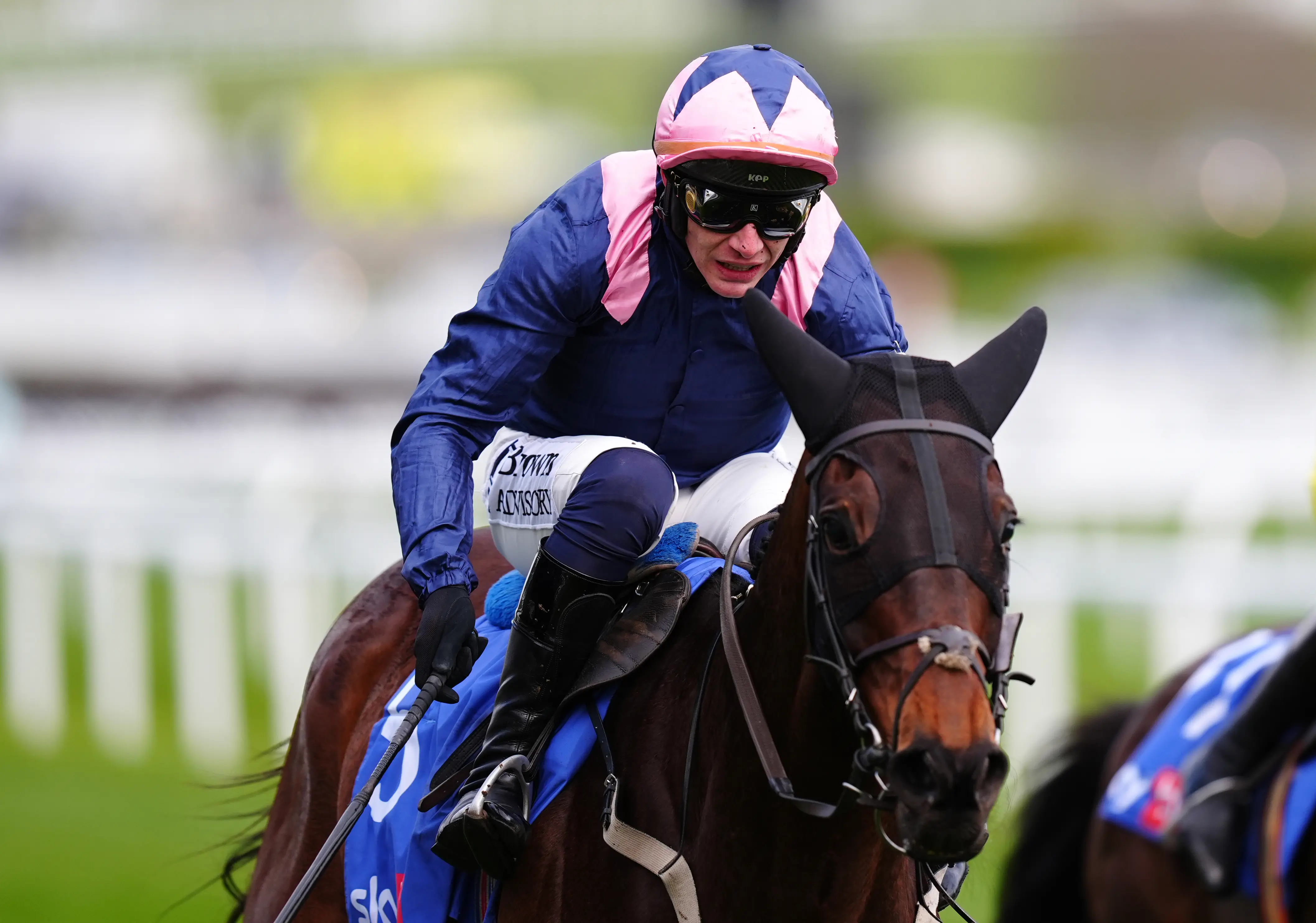
Kopek Des Bordes: one of the leading fancies for the Arkle, a race for which speed is more important than chasing experience
Kopek Des Bordes is a buzzy type and has to behave on the day, but if he does, he looks to have a huge level of ability and he’s a really fast horse. I’d place more emphasis on those qualities than chasing experience - he could further improve the record of Arkle runners arriving off a single chase start.
They typically go steadily in the Baring Bingham – horses need to settle and have a turn of foot, (it is forgiving of novicey jumping in stark contrast to the Supreme.) It’s a test of speed at the trip and so Grade One form at around 2m is a better guide than Grade One form at 2m4f or further.
Since 1997 Grade One winning hurdlers at:
2m1f or shorter are 10/19 – 74% profit
2m4f or further are 4/29 – 60% loss
Whenever you look at trends from trials, you need to look at the specific renewal of both races to see if there is any reason why they’d be a-typical – trends are, by definition, based on typical renewals.

Opt in to receive Gavin Lynch's Cheltenham Festival tips! Click here for more details.
Free! RaceiQ's Festival Preview Pack

Of the four Baring Bingham winners who had won a Grade One at 2m4f+:
Envoi Allen had also won the Royal Bond over 2m Mikael D’Haguenet and Bob Olinger didn’t face an opponent with strong 2m form, let alone a Grade One winner
It’s rare for those with 2m4f+ Grade One-winning form to win if there is a Grade One winner at around 2m in the field.
Of the three Grade One winners at around the minimum trip, Idaho Sun isn’t entered. Skylight Hustle was a fortunate winner of the Future Champions, but still looks a player.
Given the turn of foot he showed in a slowly run Brave Inca, but how novicey his jumping has been in a faster run race, the Baring Bingham looks the ideal race for Talk The Talk and he’d look the one to beat if he runs here.
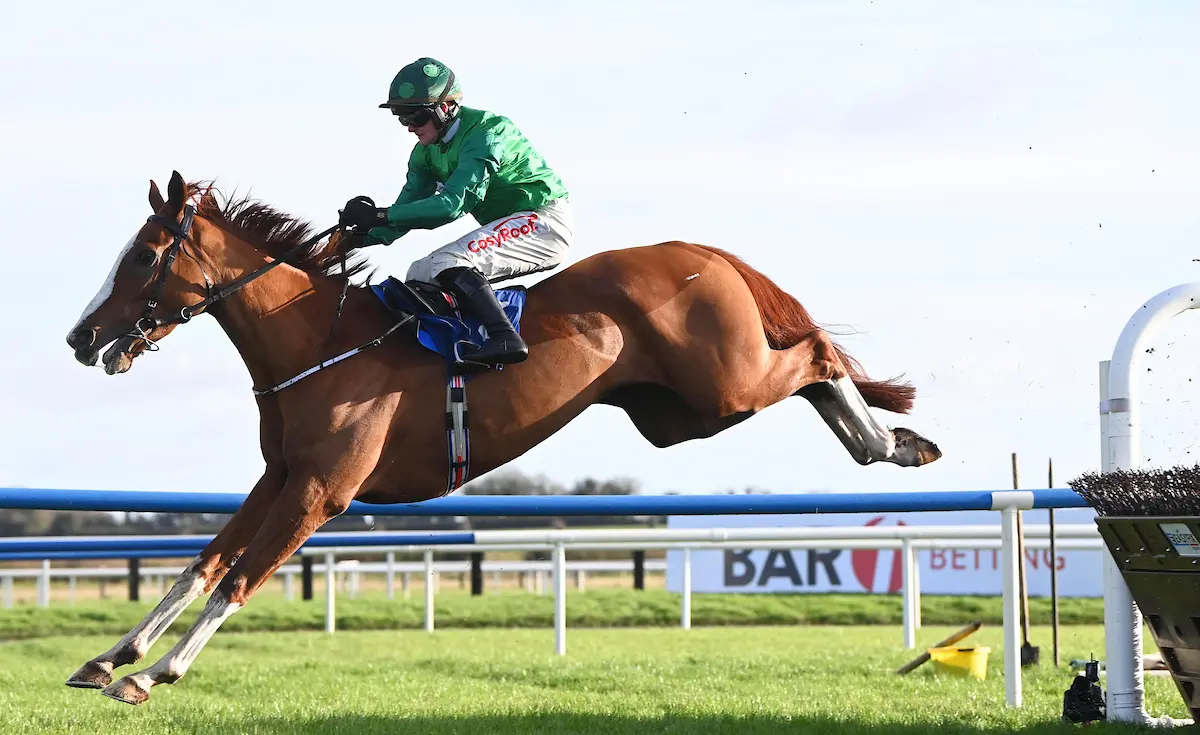
Talk The Talk: the one to beat if he runs in the Baring Bingham instead of the Supreme, says Matt Tombs. (Healy Racing)
Punters can get sucked into over-valuing flashy form at much shorter trips when betting on staying novice races such as the Broadway. It will be run over 3m1f rather than 3m½f this year and there are 20 fences to jump again rather than 19.
Much smaller field sizes, (6-9-10-6-7 in the last five renewals,) have led to the race often being more steadily run and less attritional than it used to be. It’s still a good test of stamina though, and with it 7-2 the field and 32 left in after the scratch stage, we could see a bigger field and even more emphasis on stamina this year.
This is rarely a race for really fast horses as, unless they are exceptional, they don’t stay. Since 1990, all 40 runners that had previously contested a Grade One hurdle at around the minimum trip have been beaten, including 11 who had won one.
Horses amongst the market leaders who have contested a Grade One hurdle at around the minimum trip are Kaid d’Authie (Brave Inca), Romeo Coolio (Supreme) and Salver (Triumph.)
By contrast, the Albert Bartlett has been an excellent guide despite almost every year the form being disparaged – staying novice hurdlers are an un-sexy bunch! Horses from the previous year’s Albert Bartlett are 7/35 so far – 43pt (122%) profit.
The Albert Bartlett is an attritional race that some of us thought would leave a mark on plenty of runners when it was introduced. That’s not proved to be the case – since it’s introduction in 2005 no Festival race has produced more winners at the following year’s Festival than the 17 from the Albert Bartlett.
It is a tough test that plenty of inexperienced horses aren’t ready for though. So it’s always worth considering all the Albert Bartlett runners – only four of those 17 winners at the next Festival finished in the first three in the Albert Bartlett. Both Bostons Angel and Blaklion won the Broadway having been pulled up in the Albert Bartlett.
The Big Westerner (2nd), Wendigo (5th) & Argento Boy (14th) could all represent last season’s Albert Bartlett form in the Broadway.
Champion Chase focus
Ten of the 13 odds-on favourites in the Champion Chase this century have been beaten. That’s in the context of shocks being rare – 21 of the 25 renewals this century have gone to the front three in the market.
At first sight those two stats look like they ought to belong to different races. I think there is a freak element to the record of odds-on favourites – for example Douvan and Shishkin both got injured.
However, I do think there is an angle here. The reason why shocks are rare is that very few horses can run fast enough and jump fast enough at speed to be a Champion Chase contender. Typically only three or four line up with a realistic chance. In that sense it is a predictable race.
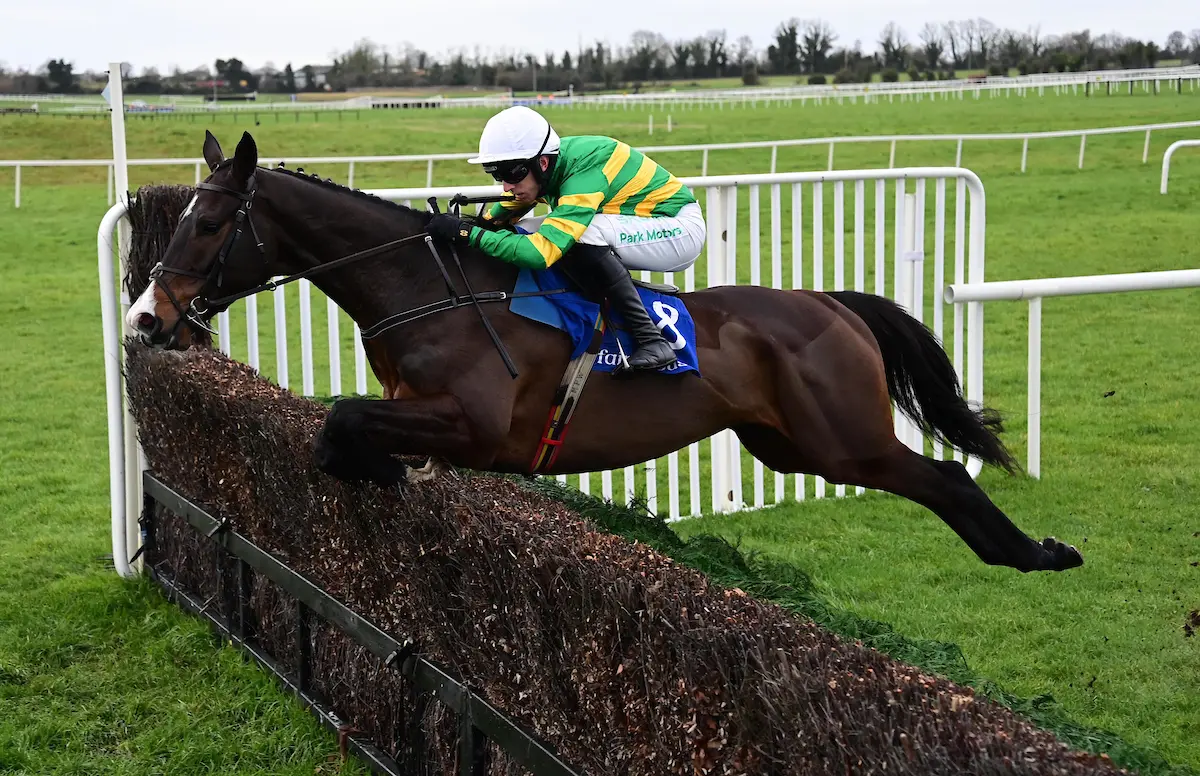
Can hugely impressive DRF winner Majborough overcome the poor record of recent Champion Chase favourites?
Those three or four realistic contenders are jumping about as quickly as horses can, and the fences come up thick and fast in the early part of the race (unlike the other courses which host Open Grade One chases at around the minimum trip).
Which of those three or four will get into a rhythm under that extreme test of jumping at speed is often hard to estimate. In that sense it is an unpredictable race between those three or four.
If that theory is right, then the uncertainty over which of, say, the first three in the market will jump well on the day ought to favour backing the second favourite. To deliberately over-simplify it – if the race:
Always had exactly one of those three whose jumping wouldn’t stand the test
- Each of the three was equally likely to fail that test
- Those who pass that test would always finish in market order
- The favourite and second favourite would win half the renewals each - the second favourite would therefore provide the value.
Of course it’s much more complicated than that, but I think it is an under-bet factor. If you had backed blind the following this century your P&L would be:
Favourites – 20% loss
Second favourites – 73% profit
Third favourites – 16% loss
The rest – 65% loss
I think this theory works best when there is an odds-on favourite and a clear second favourite, but it may appeal to those preferring the proven Champion Chase form of Marine Nationale (currently 9-4) to the brilliant but historically erratic Majborough (13-8).

Fancy a day at the Cheltenham Festival?
Champion Bumper: focus on form
Many punters seem to almost ignore form in the Champion Bumper and spend their time focusing on vibes. “Which is the one from Closutton in the Bumper?” is one of the most common questions about the Festival at this time of year. The perception is that because the horses have run minimally, some will improve so much that form analysis is less important.
Form in plain sight has therefore been an under-bet factor. The BHA began publishing ratings to runners in 2008. Since then, top-rated (when factoring in the allowances,) are 7/19 – 15pt (81%) profit.
Including joint top-rated runners, they have finished (most recent last): 3106435171512212101, so the record is even stronger in recent years.
The record of the top two in the market during that period is similarly good, 10/37 - 24pt (64%) profit.
The days of horses running once at smaller tracks like Tralee (Joe Cullen) or Fontwell (Cue Card) appear to be gone. The last winner not to have run at a Grade One course was Briar Hill in 2013. Don’t be afraid to follow the best form in the Bumper – it’s invariably under-bet.
Racing: "different to other elite sports"
Few things upset punters more than the best horses avoiding each other at the Festival. If you’re one of those punters don’t waste your energy berating the horse’s connections who are taking a perfectly legitimate decision. Invest that energy in being part of a campaign to get the Festival programme changed. It can be done as we have seen with the novice chases.
In the meantime, don’t fall into the trap of opposing those horses because you are annoyed at which race they are running in.
The main such race is the Mares' Hurdle and the horse irking punters is Lossiemouth. At the time of writing she is 4-5 NRNB for the Mares Hurdle and 11-4 NRNB for the Champion Hurdle. If you’re solely trying to maximise the chance of winning a Festival race, it’s a no-brainer to run in the Mares' Hurdle.
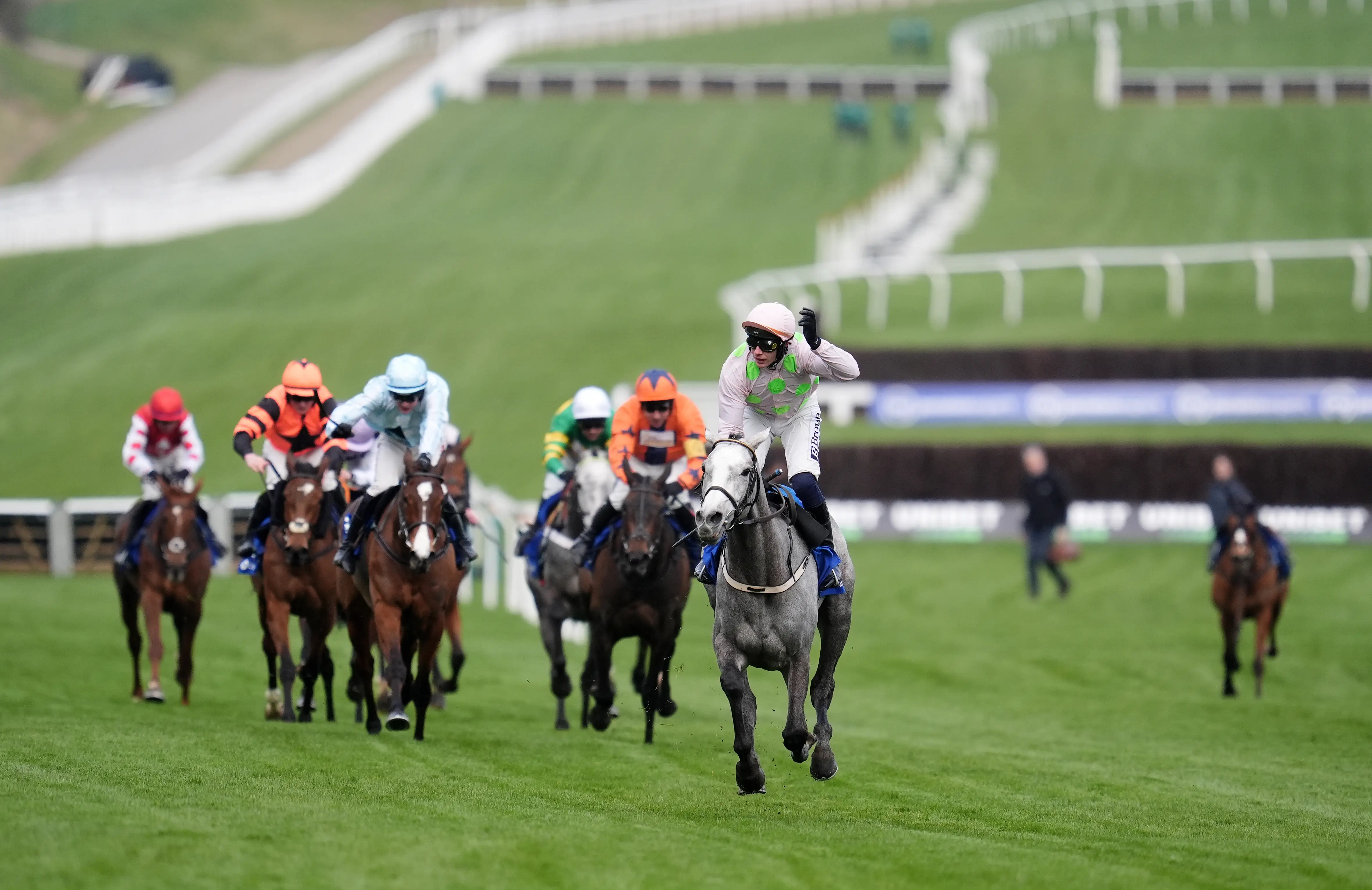
Lossiemouth: which race will the three-time Festival winner run in?
That’s where racing is different to other elite sports. Generally elite sportspeople are judged by their results in the biggest events.
For example, in golf there are four major championships. That’s how elite golfers are judged. Golf fans know that Jack Nicklaus won 18 majors and Tiger Woods has won 15. Almost nobody judges them by the fact that Tiger has won 82 tour events and Jack 73.
The dynamic in racing is different. Willie Mullins cannot afford to own all the horses he wants to train, so his business model relies on owners paying him to train lots of the best prospects around. His business model prioritises winners - not winning the biggest races. Gordon Elliott often expresses the same sentiments in terms of ‘running the horse in the race it can win’.
The result is a very different mentality to the elite players in other sports. The leading three current trainers in terms of Cheltenham Festival races won are:
Willie Mullins – 113
Nicky Henderson – 75
Paul Nicholls – 50

This is the metric we invariably hear discussed. If you were to take the unusual step of looking at the leading trainers record in the four championship races at the Festival (very loosely comparable to the majors in golf or grand slams in tennis and so on), the leading trainers are:
Nicky Henderson – 19
Paul Nicholls – 15
Willie Mullins - 13
I can see no prospect of jumps racing converting to the mentality of other elite sports. The only way to get the best horses to take each other on is to change the Festival programme so they have no choice.
In the meantime, vexed punters should consider the record in the Mares' Hurdle of mares that had won an Open Grade One hurdle. They are 8/13 – 7pt (50%) profit. Despite often having outstanding claims they are still under-bet.
The record is actually better than the bare stats. Three of the five losers were beaten by another qualifier and another would have won had the race been at level-weights as it is now. If you’re irritated if Lossiemouth runs in the Mares Hurdle, don’t let it stop you backing her.
How key is proven stamina?
The Albert Bartlett is a stiff test of stamina for novices yet almost every year punters get sucked in to backing horses with sexy profiles, usually having won graded hurdles at much shorter trips.
So far Grade One-winning hurdlers are 1/21 and that winner was Wichita Lineman in 2007. The longest trip over which there is a Grade One novice hurdle before the Festival is 2m6f and punters get sucked into thinking such horses will outclass the ‘slow old boats’ that have been running at around 3m.
Yet, 16 of the 21 winners had run over 2m7f or further over hurdles, 12 of them in graded hurdles. All those 12 had finished first or second when contesting them. That trend has strengthened in recent years, with eight of the last 11 winners meeting it.
This season’s Albert Bartlett entries that have finished in the first two in a graded hurdle over 2m7f or further are:
Dalston Lad (who is not an intended runner)
Good Girl Kathleen
Kazansky
Thedeviluno
Ubatuba
Successful betting is all about finding something that the market misprices. One concept novice punters have to get their head around is that a positive quality a horse possesses can be a negative for betting.
If every racing fan sees that a novice jumps brilliantly and everyone is eulogising about their jumping, that factor is (all else being equal), likely to mean they are over-bet.
One such factor in the Gold Cup is stamina. Stamina is important, but the one certainty over the next few days is that a huge number of pundits and punters will be saying the Gold Cup is all about stamina. It isn’t. Class counts for a lot too. How many Gold Cups in recent years can you remembering featuring a slogger outstaying a classier horse when both ran their races?
The proviso is that there is a sound surface as there has been for 22 of the 25 Gold Cups this century. When the ground is deep, as when Native River outstayed Might Bite, stamina is indeed the key criteria.
What the stats do show is that concerns about unproven stamina are significantly overplayed. Horses that had never run beyond 3m½f in a chase under Rules are 10/40 this century – 30pt (74%) profit. If you restrict it to those who went off a single figure SP the record improves to 9/20 – 37pt (183%) profit.
This year Fact To File (if he runs), Jango Baie and The Jukebox Man all fit that profile. By contrast horses that had run over further than the Gold Cup trip are 2/100, which is a negative for Haiti Couleurs.
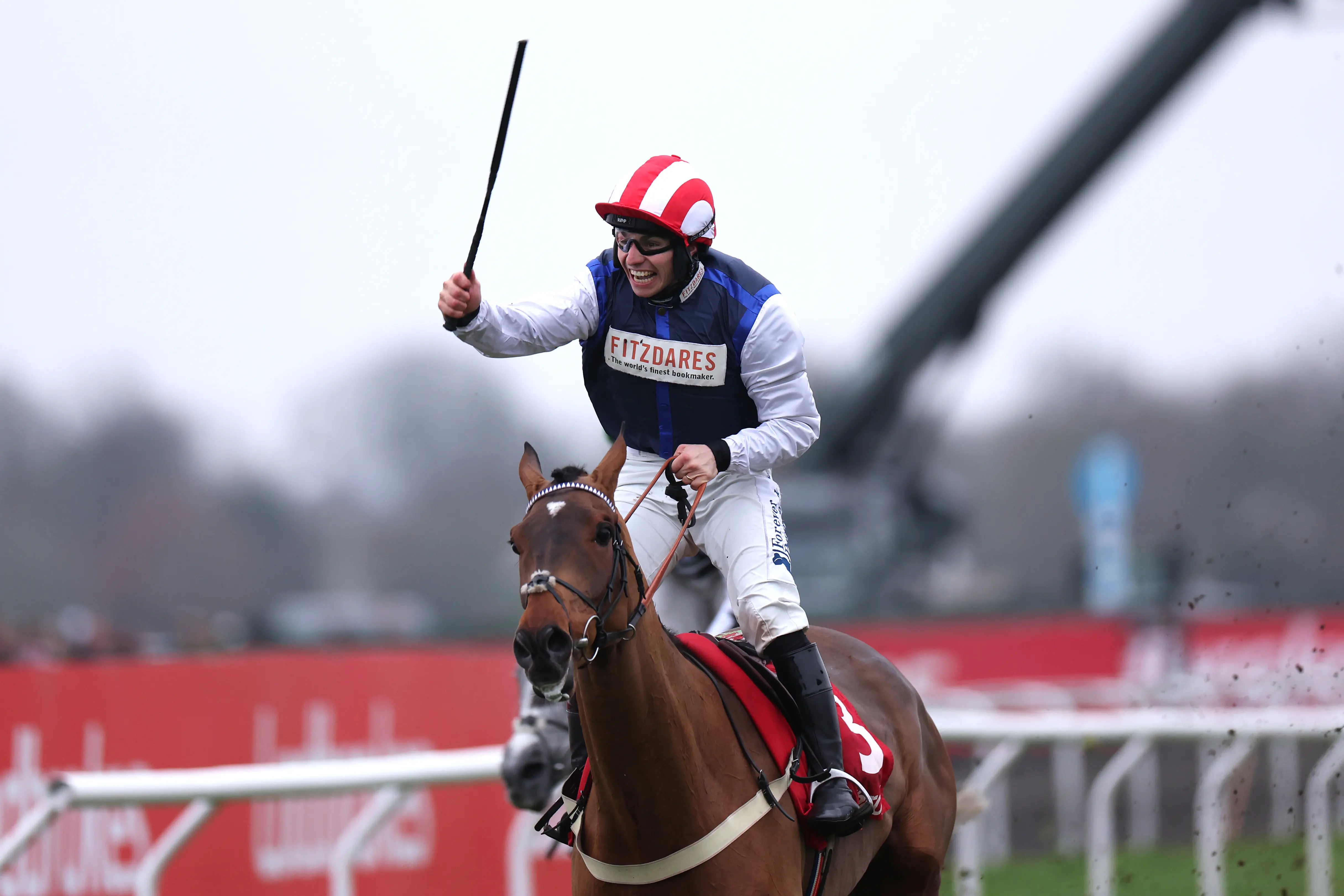
Like Fact To File and Jango Baie, The Jukebox Man has not proven his stamina for the Gold Cup trip - a statistic which is "significantly overplayed," says Matt Tombs.
One of the most important factors in a race is how predictable it is. It’s hard to suggest 3-1 is a good price about Doctor Steinberg in the Albert Bartlett when in the last 12 renewals horses starting at shorter than 5-1 are 0/20, with four of those 12 winners going off 33-1 or bigger. As with any trend, it’s not to say Doctor Steinberg can’t win - it’s saying he’s poor value.
By contrast, there are some Festival races where the front of the market is under-bet. Festival Grade Ones where it can pay to back horses at or near the front of the SP market include:
Supreme: 13 of the last 15 winners were from the front 3 in the market – 22pt (46%) profit
Bumper: 8 of the last 11 winners were from the front 2 in the market – 14pt (61%) profit
Ryanair: 15 of the 21 winners were from the front 2 in the market – 18pt (40%) profit
Gold Cup: 21 winners this century were from the front 3 in the market – 20pt (24%) profit
A trixie of horses that fit the trends well is:
Supreme – Idaho Sun 14-1
Broadway – Wendigo 7-1
Albert Bartlett – Kazansky 16-1
Good luck and enjoy what is shaping up to be one of the best Festivals for a long time.
Click here for Cheltenham free bets

Racing TV encourages responsible gambling - to find out more click here to head to our dedicated website page.
Featured offers

Bet £10 Get £40 in free bets + Money back 2nd to SP fav with BOYLE SportsT&Cs Apply
Claim Now
BOYLE Sports: Bet £10 Get £40 in free bets + Money back 2nd to SP fav with BOYLE Sports. 18+ GambleAware

Get 50% back up to £50 with QuinnBetT&Cs Apply
Claim Now
New UK Customers Only. Bet £10+ on any sportsbook markets at odds of evens (2.00) or greater. Get 50% back of your first day’s losses as a Free Bet up to £50, valid for 7 days. 18+ GambleAware.

Bet £10 get £30 in Free Bets with talkSPORT BETT&Cs Apply
Claim Now
talkSPORT BET: Bet £10 get £30 in Horse Racing Free Bets. 18+ GambleAware

Bet £10 get £40 in free bets with KwiffT&Cs Apply
Claim Now
New UK customers. Place a £10 real money bet at min. 2.0 odds within 5 days of deposit. Get 4 x £10 Free Bets: 1 Single, 2 Accas & 1 Bet Builder (min. 3 selections each). Excludes cashout, E/W, Multis, Ineligible Markets & Odds Boosts. Credited after bet settlement. 7-day expiry. T&Cs apply. 18+ GambleAware

Bet £20 and Get £40 in Free Bets with UnibetT&Cs Apply
Claim Now
Unibet: Bet £20 and Get £40 in Free Bets with Unibet
CHELTENHAM FESTIVAL TIPS
READ THESE NEXT
Related posts
Richard Hannon breaks new ground with North American winner
Sheikh Ahmed bin Rashid Al Maktoum dies aged 76
Listowel Harvest Festival tips: Johnny Ward's best bets for Monday
Craig Williams booked for James J Braddock mount in Melbourne Cup
Guinness Kerry National: guide to the key players
Featured offers
Get 50% back up to £50 with QuinnBet
T&Cs Apply
Claim Now
New UK Customers Only. Bet £10+ on any sportsbook markets at odds of evens (2.00) or greater. Get 50% back of your first day’s losses as a Free Bet up to £50, valid for 7 days. 18+ GambleAware.
Bet £10 Get £40 in free bets + Money back 2nd to SP fav with BOYLE Sports
T&Cs Apply
Claim Now
BOYLE Sports: Bet £10 Get £40 in free bets + Money back 2nd to SP fav with BOYLE Sports. 18+ GambleAware
Bet £10 get £30 in Free Bets with talkSPORT BET
T&Cs Apply
Claim Now
talkSPORT BET: Bet £10 get £30 in Horse Racing Free Bets. 18+ GambleAware
Bet £20 and Get £40 in Free Bets with Unibet
T&Cs Apply
Claim Now
Unibet: Bet £20 and Get £40 in Free Bets with Unibet
Bet £10 get £40 in free bets with Kwiff
T&Cs Apply
Claim Now
New UK customers. Place a £10 real money bet at min. 2.0 odds within 5 days of deposit. Get 4 x £10 Free Bets: 1 Single, 2 Accas & 1 Bet Builder (min. 3 selections each). Excludes cashout, E/W, Multis, Ineligible Markets & Odds Boosts. Credited after bet settlement. 7-day expiry. T&Cs apply. 18+ GambleAware
Copyright 2026 Racing TV - All Rights Reserved.
Please bet responsibly
Copyright 2026. All rights reserved