Login
WATCH FREE
Dublin Racing Festival: Matt Tombs' essential trends and stats

By Matt Tombs
Last Updated: Sat 31 Jan 2026
In the final instalment of a six-part series, Cheltenham trends expert Matt Tombs previews this weekend's action in the Irish capital and the record of DRF runners at the Cheltenham Festival. Watch every race from both meetings live on Racing TV.
Enjoy a FREE one month trial of Racing TV!

Although there have only been eight Dublin Racing Festivals (DRF), I would argue that it is now firmly established as the second most important meeting of the season. In an era where the Grade Ones at Cheltenham are dominated by Irish stables, the DRF has become the springboard for many of those Irish horses that triumph at the Festival.
The number of winners the DRF has produced at Cheltenham has been (most recent last): 8-2-3-11-5-8-11-7. In 2019 and 2020 the ground was quicker than usual and lots of intended runners didn’t run. Leopardstown is unlikely to allow that to happen again and, if you ignore those two years, then the average is 8-9 Festival winners per year, i.e., nearly a third of the Festival races.
It’s hard to compare this with the pre-DRF era to see the impact the creation of the DRF in 2018 had as, until 2017, Irish yards had never won more than 14 races at the Festival. 2017 is a one-year sample, but only four of the 19 Irish-trained Festival winners ran in the 22 races on the three Leopardstown cards that were merged into the 15 races at the DRF.
Most of the races at the DRF existed before 2018, but I think that the success of the meeting has led to a virtuous circle with more of the best horses running in these races now. With Gordon Elliott planning on taking more of his A-teamers to DRF this year, that trend should build if the prospect of really bad ground doesn’t put connections off.
That means, especially in the novice races, DRF runners get more meaningful experience, which improves their chances at Cheltenham. Whilst you don’t want very hard races that take the edge off your Cheltenham contender, in the novice races I think that these days more horses are beaten at the Festival through lack of meaningful experience than by not being fresh enough having had too many hard races. The high quality of competition at DRF is a real boon to the Irish challenge at Cheltenham.
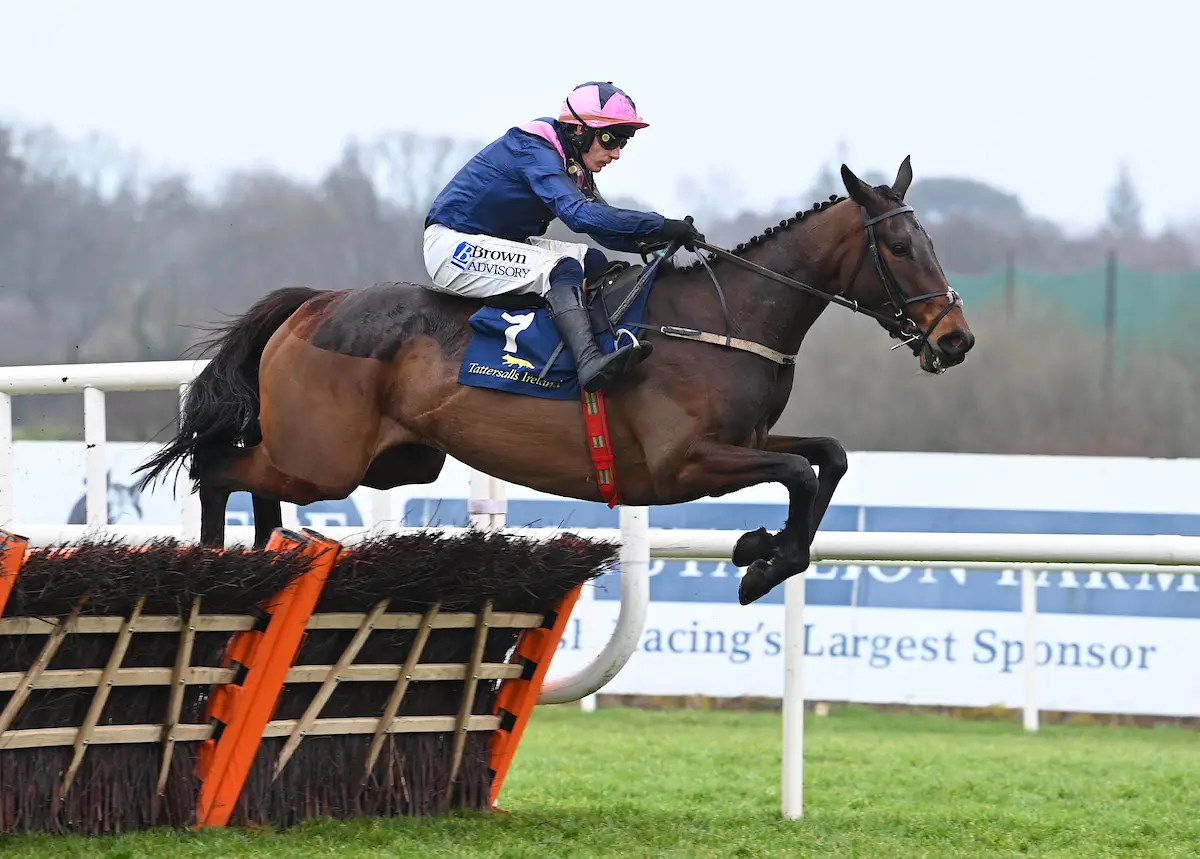
Kopek Des Bordes: one of many to complete a DRF-Cheltenham double in recent years. (Healy Racing)
Beware the Golden Cygnet
The meeting kicks off with the 2m6f Grade One Golden Cygnet Novice Hurdle, which was a new race when the DRF began, (there had been a 2m4f Grade Two at one of the precursor Leopardstown meetings.) The Golden Cygnet does feel a different race to its predecessor, very much one for stayers. That’s been born out by the record of runners at the Festival. In the Baring Bingham they are 0/7, in the Albert Bartlett 3/23 – 33pt (143%) profit.
You often hear that you should oppose Golden Cygnet winners in the Albert Bartlett as they never win. Literally that’s correct – none of the eight have won. However, I think that’s a consensus worth challenging. In fact the five Golden Cygnet winners to run in the Albert Bartlett have run well in such an unpredictable race, finishing 52223.
That context is important. The main reason the Albert Bartlett is so unpredictable is that the test it provides differs more from the trials than is the case in the other novice races at the Festival - typically there is close to a full field of 20 going a significantly stronger gallop.
I wonder if the Golden Cygnet might be a bit different to the other Albert Bartlett trials. It’s the Grade One novice hurdle over the longest trip before Cheltenham and, as is typical at the DRF, attracts a strong field, which tends to go a decent gallop. My visual impression is that it is less unlike the Albert Bartlett than the other main trials. I think that rather than keeping hitting the cross bar, we’re going to get a Golden Cygnet winner follow up in the Albert Bartlett soon.
Perhaps more importantly from a punting viewpoint, the fact that the Golden Cygnet tends to be a deep race makes me think that the good record of beaten horses in the Albert Bartlett will continue. All three Albert Bartlett winners were well beaten at Leopardstown. Gavin Cromwell’s yard who were badly out of form when Vanillierwas beaten 59l. Neither of the other two, Jasmin De Vaux (17½l 4th) and Stellar Story (11l 4th), jumped well.
The Golden Cygnet winner will typically be at or near the front of the ante-post market for the Albert Bartlett. However, 10 of the last 12 Albert Bartlett winners went off double figure prices, including three 33-1 shots and a 50-1 chance.
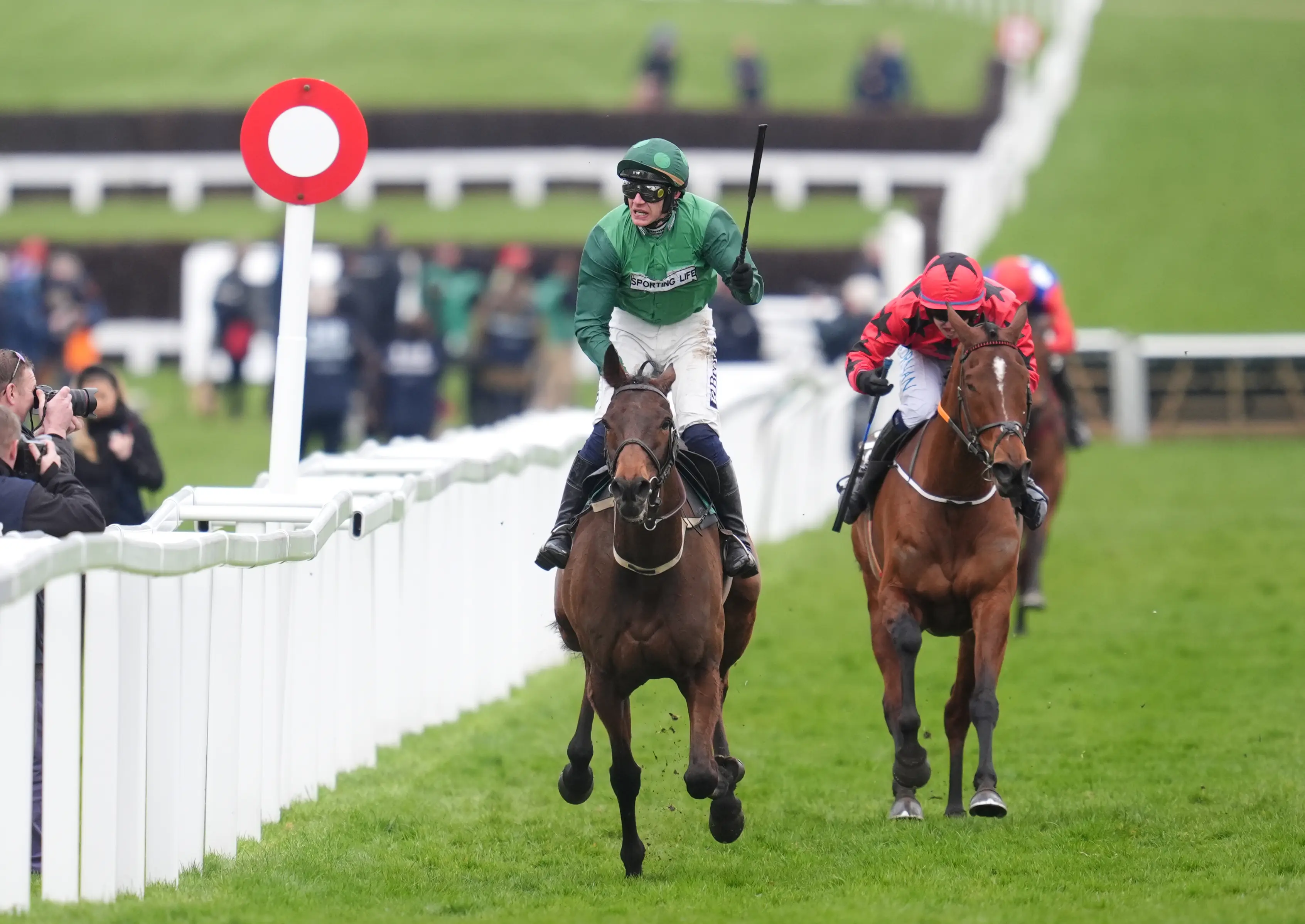
Jasmin De Vaux was well beaten at the Dublin Racing Festival last year but bounced back to winning ways in the Albert Bartlett.
Therefore whilst I think we’ll get a Golden Cygnet winner following up in the Albert Bartlett in the not too distant future they still may not provide good punting value. By contrast, if you can find a good novice with an excuse for a substandard performance in the Golden Cygnet it’s likely to provide value at a juicy price for the Albert Bartlett.
Timing is crucial in betting, especially ante-post. The SP long shots that so often win the Albert Bartlett are invariably defensively priced ante-post and are often bigger prices on the day. I’m an ante-post punter – in some of the Festival races the value is usually squeezed out well before March so I think you have to be. However, it’s important to know your races – the Albert Bartlett is often the worst Festival Grade One for ante-post betting.
The ground looks set to be really testing at DRF this year, especially on the hurdles track. The slowest ground at DRF so far has been soft-to-heavy on the hurdles track and soft on the chase track. With the track waterlogged at the time of writing - what impact will the ground have on runners’ chances at Cheltenham?
I’m generally more concerned about a heavy ground prep run for staying chasers than two-mile hurdlers. Horses finish tired much more often over three miles and jumping fences out of deep ground is hard work. I’d also be more concerned about younger horses who were still developing getting bottomed, at least for the season, by an attritional test.
Given that the Golden Cygnet is a tough, staying contest I’d wondered whether it might take the edge off novices for the season, especially when run on bad ground. Four renewals so far have been run on yielding or quicker and four on soft or slower.
The three Festivals winners have all come from soft or soft-to-heavy ground renewals. Three of the four Golden Cygnet winners on such testing ground went on to Punchestown at the end of the season and all won Grade Ones. Whilst in theory I’d be concerned about a hard race here leaving its mark for the spring festivals – that hasn’t generally proved the case so far. Genuinely heavy ground may be different.
What can we learn from the Spring Juvenile?
One of the most interesting trials all season for the Festival is the Spring Juvenile. I’ve mentioned in previous columns that the British graded juvenile hurdles tend to be shallow races – it is only worth following the winners in the Triumph.
The Spring is usually a much deeper race, with the pattern funnelling the best juveniles into it, (which isn’t the case in Britain). It is much the best trial for the Triumph having produced 10 winners this century including four of the last five.
However, many punters make the mistake of thinking the Spring form creates a clear pecking order amongst those Irish juveniles. That’s an orthodoxy worth challenging after Saturday’s race. Only three of those 10 Triumph winners won the Spring, (in addition Scolardy was first past the post at Leopardstown and disqualified). More widely, the Spring form has been tested 23 times in the Triumph, with the horse who did best at Leopardstown only doing best at Cheltenham on nine occasions.
If you ignore the Scolardy year and also 2021 when Quilixios was the only runner from the Spring in the Triumph – when the Spring has produced the Triumph winner, six times out of eight that Triumph winner was beating the winner of the Spring. Horses progress and regress during the season in all divisions but it’s logical this should be a bigger factor in the juvenile division.
The Spring is the trial to focus on when betting in the Triumph and a good source of value given that the form so often gets reversed. We’re therefore looking for reasons why that may happen.
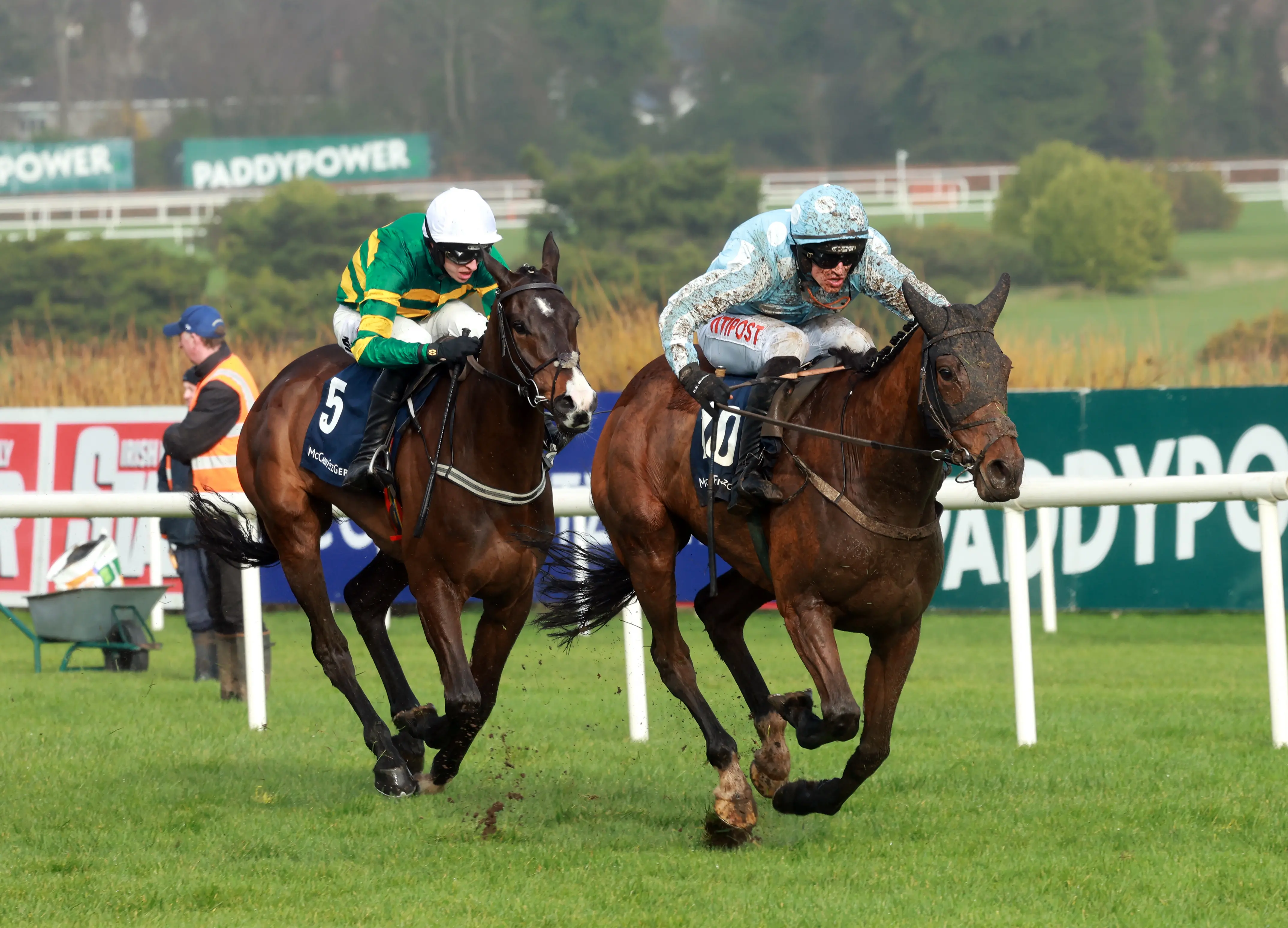
Majborough (left) - one of several horses to have been beaten in the Spring Juvenile but win the Triumph the following month.
Sometimes it is inexperience at Leopardstown – Majborough was having his second career start in the Spring and his first for Willie Mullins whereas Spring winner Kargese was having her fifth, having run in the Grade Two at Christmas.
This year Selma De Vary could make her debut for Willie Mullins, although she’s more experienced than Majborough having had five runs in France including three over hurdles. She’s not had long to acclimatise having run for previous connections in France in November. Immediate Effect and North Shore would be having just their second runs over hurdles.
Another reason, which may be in point this year, is that the Spring and Triumph can be run under very different ground conditions. The Triumph is one of the few Festival races where ex-flat horses still prosper – six of the last 10 began on the flat and, as a generalisation, they are more likely to prefer quicker ground. In 2016 Ivanovich Gorbatov got stuck in the mud in the Spring before winning on a sound surface in the Triumph.
The likely deep ground is going to make it really tough going for the juveniles in the Spring and we could get a similar scenario again. Narcisco Has won on the prevailing testing ground at Auteuil in April but yielding has featured in the description of both his starts for Willie Mullins where he’s shown much stronger form.
In addition, because the Spring is such a strong race, it is worth keeping an eye out for potential Fred Winter horses amongst the also-rans. Dabiroun won at 20/1 and Flaxen Flare at 25/1, both having been fifth in the Spring. There may be a trainer element to this. Gordon Elliott is more inclined to run his Fred Winter horses in graded juveniles whereas Joseph O’Brien has prepped his in smaller races, (Joseph doesn’t have a runner this year, whereas Gordon has four entries.)
Looking at the Spring itself the key guide is the Grade Two Changing Times Brewery Juvenile Hurdle here at Christmas. However, similarly to the Spring as a Triumph trial, the Changing Times form often gets turned round in the Spring. Changing Times winners are 2/11 since the Spring became a Grade One is 2010, whereas five horses beaten in the Changing Times have won the Spring.
Narcisco Has looked to improve significantly from his Fairyhouse defeat by Mange Tout in the Changing Times and is odds-on for the Spring. It’s tempting on form to see him as a banker but history suggests punters should be wary, especially given the likely ground. The three who chased him home at Christmas, Adrienne, North Shore and Barbizon could all re-oppose.
Can Final Demand justify the hype?
The novice chase run over an extended 2m5f, (the ‘Moriarty’ in old money,) has been one of the best novice chase trials run all season, producing 10 winners of level-weights novice chases at the Festival, (plus a winner of the Plate).
I’ve mentioned previously that the top novices, taking on only one cohort of horses, can often win at a wide range of trips – their class getting them home when the trip isn’t ideal. There is rarely an intermediate trip specialist novice chaser at Grade One novice level. The Moriarty has been another example of that.
The closest Grade One at the Festival in terms of distance was the old level-weights Golden Miller. Moriarty runners were 0/14, including six winners. By contrast they are 2/8 in the Arkle (50% profit), 6/43 in the Broadway (flat) and 2/7 in the old conditions race National Hunt Chase (6% profit).
The rule is - don’t pigeon hole horses from the Moriarty in terms of the distance they need to run over. The Moriarty is usually a really strong race and we’re looking for the class acts from it, who might be equally or even more effective at a different trip at Cheltenham.
The Moriarty itself has been very predictable. In the last 14 renewals 10 favourites (or joint-favourites) have won, with three other renewals going to the second in the market. Testing ground at this trip would suit odds-on favourite Final Demand who has jumped really well out of deep ground and should be suited by a stamina test at this intermediate distance.
One word of caution about Final Demand is the record of Faugheen winners – who are 2/11. The beaten horses include a pair of Willie Mullins short priced favourites Gaelic Warrior and Bellshill. The Faugheen is a stronger race than it used to be but the Moriarty is typically a fair bit stronger. However it could cut up this year in which case we may not really find out whether the Final Demand hype is justified on Sunday.
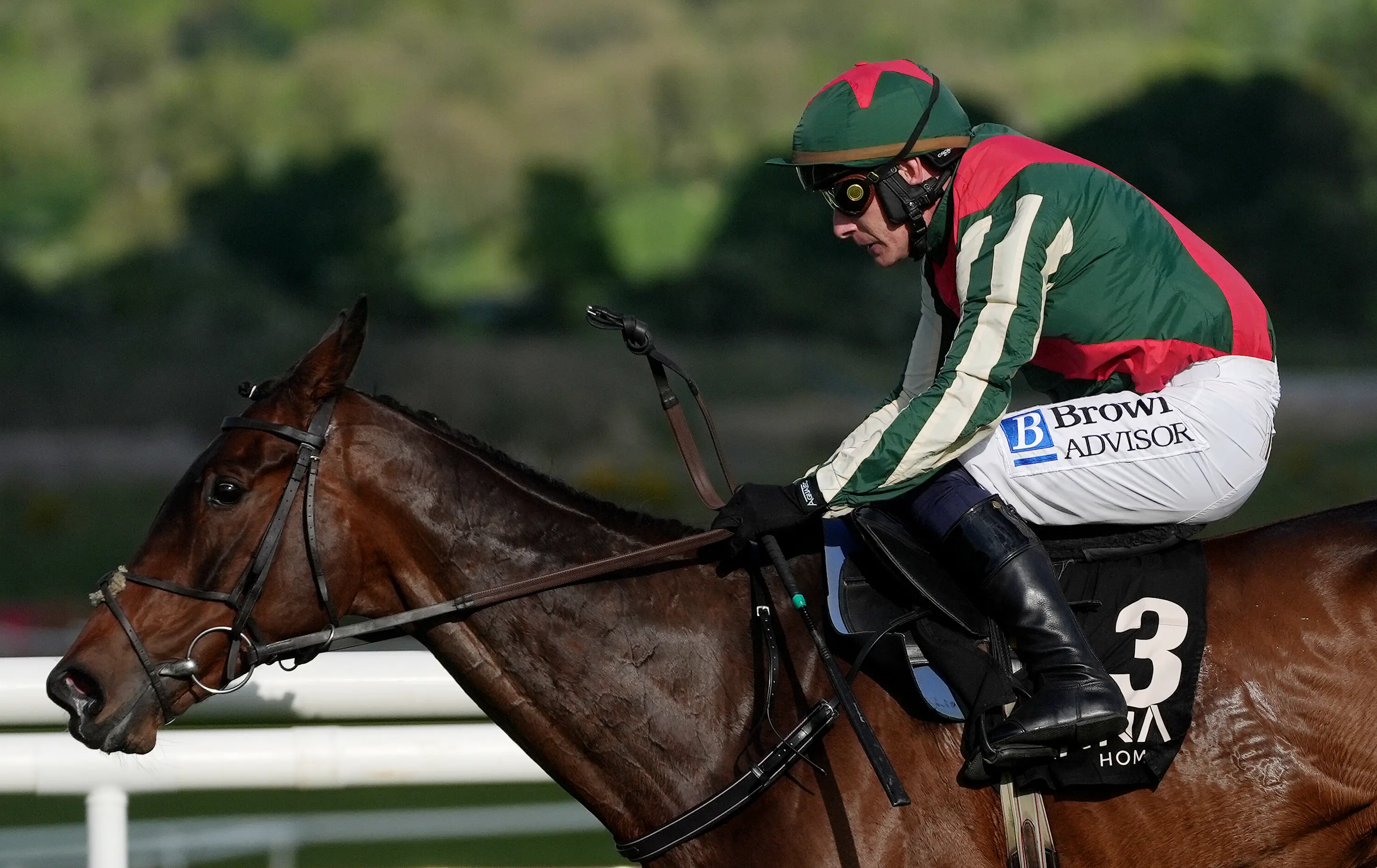
Final Demand: a short-priced favourite for the Ladbrokes Novice Chase (or Moriarty) on Sunday.
Novice hurdle clues
Only one DRF race has produced more than six winners at Cheltenham so far, the Brave Inca Novice Hurdle - which has produced nine from the eight renewals. Since DRF it has been run over 2m, (it was previously run over 2m2f on the Irish Gold Cup card.) Overall this century it has produced 15 Festival winners. That’s more than any other novice race and joint-third in the overall list.
The influence of the two races that have produced more winners, the King George and Tingle Creek, has declined in recent years as the British challenge has weakened. I’d argue that the Brave Inca is the strongest trial all season for the Festival at the moment in terms of finding winners.
The record of Brave Inca winners, (whether over 2m2f or 2m,) in the Supreme is excellent. This century they’ve finished 31131114151, the seven winners producing a 17pt (156%) profit.
Even with the Brave Inca distance reduced from 2m2f to 2m it remains a good trial for the Baring Bingham, which typically provides a test of speed at the trip. The six winners in the DRF era that went on to win at the Festival are split 3:3 between the Supreme and Baring Bingham, (in addition Slade Steel won the Supreme, avoiding his Brave Inca conqueror Ballyburn in the Baring Bingham.)
The difficulty for punters is that markets have changed. Between 2000-2017 the 34 renewals of the Supreme and Baring Bingham produced one odds-on favourite – Dunguibwho was third in the 2010 Supreme. The 16 renewals in the DRF era have produced two odds-on shots in the Supreme and four in the Baring Bingham – and all six have won. All bar Envoi Allen of those six won the Brave Inca.
A lot of winners are going off at what to many punters are prohibitively short prices. We should therefore consider ante-post betting on the Supreme and Baring Bingham in the run up to the Brave Inca.
For example, last year immediately before DRF Kopek Des Bordes was 12/1 for the Supreme. After he won the Brave Inca he was 7/4 and won at 4/6. He won the Brave Inca at 4/5 having been chosen by Paul Townend – so he was in plain sight when the 12/1 was available.
The difficulty with that strategy is that historically Willie Mullins often hasn’t known his pecking order in the novice/juvenile races at DRF, especially over hurdles where the horses had run less for him. The value has tended to be with his second-strings – it is not usually as obvious as it was with Kopek Des Bordes. If you are ante-post betting before the Brave Inca don’t be put off taking a big price about one of the supposed lesser lights from Closutton.
This year punters face a question we’ve not had for some years. Are the Mullins novice hurdlers just slower coming to hand and so will spark to life at DRF – or are they a substandard crop that need opposing? I’m open-minded but it seems logical that he will have less of an idea of pecking order and so the supposed second strings could be the better value again this year.
The perception is that Brave Inca ante-post favourite Talk The Talk will run in the Supreme if he performs well at Leopardstown. He’s a chancy jumper but settles pretty well and has a turn of foot, the ideal qualities for the Baring Bingham for which he’s 25-1. It wouldn’t surprise me if that’s where he ends up.
For those who like ante-post accumulators the run up to the DRF can be a great time to try and win a big sum for a small stake by taking a view which stars may emerge at the weekend and so shorten a lot for Cheltenham. My suggested trixie is:
Arkle – Kopek Des Bordes (3-1)
Champion Hurdle – Brighterdaysahead (7-1)
Baring Bingham – Talk The Talk (25-1)
Enjoy the DRF and hopefully there’ll be an acca voucher to enjoy on the run up to Cheltenham.
Featured offers

Bet £10 get £40 in Free Bets with BetwayT&Cs Apply
Claim Now
New customers only. Place a min £10 pre-event bet at min odds of 2.0. £40 worth of Free Bet Tokens awarded on bet settlement. 4 x £10 each with betting restrictions. 7 day expiry. Debit Card deposits only (exclusions apply). Bet The Responsible Way Full Terms apply. 18+ GambleAware

Bet £10 Get £40 in free bets + Money back 2nd to SP fav with BOYLE SportsT&Cs Apply
Claim Now
BOYLE Sports: Bet £10 Get £40 in free bets + Money back 2nd to SP fav with BOYLE Sports. 18+ GambleAware

Bet £10 get £40 in free bets with KwiffT&Cs Apply
Claim Now
New UK customers. Place a £10 real money bet at min. 2.0 odds within 5 days of deposit. Get 4 x £10 Free Bets: 1 Single, 2 Accas & 1 Bet Builder (min. 3 selections each). Excludes cashout, E/W, Multis, Ineligible Markets & Odds Boosts. Credited after bet settlement. 7-day expiry. T&Cs apply. 18+ GambleAware

Bet £20 and Get £40 in Free Bets with UnibetT&Cs Apply
Claim Now
Unibet: Bet £20 and Get £40 in Free Bets with Unibet

Racing TV encourages responsible gambling - to find out more click here to head to our dedicated website page.
Related posts
Richard Hannon breaks new ground with North American winner
Sheikh Ahmed bin Rashid Al Maktoum dies aged 76
Listowel Harvest Festival tips: Johnny Ward's best bets for Monday
Craig Williams booked for James J Braddock mount in Melbourne Cup
Guinness Kerry National: guide to the key players
Featured offers
Bet £10 Get £40 in free bets + Money back 2nd to SP fav with BOYLE Sports
T&Cs Apply
Claim Now
BOYLE Sports: Bet £10 Get £40 in free bets + Money back 2nd to SP fav with BOYLE Sports. 18+ GambleAware

Get 50% back up to £50 with QuinnBet
T&Cs Apply
Claim Now
New UK Customers Only. Bet £10+ on any sportsbook markets at odds of evens (2.00) or greater. Get 50% back of your first day’s losses as a Free Bet up to £50, valid for 7 days. 18+ GambleAware.
Bet £10 get £40 in free bets with Kwiff
T&Cs Apply
Claim Now
New UK customers. Place a £10 real money bet at min. 2.0 odds within 5 days of deposit. Get 4 x £10 Free Bets: 1 Single, 2 Accas & 1 Bet Builder (min. 3 selections each). Excludes cashout, E/W, Multis, Ineligible Markets & Odds Boosts. Credited after bet settlement. 7-day expiry. T&Cs apply. 18+ GambleAware

Bet £10 get £30 in Free Bets with talkSPORT BET
T&Cs Apply
Claim Now
talkSPORT BET: Bet £10 get £30 in Horse Racing Free Bets. 18+ GambleAware
Bet £20 and Get £40 in Free Bets with Unibet
T&Cs Apply
Claim Now
Unibet: Bet £20 and Get £40 in Free Bets with Unibet
Copyright 2026 Racing TV - All Rights Reserved.
Please bet responsibly
Copyright 2026. All rights reserved