Login
WATCH FREE
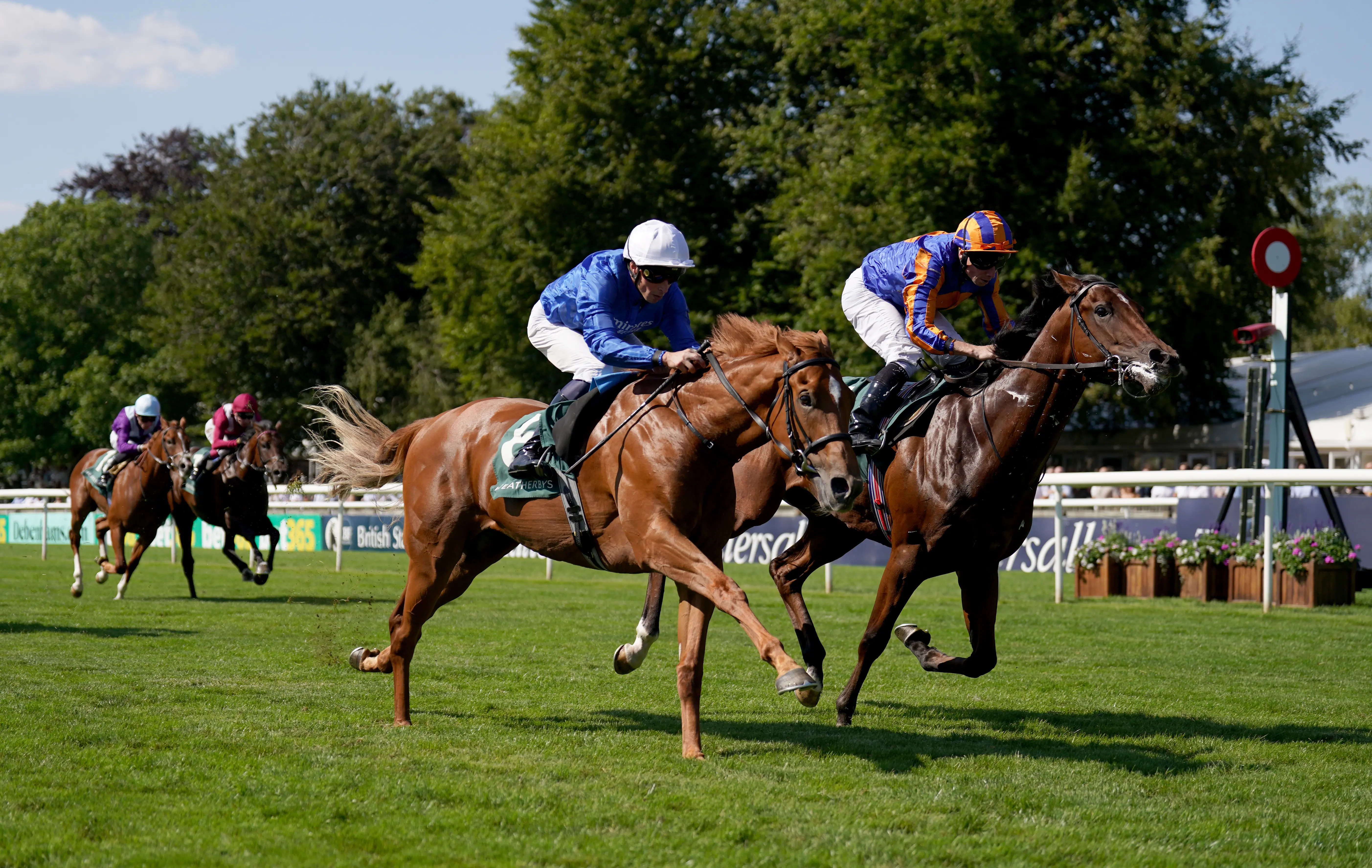
RaceiQ: How stride patterns could decide the 2000 Guineas
By Page Fuller
Last Updated: Sat 2 May 2026
We are now three years into the RaceiQ project, and with that comes a growing amount of tracking data that we can utilise in our race analysis.
It’s amazing to think that in the past couple of months we tracked our fourth Cheltenham and Aintree Festivals, and big credit must go to all of the broadcast, digital and engineering teams to get it to the point we are now. But with all of that said, I know you lot will be asking, how does it help us though?
Watch: 2000 GUINEAS WORLD POOL PREVIEW | Tips for Newmarket on Saturday & 1000 Guineas tips, featuring exclusive views from Ryan Moore and Tom Marquand!
Here at RaceiQ Headquarters, we tasked our data scientists to look at the Rowley Mile ahead of the Betfred 2000 and 1000 Guineas and how the data we have now collected could help us identify important characteristics.
For those of you reminding us that three years means that the sample size is still fairly small, you are correct.
However, we have already seen patterns emerging that can help us understand race suitability and interpret the formbook in even more detail.

It is no secret that Night Of Thunder progeny excel on the Rowley Mile course.
His offspring have an impressive 24% strike rate over a mile at the track and have beaten 62% of their rivals. Those numbers are approximately 17% and 58%, respectively, when examining his records across all tracks.
By contrast, Wotton Bassett’s progeny fail to shine at the track. Their strike rate is only 5% compared to 16% at all tracks, and they have only beaten 42% of their rivals, compared to 55% at all tracks.
So, how can we layer our RaceiQ metrics onto this traditional sire analysis to understand the requirements to win at Newmarket?
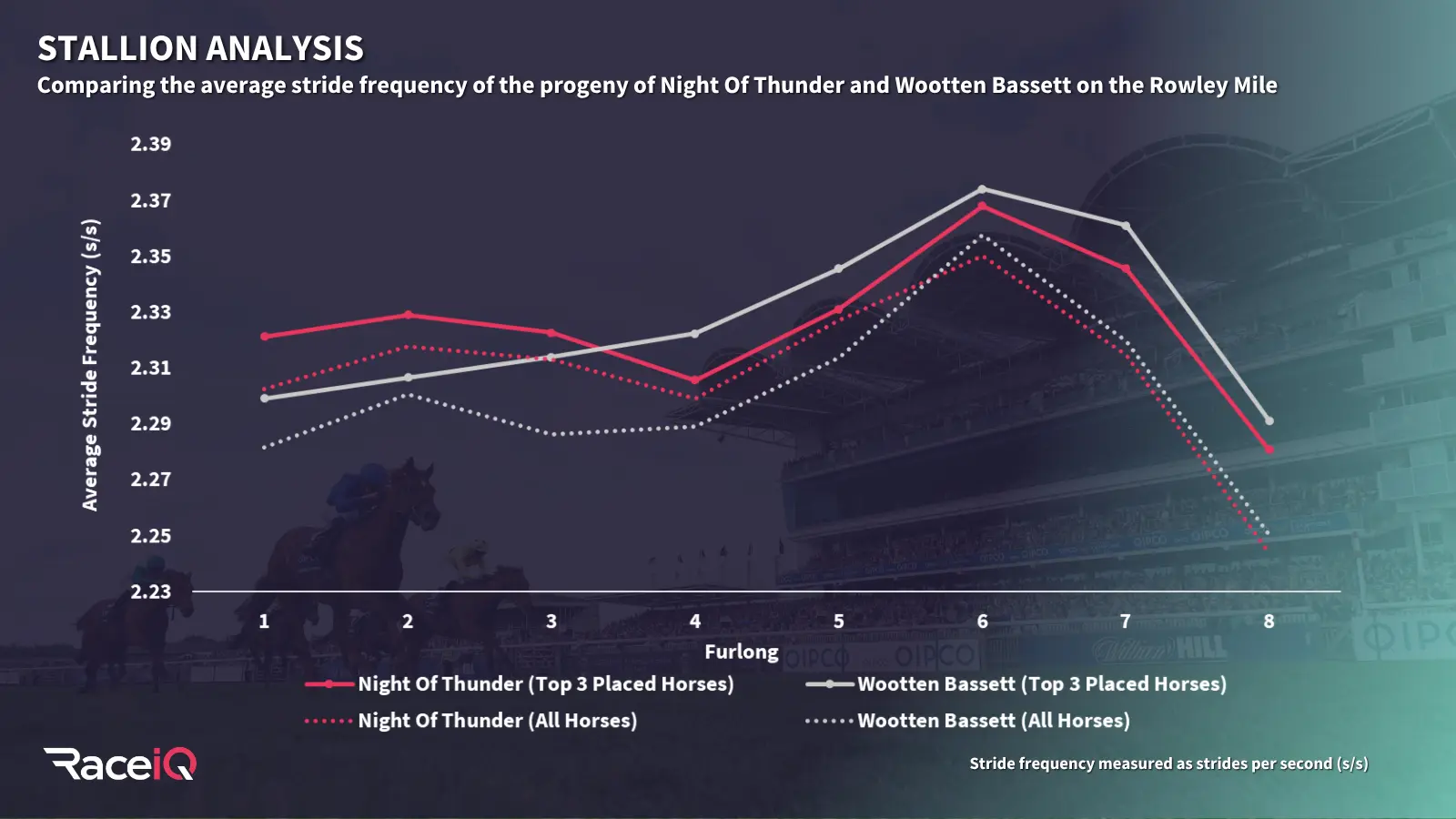
When we compare the two stallions’ progeny, it highlights that Night Of Thunder’s offspring can maintain a high stride frequency when racing on the track, whereas the few Wootton Bassets we have seen on the Rowley mile tend to start with a lower stride frequency and use it to quicken at the end. Presumably a more inefficient way of racing when the emphasis is on sustained pace:
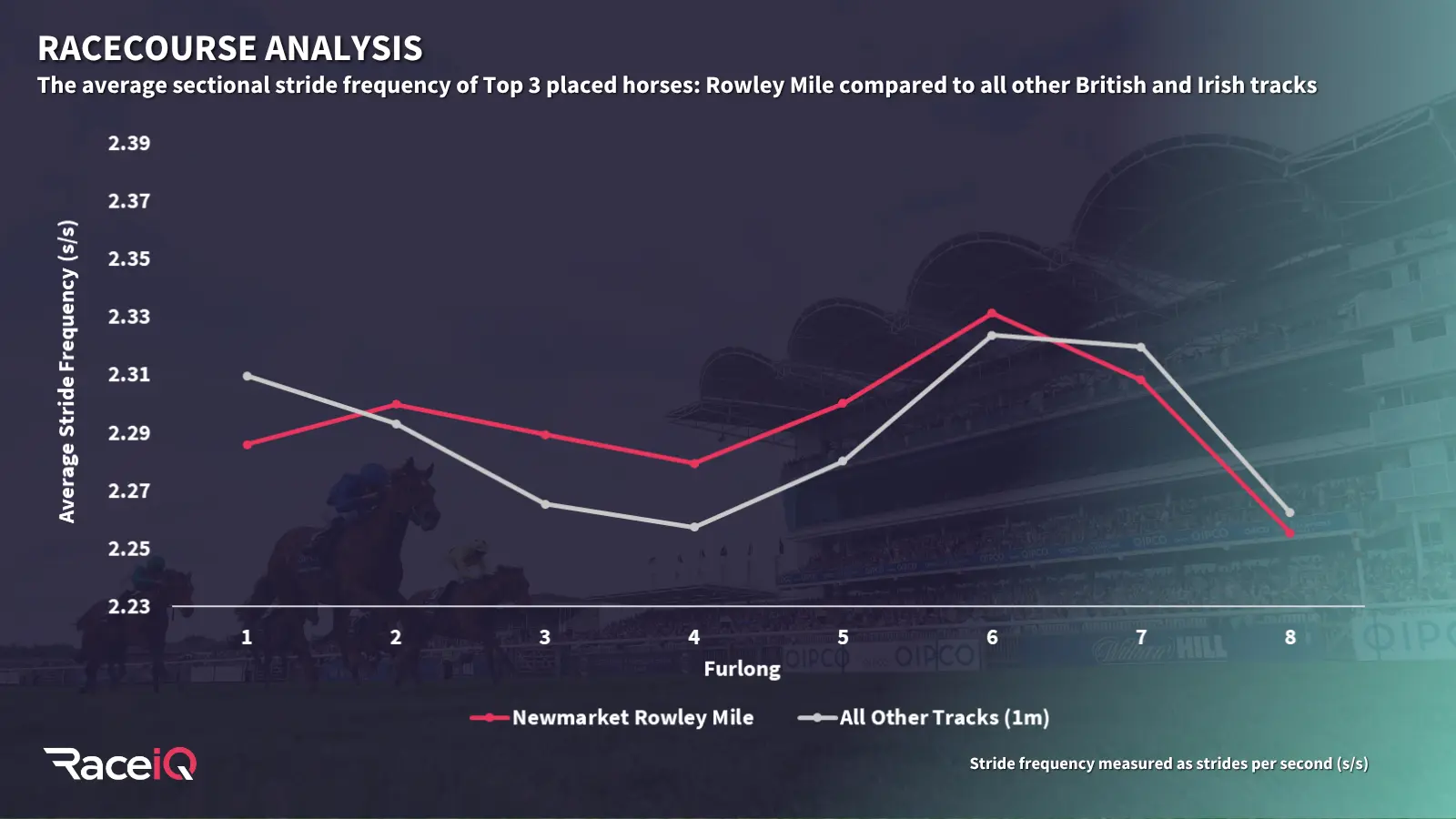
This Newmarket run style is illustrated further when you start comparing the furlong-by-furlong stride frequency of the top three placed horses on the Rowley Mile against the same over a mile on all tracks in general.
Once again, it demonstrates the requirement to maintain a consistently high stride frequency at Newmarket compared with other racecourses on both sides of the Irish Sea:
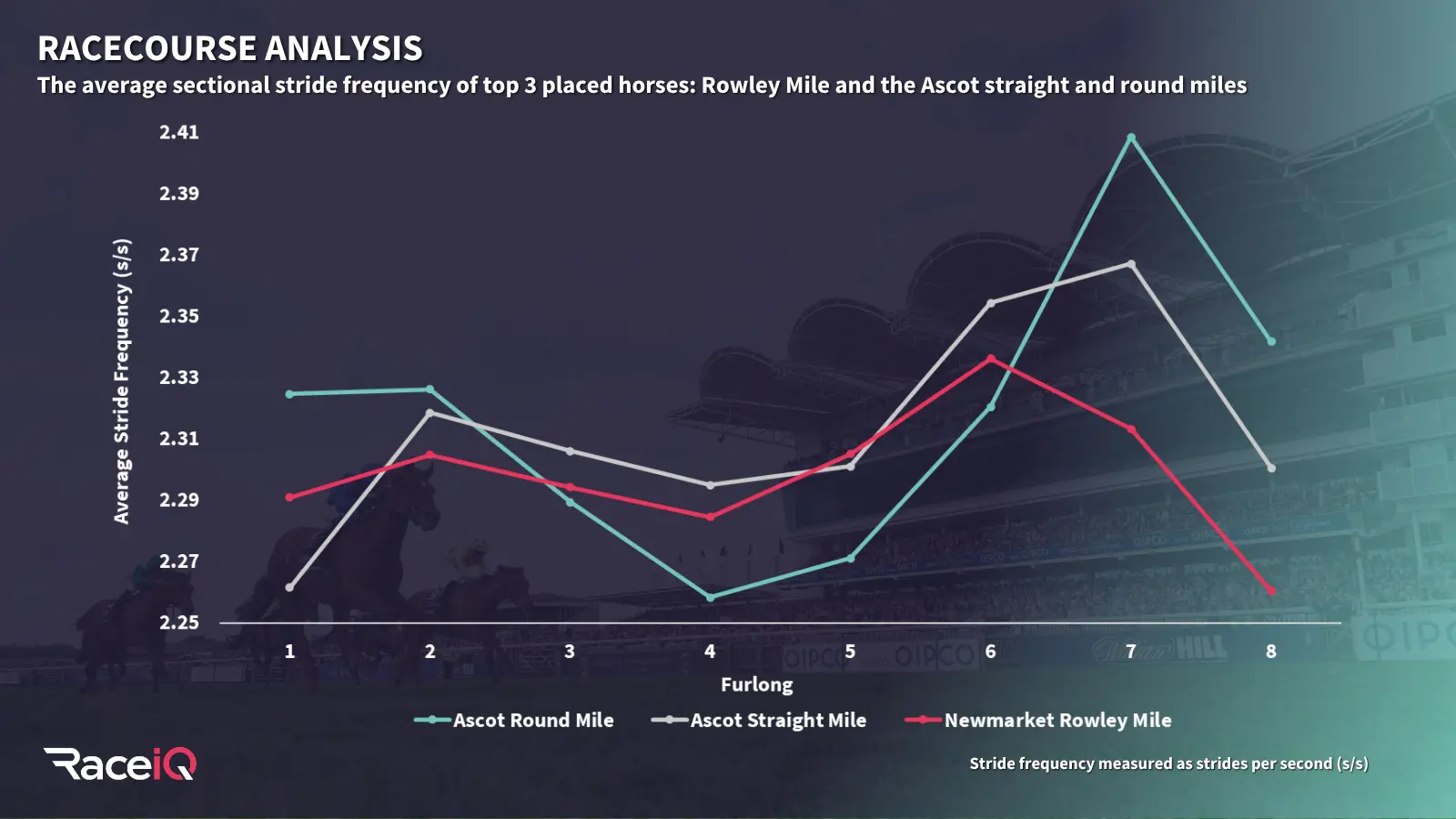
The past two runnings of the St James’ Palace at Royal Ascot saw the 2000 Guineas runners-up turn the tables on their conquerors, and once again, we can use sectional stride data to give us clues as to why that might have happened. This was pretty eye opening in understanding the difference between a straight and round mile.
The straight mile at Ascot profiles similarly to Newmarket, but when you have a look at how successful horses operate on the round mile in comparison, it takes a very different horse to win there.
Both Field Of Gold and Rosallion had a vicious turn of foot in their respective victories on the round course, and in hindsight, we can see how that same turn of foot would have been blunted on an evenly run straight mile in the Guineas:
The emphasis on a sustained sprint on the Rowley Mile continues when assessing the track through the lens of our other metrics as well:
•
The average winners’ Finishing Speed Percentage (FSP) on the Rowley Mile is 101%. This means that winners tend to finish the final furlongs at a similar pace as they complete the race as a whole.
•
Context: The round course at Ascot has an average FSP of 105%
•
54% of races in our database have been won by the horses that finished with the highest FSP of the race.
•
Context: This is the eighth highest percentage of the 45 flat tracks in our database
•
No previous winner of either of the past three 2000 or 1000 Guineas clocked a furlong faster than 11.13sec in their respective victories
And in terms of this year’s 2000 Guineas?
The two horses at the head of the betting are both by Night Of Thunder.
A reasonable starting point, as we have already established. So, if we want to land on one, what does the above analysis suggest? Well, what does my interpretation of the above tell me. You might have come to your own (different?) conclusions already.
Bow Echo was the winner of last year’s Royal Lodge Stakes over course and distance. So, he has proven form at the track, plus he’s had two racecourse gallops there.
However, the Par Sectionals illustrate that it turned into a bit of a sprint. Bow Echo’s Top Speed of 40.75 mph in the penultimate furlong was the fastest of the field, and each of his last three furlongs were recorded as ‘Fast’ compared to Par.
It was not the sustained speed test that we are likely to see in the Guineas, and when you compare his striding against the pattern we have established above, he still has a lot to prove:
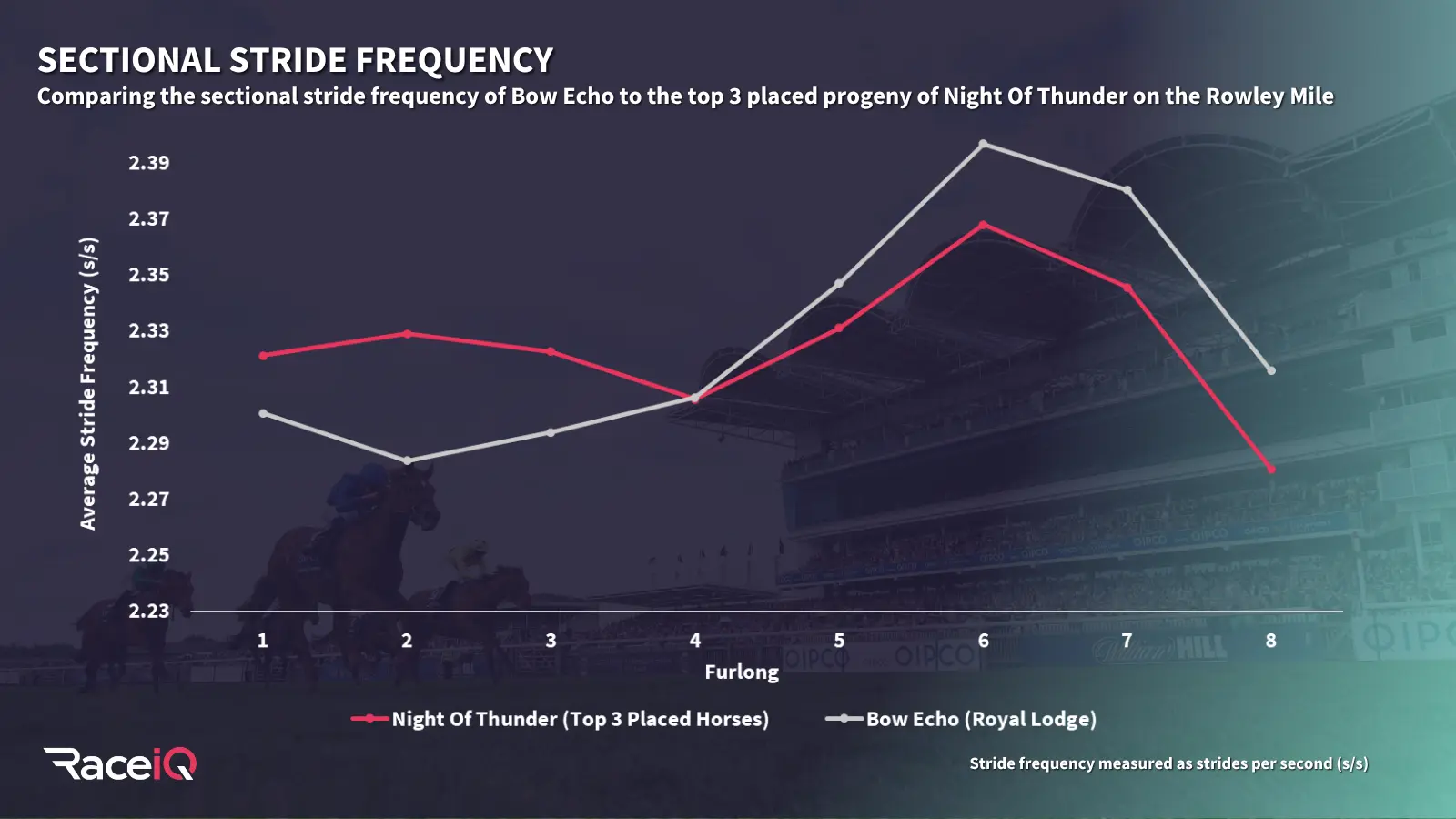
Distant Storm, on the other hand, fits the profile quite nicely.
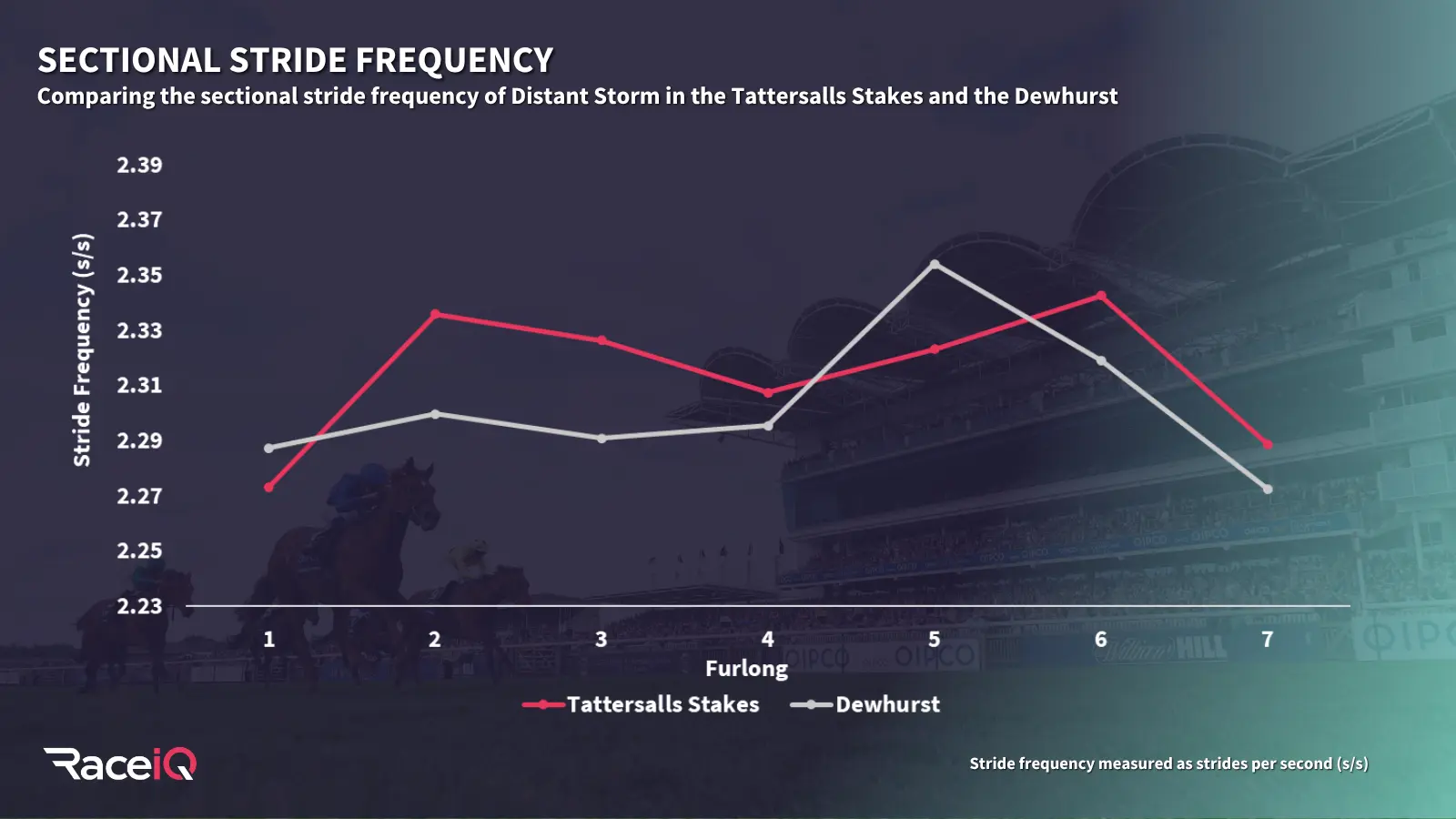
He is untried further than seven furlongs, and was beaten in the Dewhurst, but once again we can see how his striding is far better suited to a track like Newmarket in an evenly run contest.
In the Tattersalls Stakes, on his penultimate start, the fractions in front were honest, and he was the only horse to quicken in the finish.
His FSP of 102.76% was the only above 100%, and he was also the only horse to break 40 mph with a Top Speed of 40.46 mph in the penultimate furlong. The difference with him, compared to Bow Echo, was that he was able to reach that speed without having to quicken his stride too much.
As we can see from the graph below, his profile in defeat in the Dewhurst was quite different. His early revs were low, and he had to turn over his stride far quicker in the finish. This suggests that we will see a far better horse than we did in the Dewhurst if he can find an even rhythm with his stride.
We know he is capable of such, and how well that striding pattern suits the Rowley Mile at Newmarket:
He was never closer than he was at the line in the Dewhurst, and his two latest runs suggest that he should take the step up to a mile, quite literally, in his stride.
READ MORE:

Related posts
Under The Radar: Paddy Magee nominates three to follow
Ross Millar's Monday tips: "he is undeniably well handicapped"
Bond Thoroughbreds: the inside track on their top team
Trustyourinstinct flies home to land Curragh Cup
William Buick set to be reunited with Touleen at Ascot
Featured offers

Bet £10 get £30 in Free Bets with BallyBet
T&Cs Apply
Claim Now

Get a £50 free bet when you bet £50 with Coral
T&Cs Apply
Claim Now

Bet £10 Get £40 in free bets + Money back 2nd to SP fav with BOYLE Sports
T&Cs Apply
Claim Now

Bet £10 get £30 in Free Bets with TalkSportBet
T&Cs Apply
Claim Now

Bet £10 get £40 in free bets with Kwiff
T&Cs Apply
Claim Now
Copyright 2026 Racing TV - All Rights Reserved.
Please bet responsibly
Copyright 2026. All rights reserved