Login
WATCH FREE
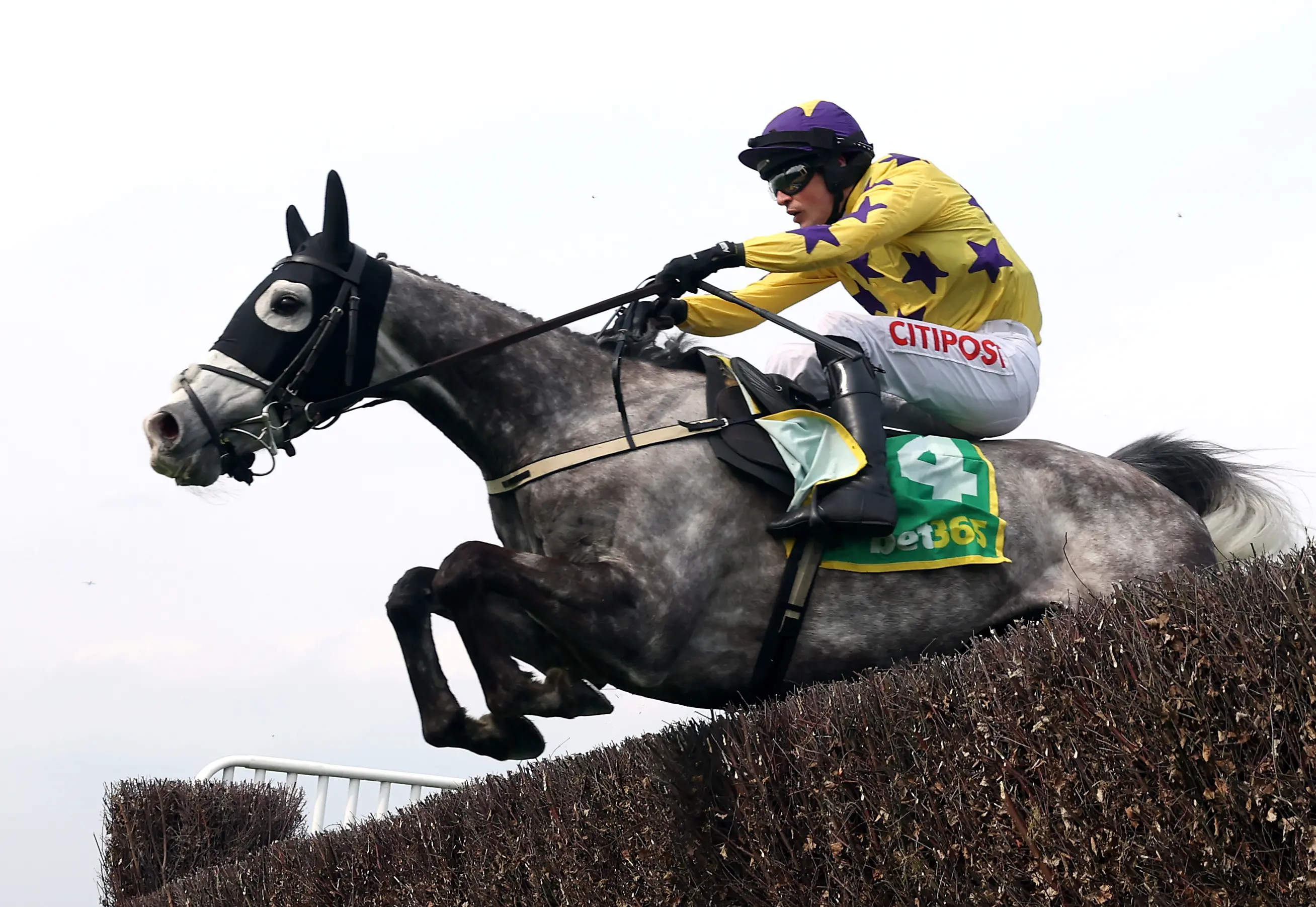
Road To Cheltenham: How Il Etait Temps came undone at Ascot
By Lydia Hislop
Last Updated: Fri 23 Jan 2026
Never knowingly underbold.
“It was a Mickey Mouse race,” declared Barry Connell last Sunday, thus bookending the Clarence House with trash talk. “I can’t see any of those horses having a chance in the Champion Chase. I couldn’t see it before the race, and I can’t see it afterwards. I think if we jump a clear round, we win.”
You can understand his confidence. Marine Nationale is a dual Festival winner, proven at the ever-turning Old Course which places an emphasis on pace. Meanwhile, Il Etait Temps failed to translate the roughings-up he’d dispensed to Jonbonat Sandown when facing that same rival over the different test of Ascot.
Sparky front-runner Thistle Ask ensured it was very different. In that sense, the Clarence House tested the ability to cruise and jump accurately at a high tempo whilst retaining sufficient capacity to be effective at the business end. Jonbon alone passed that test and, whilst that doesn’t make him a Champion Chase threat, it’s a timely reminder of his enduring class and consistency.
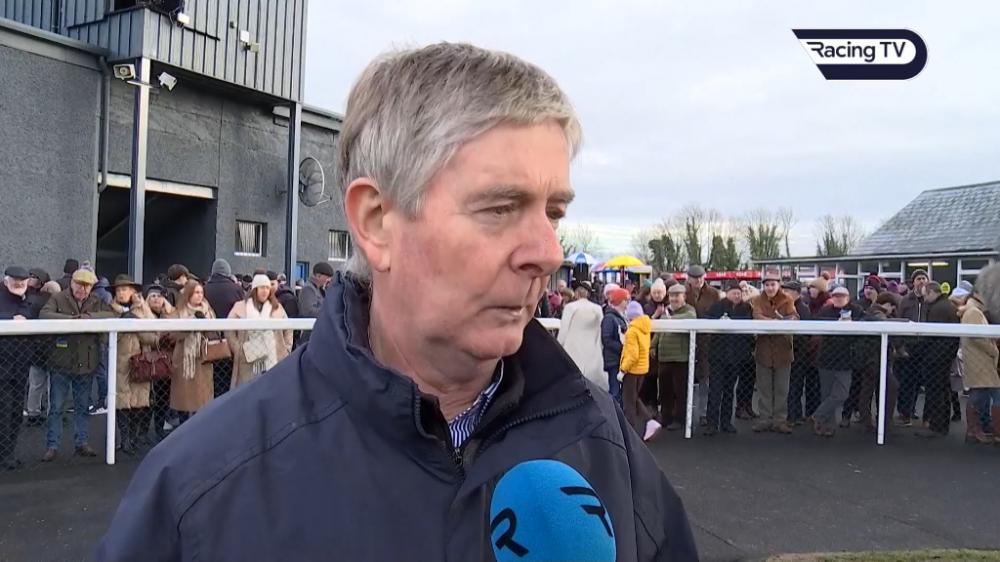
If he jumps a clear round, he wins: Connell offered a forthright view on Marine Nationale's Champion Chase defence last Sunday
The likeliest explanation for Il Etait Temps’ abject performance is something was ailing him. Yet in that scenario, to be a relevant Festival factor he’ll need to recover not only from that unexplained issue but also the tired fall he sustained at the second last, after which he lay on the cold, wet earth for a good ten minutes before thankfully getting to his feet.
Ross Doyle, racing manager for his owners Hollywood Racing and Barnane Stud, issued good news two days later. “The team at Ascot looked after him very well,” he said. “Paul [Townend, his rider] stayed with him the whole time . . . thankfully, he got up and they were very happy with him when they got him back into Closutton as he was straight into his feed, looking bright and alert.”
Townend’s own post-race analysis was characteristically succinct. “Just put a line through it,” he said. “It was too bad to read anything into it. He never travelled. We just need to find out why that happened, and hopefully he'll recover in time for March.”
Doyle also asserted what happened was “nothing to do with the ground”. I’m not so sure. Il Etait Temps’ Clonmel and Aintree victories, over four and three furlongs further respectively, were registered on going comparably soft to Ascot – albeit, in the case of Clonmel, against lesser opposition.
However, Timeform, which employs time-based going assessments rather than relying on the vagaries of official going descriptions, suggests his very best efforts (4-6lb better) have thus far taken place on good-to-firm ground at Sandown last April and on good-to-soft at the same venue in December’s Tingle Creek.
Yet I’m not arguing ground as the primary determinant in his performance but rather as potentially an exacerbating factor. The crux of the matter is whether Townend is correct to lean towards diagnosing an underlying issue for his mount’s clunker or whether this race has starkly exposed an Achilles’ heel?
To apply this question to Ascot’s visuals: did Il Etait Temps need urging along after the first fence, his jumping increasingly lacking assuredness, because there was something wrong or was he unable comfortably to sustain that pace from the outset?
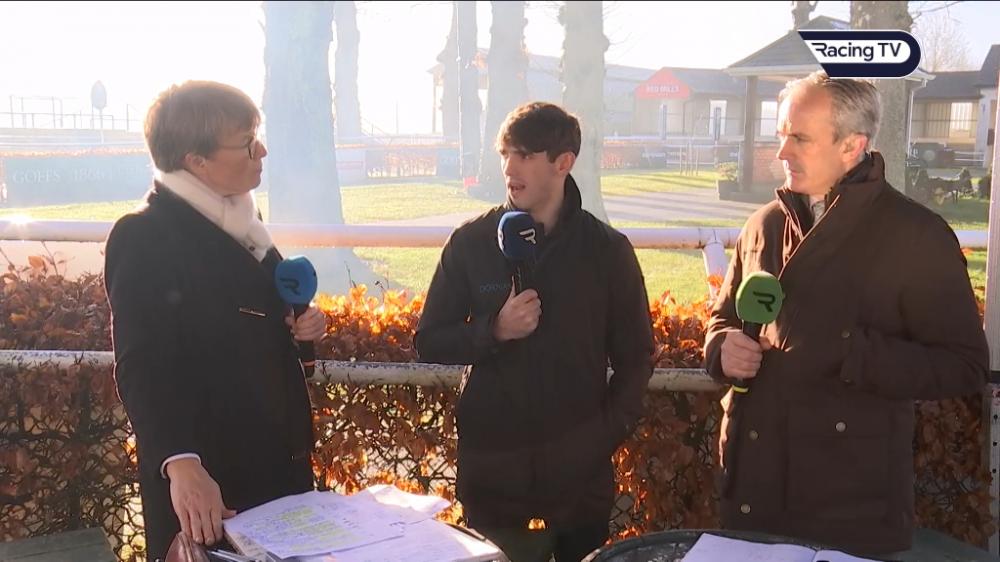
Enjoy this week's Road To Cheltenham show in full with Darragh O'Keeffe
In this week’s Road To Cheltenham show, Ruby Walsh said he had tended towards the latter explanation whilst watching the race live but has since reassessed, having heard from his successor as Closutton stable jockey that Il Etait Temps was also lifeless in the preliminaries. You’ve got to take that testimony on board, clearly. Equally, we humans are prone to backfitting to suit our preferred narrative, especially – understandably – those closest to a horse.
The race got me thinking about whether the deposed Queen Mum market leader had ever been taken along that fast before, particularly to a first fence that comes up so quickly. Thistle Ask recorded an opening furlong of 11.39sec, in doing so outflanking Gidleigh Park and Jonbon for the lead after both had set out to jump upsides him at the first fence.
Harry Skelton was determined to maximise his progressive mount’s key assets of pace and accurate jumping, continuing in that vein until Jonbon – having bravely hung in there despite putting down when asked long by James Bowen at the eighth – was stamina-laden enough to stay on past, despite getting the slightly lesser jump at the last.
Meanwhile, Gidleigh Park’s jumping quickly unravelled – after diving precipitately at the fifth and sixth, Bryan Carver wisely drew stumps. It currently appears this horse is caught betwixt and between – not quite staying two-and-a-half miles but not good enough to operate in this company over shorter trips, at least not at this track
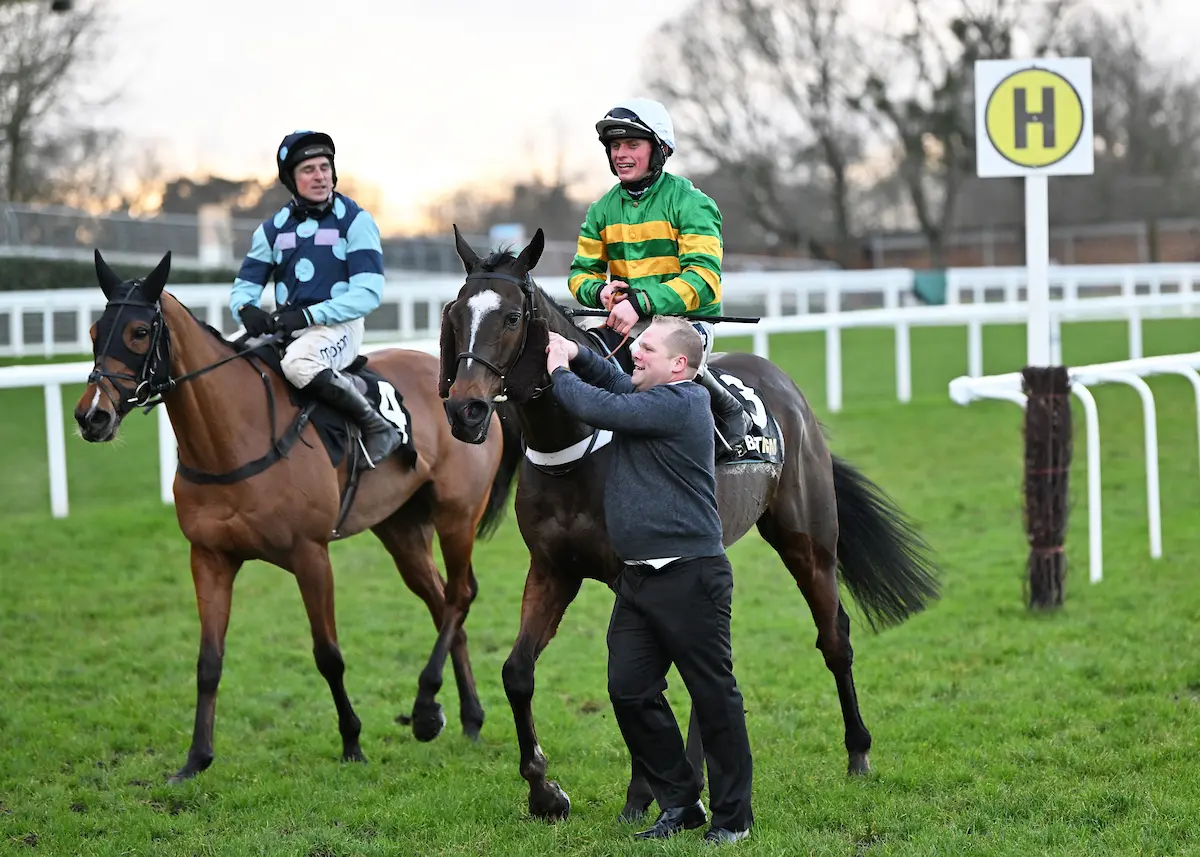
Jonbon and Thistle Ark after their compelling battle (focusonracing.com)
Yet Il Etait Temps struggled to jump cleanly, too. To repeat, it’s entirely possible he was just having an off-day but it looked an effort for him to negotiate obstacles whilst trying to keep up. By halfway, Townend was explicitly niggling him along, so it’s to his credit he worked his way determinedly into second. Yet he forfeited that almost immediately when reaching three out and then taking his tired fall at the next.
Thistle Ask followed up his rapid first furlong – quicker than Il Etait Temps has ever encountered before – with the next at 13.99sec. He would dip under 14 seconds twice more, with a 13.92sec fifth furlong and a 13.32sec sixth. From the Irish Arkle onwards, in the first mile of any contest, Il Etait Temps had only three times previously experienced sub-14sec pace and only for a single furlong in three different races.
When asked for a turn of speed at the end of a more steadily run race, it’s a totally different story, however. In those circumstances, Il Etait Temps is all over it. In races run to suit, when he’s accelerating late on to settle matters, he can string together sub-14sec furlongs and approach his obstacles at speeds of between 32 and 33mph. But the first half of those races were always slower.
Ruby was right to cite the Celebration Chase as a potential counter argument to the one I am floating here. Il Etait Temps’ RaceiQ entry speeds over the first three fences of that Sandown contest were broadly comparable, although on average the Clarence House was 0.4mph quicker.
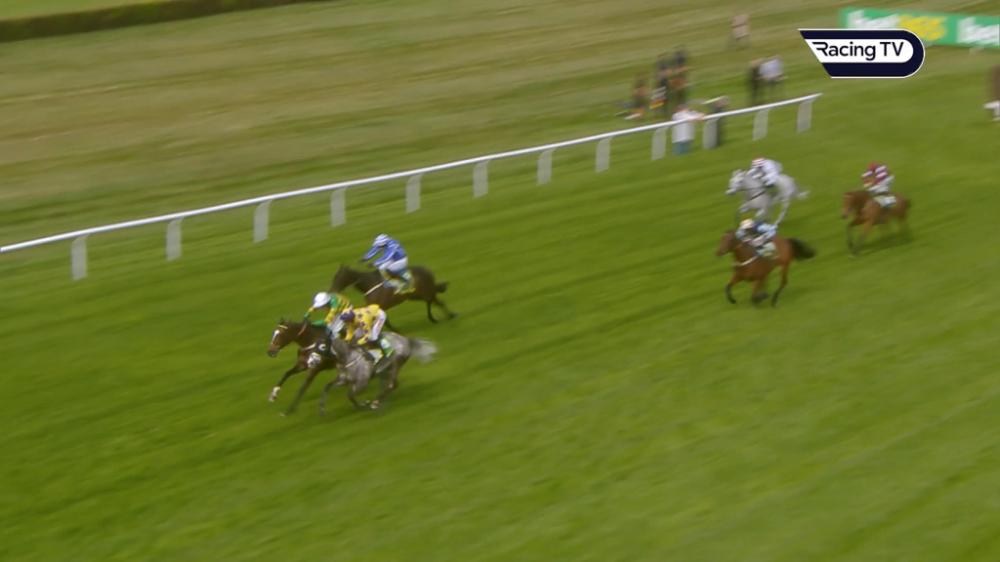
Il Etaits Temps thumped Jonbon in the Celebration Chase but the tempo of the race, on faster ground, was different to the Clarence House
But, first, the Sandown race then slowed down for the next three fences whereas the Ascot race ratcheted up – on average, about 3mph quicker. Second, he achieved that speed at Sandown on good-to-firm ground. Here, he was asked to exceed it on soft ground. That’s got to take a lot more out of you if it’s not your natural flow. It might explain why he was knackered.
Only at the second last in the 2023 Supreme (34.83mph) has Il Etait Temps ever approached an obstacle quicker than the fourth fence in the Clarence House (34.62mph). Taking the average entry speed over the first eight obstacles of every race he’s run in the RaceiQ database – roughly the equivalent of when he began to tire at Ascot – he has never been so fast over such a sustained period.
Would he face a similarly exacting pace in the Queen Mum? Yes, is the answer, if we’re talking about something akin to last year’s edition – and why wouldn’t that be a reasonable measure given most of its main players are again due to turn up again?
At the fore, front-running Energumene’s average entry speed at his first three obstacles was 32.92mph. For pressing Quilixios, it was 32.85mph. For patiently ridden Marine Nationale, it was 32.58mph. The topographies are clearly different but Il Etait Temps, when looking sketchy in the Clarence House, averaged 31.18mph at the first three fences. In his Arkle, it was 29.41 mph.
This data doesn’t prove Il Etait Temps won’t be able to produce his best form in the Champion Chase because the Clarence House is only one piece of evidence in which different factors might have been at play. However, I do think it’s suggestive. A lot will depend on the ground at the Festival, too.
Most pertinently, I don’t expect Willie Mullins to change target based on a single item of evidence so switching up to the Ryanair seems unlikely, with or without Fact To File occupying that ground. So, hopefully, we might get to find out. (Albeit, racing being racing – a multi-factorial sport and utterly compelling for it – something else will probably happen. The Champion Chase has played the role of Queen Of The Upsets in recent years.)
The Grade One winning machine is not bust
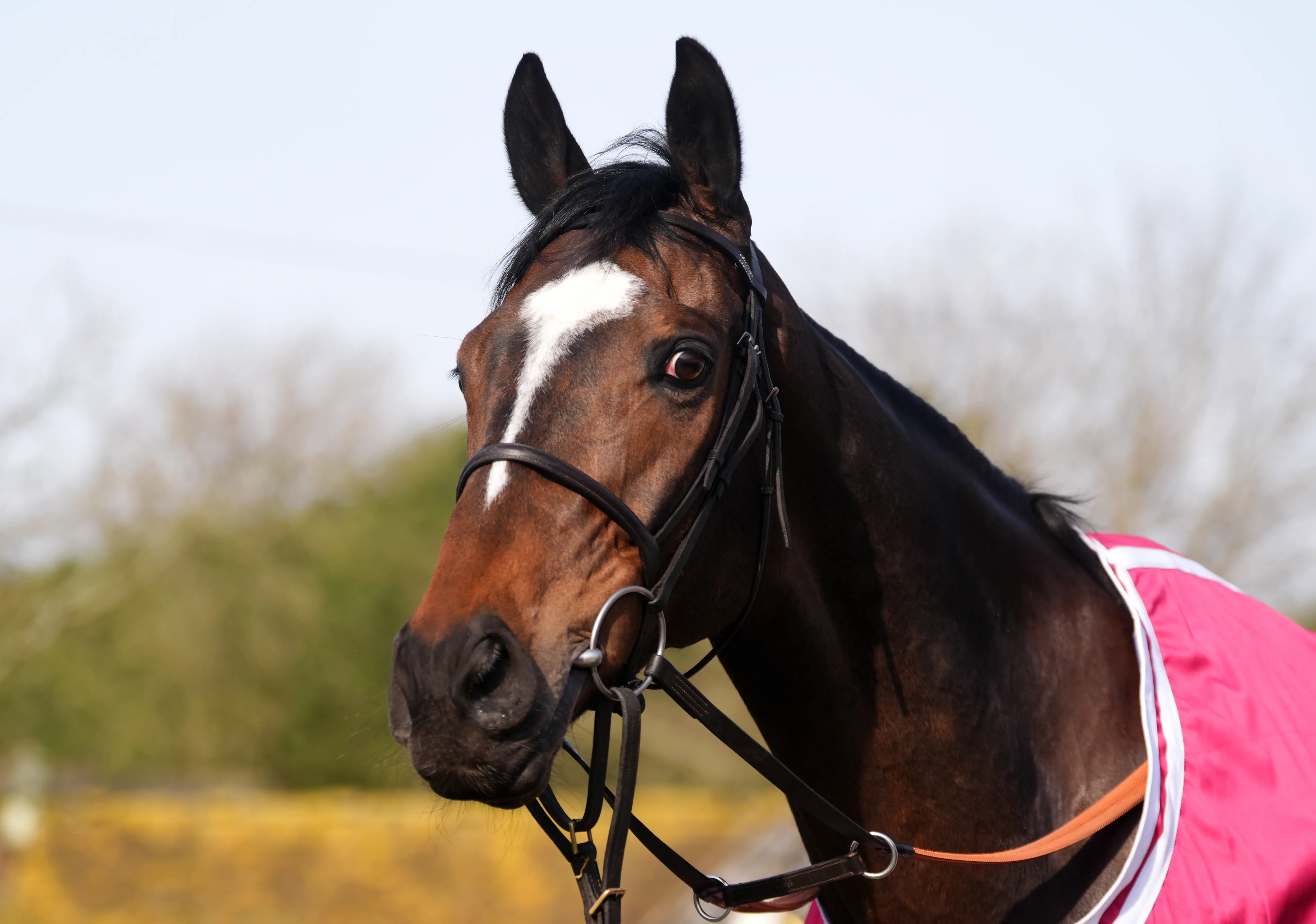
Jonbon has now won 11 Grade One races
Jonbon’s redemptive victory at Ascot, both for horse and rider, was a reminder to us racing fans not to write off a horse so soon. Only 12 months ago, we were broadly lauding this horse for his high-class consistency but the prevailing reception as he stepped up to defend his Clarence House title last Saturday was as if he were a busted flush. Instead, he turned up his Grade One tally to 11. One louder.
I’d even go so far as to say he’s over-priced for the Champion Chase at 18-1. We don’t need to discuss his Cheltenham record again – not least because Matt Tombs has already done that for us. In his column earlier this season, he hypothesised that Jonbon “struggles to get into a rhythm” due to there being much more jumping early on at Cheltenham.
At Cheltenham’s Old Course, its first fence comes up marginally quicker than Ascot’s but its second follows shortly afterwards, before a gallop of more than twice the distance to the third fence, followed very quickly by the fourth – and we’re not even half a mile into the contest – before another long gallop to the fifth.
At Ascot, there’s a long gallop around a bend to the second and relatively close third and then a very long gallop around a longer bend to the fourth, which comes up between five and six furlongs into the race. So, the patterning of the fences diverges between the two courses. It’s one of the key elements that make this sport so compelling – and some will play towards and against different horses and their preferences.
However, the fact is Jonbon fluffed the standing start last March and was always playing catch-up from that point. At Ascot – replete with the cheekpieces he’s only worn the last twice – he started promptly but was reined back into third by Bowen behind Thistle Ask’s frenetic pace after the first fence and perhaps benefits from that extra time to settle in before facing the next. It’s possible.
Even so, I don’t see him as having half the chance of L’Eau Du Sud – who’s half the price and beat him on their mutual seasonal debuts on heavy ground that serves the winner well and Jonbon dislikes. Nor do I see him as having a comparable chance to Thistle Ask, who’ll be taken on both for the lead and the who-can-jump-and-race-furthest-right contest by Solness.
Final thought on the two-mile chasing division: it was heartening to hear Darragh O’Keeffe being so confident about Quilixios’s return in this week’s Road, whilst expecting it to take place in the Champion Chase rather than next weekend’s Dublin Chase. He’d have been clear second-best last March and might even have bustled up the winner. He won’t be anything like 16-1 on the day.
Lydia’s selections:
Advised 28/11/25: William Munny at 12/1 for the Unibet Champion Hurdle [Non-runner]
Advised 21/12/25: Majborough at 6/1 for the BetMGM Queen Mother Champion Chase
Ruby’s selections:
Advised 08/01/26: I Am Maximus each-way at 33/1 for the Boodles Cheltenham Gold Cup
FREE RACING TV TRIAL!

Related posts
Under The Radar: Paddy Magee nominates three to follow
Ross Millar's Monday tips: "he is undeniably well handicapped"
Bond Thoroughbreds: the inside track on their top team
Trustyourinstinct flies home to land Curragh Cup
William Buick set to be reunited with Touleen at Ascot
Featured offers

Bet £10 get £40 in free bets with Kwiff
T&Cs Apply
Claim Now

Bet £10 get £30 in Free Bets with TalkSportBet
T&Cs Apply
Claim Now

Bet £10 get £30 in Free Bets with BallyBet
T&Cs Apply
Claim Now

Bet £10 Get £40 in free bets + Money back 2nd to SP fav with BOYLE Sports
T&Cs Apply
Claim Now

Get a £50 free bet when you bet £50 with Coral
T&Cs Apply
Claim Now
Copyright 2026 Racing TV - All Rights Reserved.
Please bet responsibly
Copyright 2026. All rights reserved