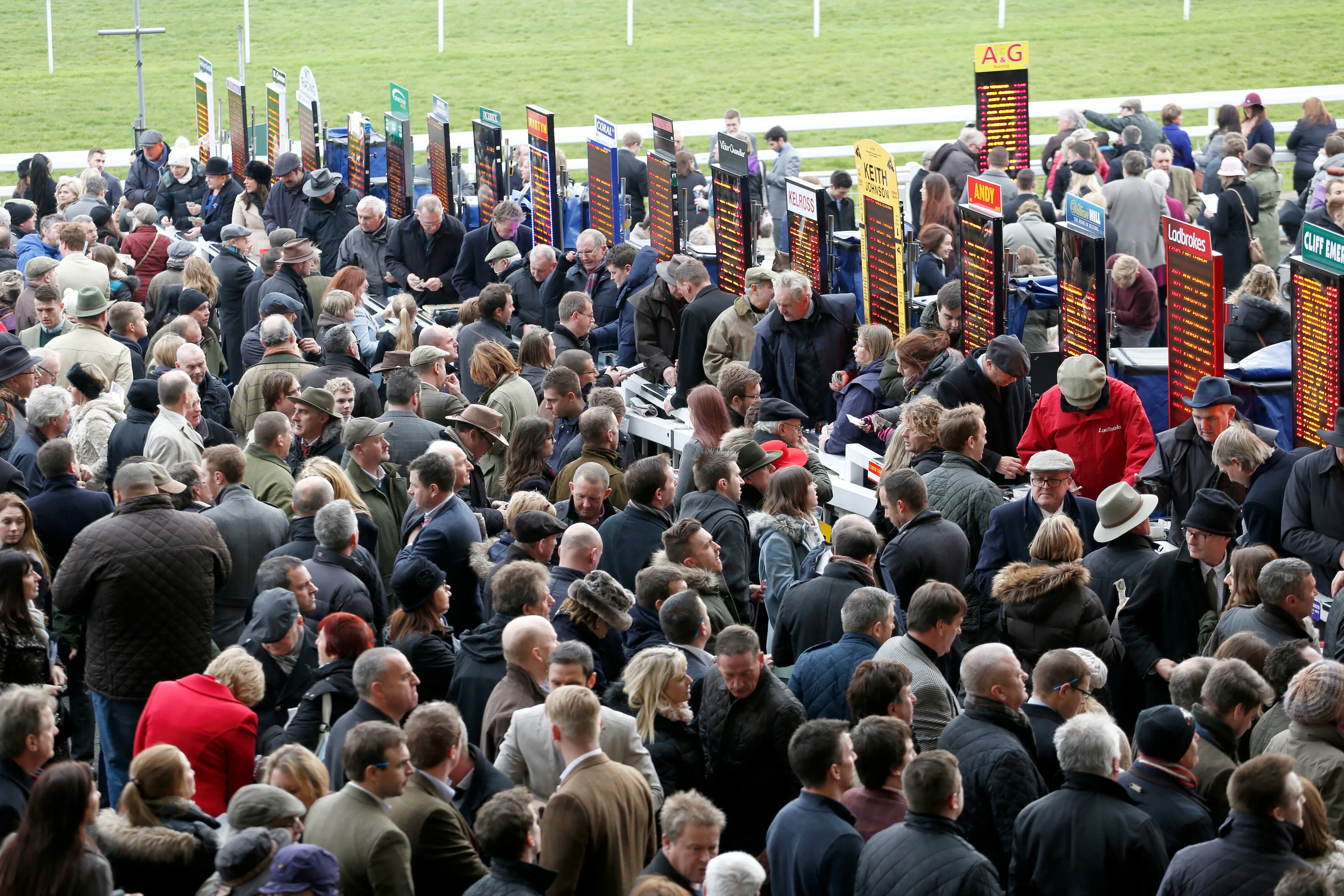
Right To Bet survey: British racing faces exodus of punters
By Racing TV
Last Updated: Tue 5 Dec 2023
More than half of bettors will stop or significantly cut their betting on horseracing if stringent new checks are introduced, a cross-industry survey of over 14,000 respondents has found.
The proposed checks would see bettors having to prove that they can afford their hobby if they sustain losses as low as £1.36 per day and, rather than submit to these checks, respondents to the survey organised by the British Horseracing Authority in conjunction with Racing TV, At The Races and the Racing Post made clear that they would turn their backs on the country’s second-largest spectator sport which contributes more than £4bn a year to the British economy.
Survey aims and Gambling Commission proposals

(Focusonracing.com)
The aim of the Right To Bet survey was to provide clear and quantifiable evidence of racing fans’ opinions on these proposals that could be shared with the Government and the Gambling Commission. The questions echoed those set out in the Commission’s consultation in a more accessible format and were accompanied by an explanation of what is being proposed. The voices of everyday bettors have often been lost in the debate on affordability checks and the survey has given them a chance to collectively make views known, both to Government and the Gambling Commission.
The proposals consist of two tiers of checks. The first level would test financial vulnerability by way of "unintrusive" checks that would be conducted when a bettor reaches a £125 net loss within a rolling 30-day period, or £500 within a rolling 365-day period. The checks would use "publicly available data" and look for issues such as bankruptcy orders or a history of unpaid debts. Such checks would not need to be repeated within a 12-month period.
The second level assesses financial risk using credit reference data which would be triggered by losses greater than £1,000 within a rolling 24 hours or £2,000 within 90 days. The triggers for such enhanced assessments will be lower for those aged 18 to 24. However, when a credit reference agency is unable to provide sufficient information, operators would need to ask customers for data through open banking or providing documentation. At this tier, checks could take place as often as twice a year.
Hundreds of thousands already being asked for financial information
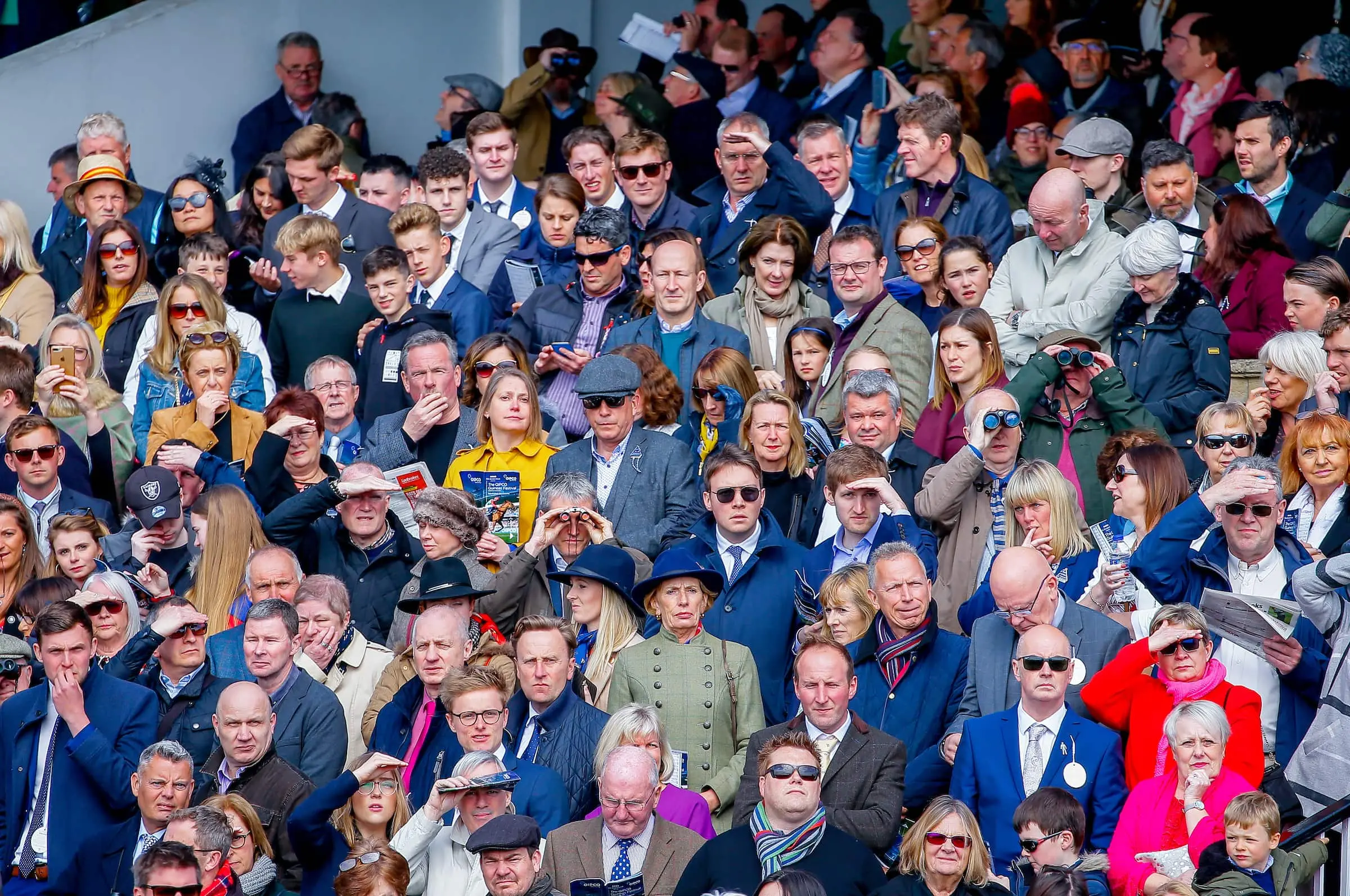
More than 14,000 people responded to the survey and the eye-catching results included the fact that, even before the new affordability checks are introduced, hundreds of thousands of bettors are already being asked to provide proof they can afford to enjoy their hobby.
If the Government and Gambling Commission proceed with the current plans, 52 per cent of respondents say they would either bet significantly less on horse racing or stop betting on the sport at all. This would have significant negative impact on the racing industry due to a substantial reduction in funding due to a fall in the Horserace Betting Levy.
And despite fears about black-market betting activity being played down by the Gambling Commission, the survey showed that one in 10 bettors is already using illegal providers and four in 10 will consider it if the new checks are introduced.
At the same time, using a bettor’s postcode or job description to potentially determine those ‘at risk’ was opposed by 85 per cent of respondents. Assessing people’s eligibility to place a bet based on their job title or postcode is highly discriminatory and British racing will continue to oppose this proposal. The results of the survey come as the Gambling Commission’s consultation on remote gambling is set to close on Wednesday 18 October.
Following significant anecdotal evidence, a decision was also taken to ask racing bettors whether they had already experienced affordability checks to build a clear picture of the current situation.
The Gambling Commission has consistently stated that only 3 per cent of betting accounts will be subject to so-called frictionless affordability checks on their online accounts, with just 0.3 per cent encountering the more stringent ‘enhanced spending checks’.
However, it is clear that affordability checks have already arrived by stealth for many, and their frequency is far greater than what has been predicted. With 26 per cent of respondents already subject to intrusive checks, the case for reviewing the idea of blanket affordability checks could not be clearer. Instead, measures must be proportionate and targeted at individuals and their specific circumstances. It is our firm view that until the Government has legislated to make changes to gambling regulations and until such time as checks have been subjected to a pilot and are genuinely "frictionless”, that interventions should only be happening in cases where an operator has spotted genuine signs of vulnerability because of tracking an individual bettor’s behaviour.
Black market concerns and Levy implications
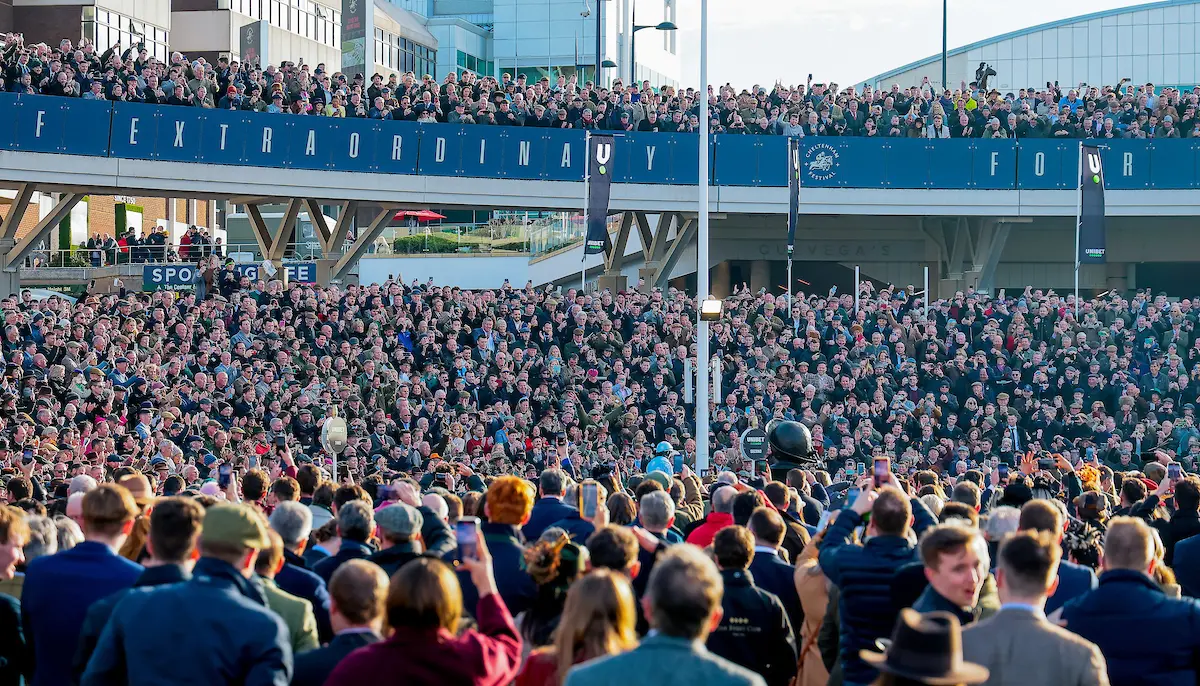
Horse racing is Britain
Affordability is only one potential marker of harm for problem gamblers. Given the fact that millions of people enjoy betting safely each year, questions can legitimately be asked about why the Government and Gambling Commission are seeking to dictate how people choose to spend their money in horseracing in a way that it does not seek to do in any other leisure activity, including playing the National Lottery, purchasing alcohol, cigarettes or fast food, or shopping online.
The current size of the black market has also been consistently underplayed by the Gambling Commission, as well as the potential increase in black market activity if blanket affordability checks are to be implemented. The results of British racing’s survey highlight the impact that affordability checks have already had on driving black market activity, with 9 per cent having used an unregulated bookmaker, while 12 per cent have been approached by one. Any increase in black market activity will have devastating consequences for those with gambling addictions as unregulated betting companies provide no safer gambling tools and are not part of ‘GamStop’.
In addition, the potential cost impact of proposed affordability checks on the sport could result in a 11 per cent reduction in the Levy. The resultant loss of value to media rights deals could see the funding from these reduce by 15 per cent, leading to a reduction of overall funding to racing of millions of pounds.
"This survey offers the vital voice of the racing punter"
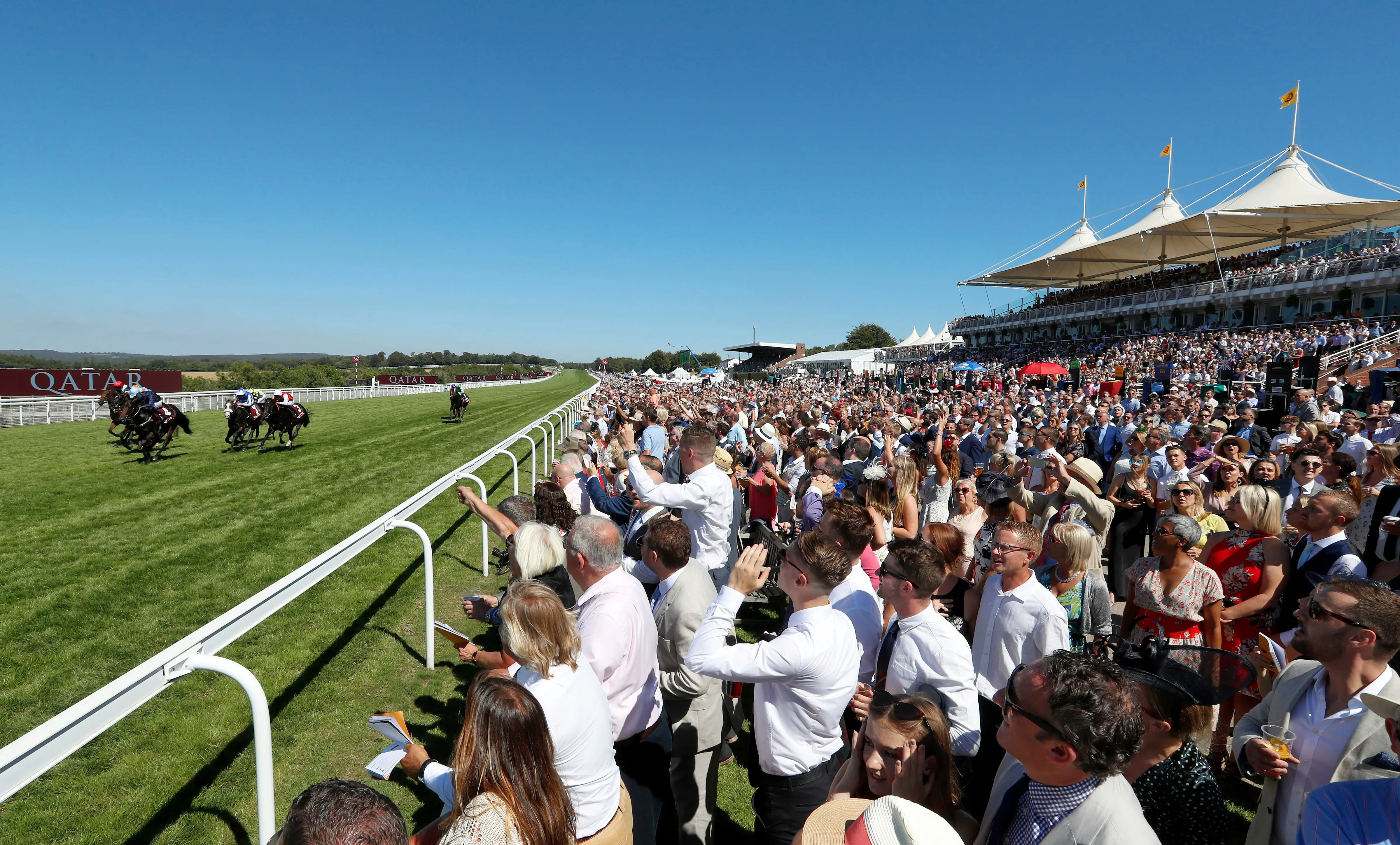
(Photo: focusonracing.com
The British Horseracing Authority will submit a detailed response to the Gambling Commission’s consultation, on behalf of British horseracing, which includes data from the ‘Right to Bet’ survey.
Racecourse Media Group CEO Martin Stevenson said: “This survey offers the vital voice of the racing punter, who is not being listened to as they should be. It is essential that these illuminating and stark findings from those most affected are properly digested by the Minister, Stuart Andrew MP, and the Gambling Commission. We thank everyone who partook in the survey – we truly believe your voice will be heard.”
The BHA’s Director of Communications and Corporate Affairs Greg Swift said: “The results of the survey demonstrate a clear rejection by British racing bettors of the measures that are being consulted on by the Gambling Commission. It also demonstrates that for a significant proportion of bettors, affordability checks are already here and impacting on their wholly legitimate hobby. We thank everyone that took the time to complete the survey.”
Racing Post editor Tom Kerr said: “The Right To Bet survey results align with what racing fans and punters have been telling us for years. Illiberal and invasive affordability checks are not only deeply unpopular, they are driving bettors towards the black market and away from regulated operators, which will cause untold damage to British racing and fail to achieve the stated aim of increasing protections for punters.”
At The Races CEO Matthew Imi said: “The Right To Bet survey results offer a very clear indication of the damaging impact which unwarranted affordability checks are already having on racing fans and bettors, and on the sport as a whole. Passionate punters have a key role to play in this debate and we are grateful to those who took the time to share their views.”
Most viewed
King George VI Chase: a guide to all the possible runners and verdict
Road To Cheltenham: Step in now for Majborough ahead of quick return
Matt Tombs: Christmas trends and a 16-1 bet for the Gold Cup
Ross Millar: Ascot review and Monday tips
Golden Ace up against it in Christmas Hurdle, says Scott
Copyright 2025 Racing TV - All Rights Reserved.
Please bet responsibly
Copyright 2025. All rights reserved