Login
WATCH FREE
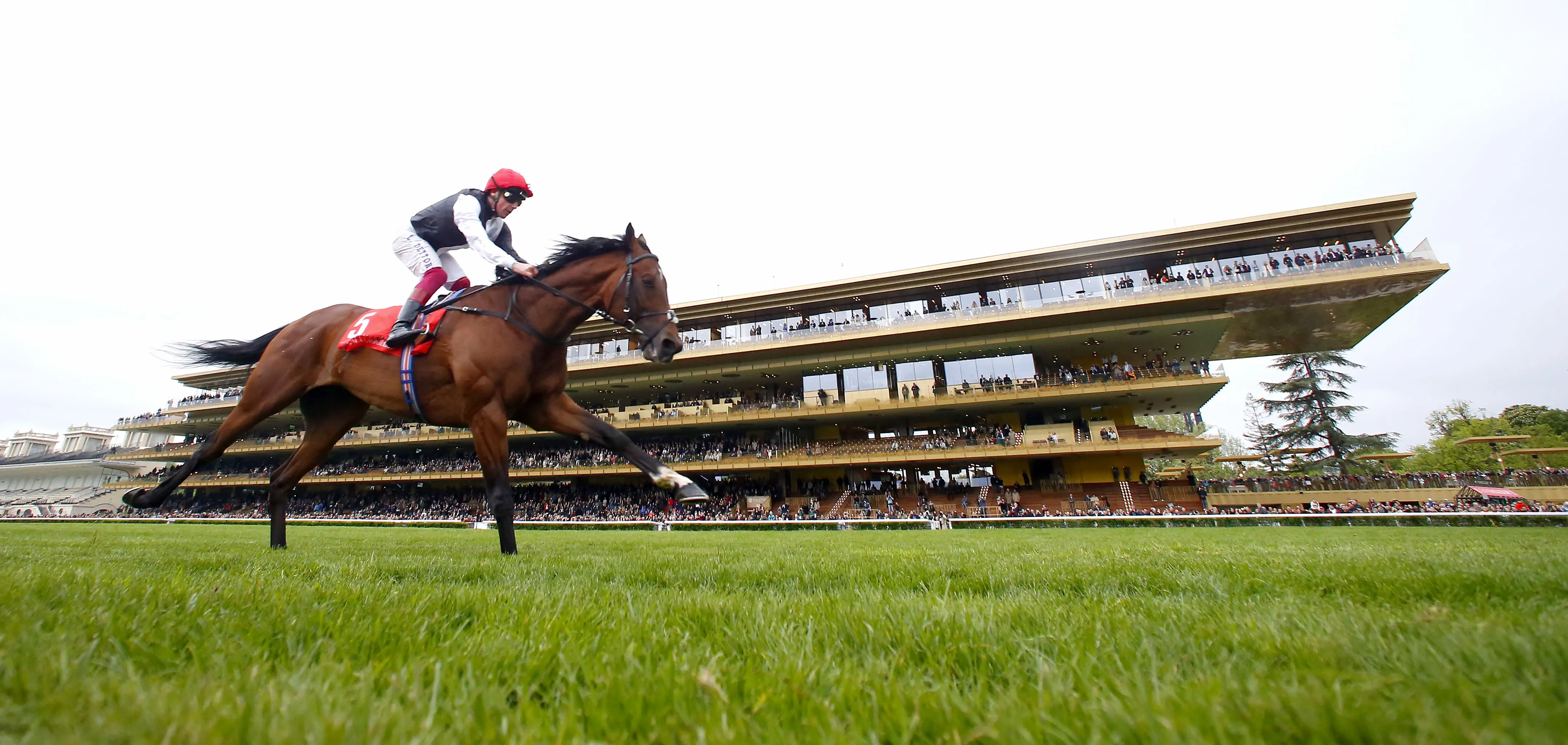
France Galop to consider covered seating for Arc after ParisLongchamp washout
By Geoffrey Riddle
Last Updated: Tue 5 Dec 2023
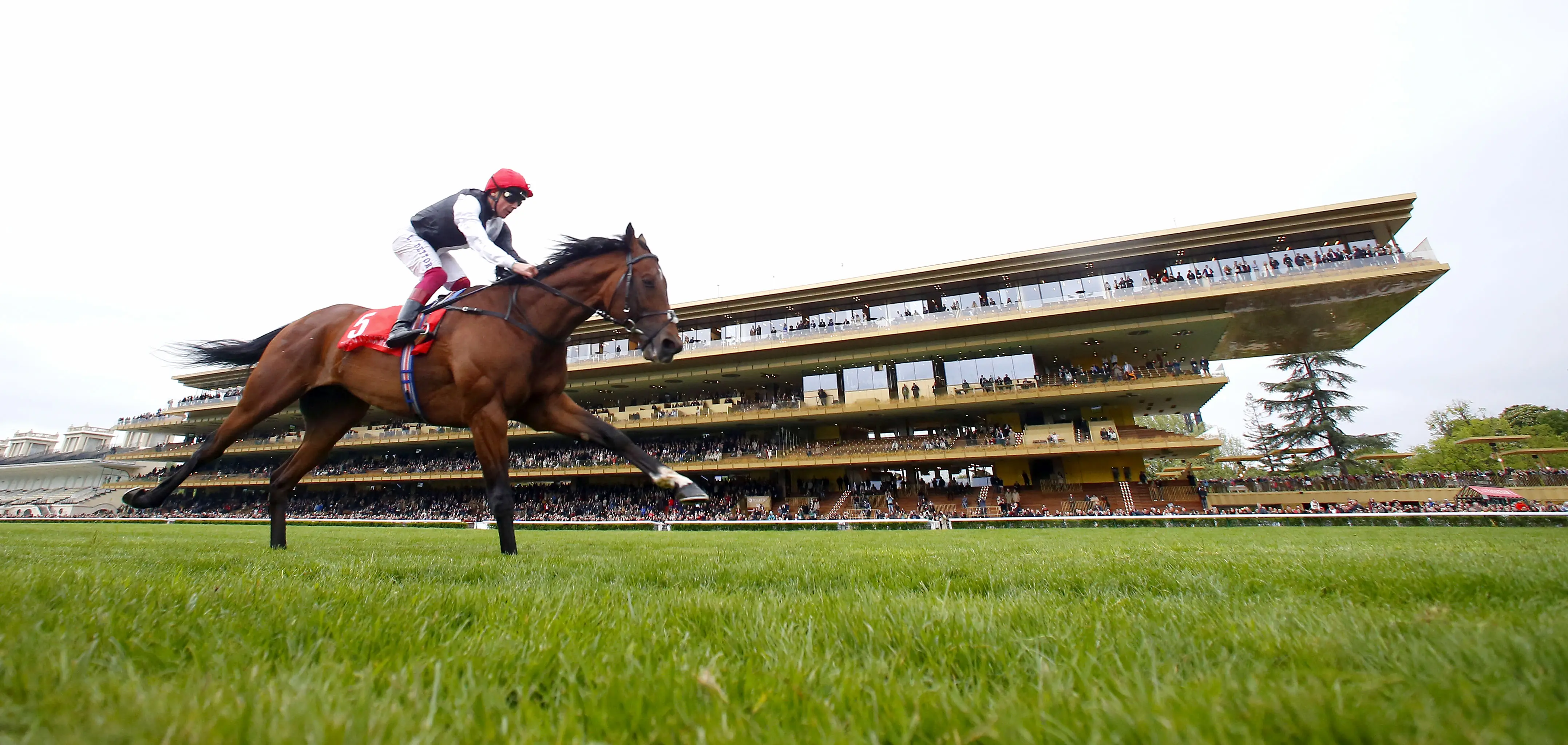
Cracksman stamped his authority on ParisLongchamp on Sunday (FocusOnRacing)
By Geoffrey Riddle
France Galop chiefs are seriously considering covered seating for the Prix de l’Arc de Triomphe meeting in October after the weather rained on their parade on Sunday.
Cracksman was the star turn when he routed the field in the Group One Prix Ganay at the rebranded ParisLongchamp, but despite 25,000 tickets being sold not even half turned up to the official opening to brave the rain, wind and uncharacteristic spring chill.
The shiny new grandstand is an undoubted upgrade to the charming but old, creaking concrete structure that was revamped to the tune of around £120 million following Golden Horn’s Arc success in 2015.
Out came most of the walls, however, to provide a dual aspect grandstand whereby racegoers can easily watch the action on the track in front and during the preliminaries in the parade ring behind the structure.
This will be perfect for the planned garden party coinciding with the Grand Prix De Paris in July on a balmy summer's evening, but if the autumnal weather takes a turn for the worse British punters will feel more at home than their Parisian counterparts for Europe's biggest horse race.
“After such a rainy day, we will definitely study this option, added to a covered official village (called Jardins de l’Arc) that we will build approximately 150 metres from finish line,” Fabrice Favetto Bon, France Galop’s marketing director, told Racinguk.com.
“The decision will be made by the end of May. As we did at Chantilly when we staged the Arc there during the redevelopment we will also use the infield for a Public Village (called Village de l’Arc and Gradins De L’Arc)."
The new four-floor grandstand was designed by the architect Dominique Perrault, whose previous work includes the Bibliothèque Nationale, in Paris, and who is now building the Olympic village for Paris 2024.
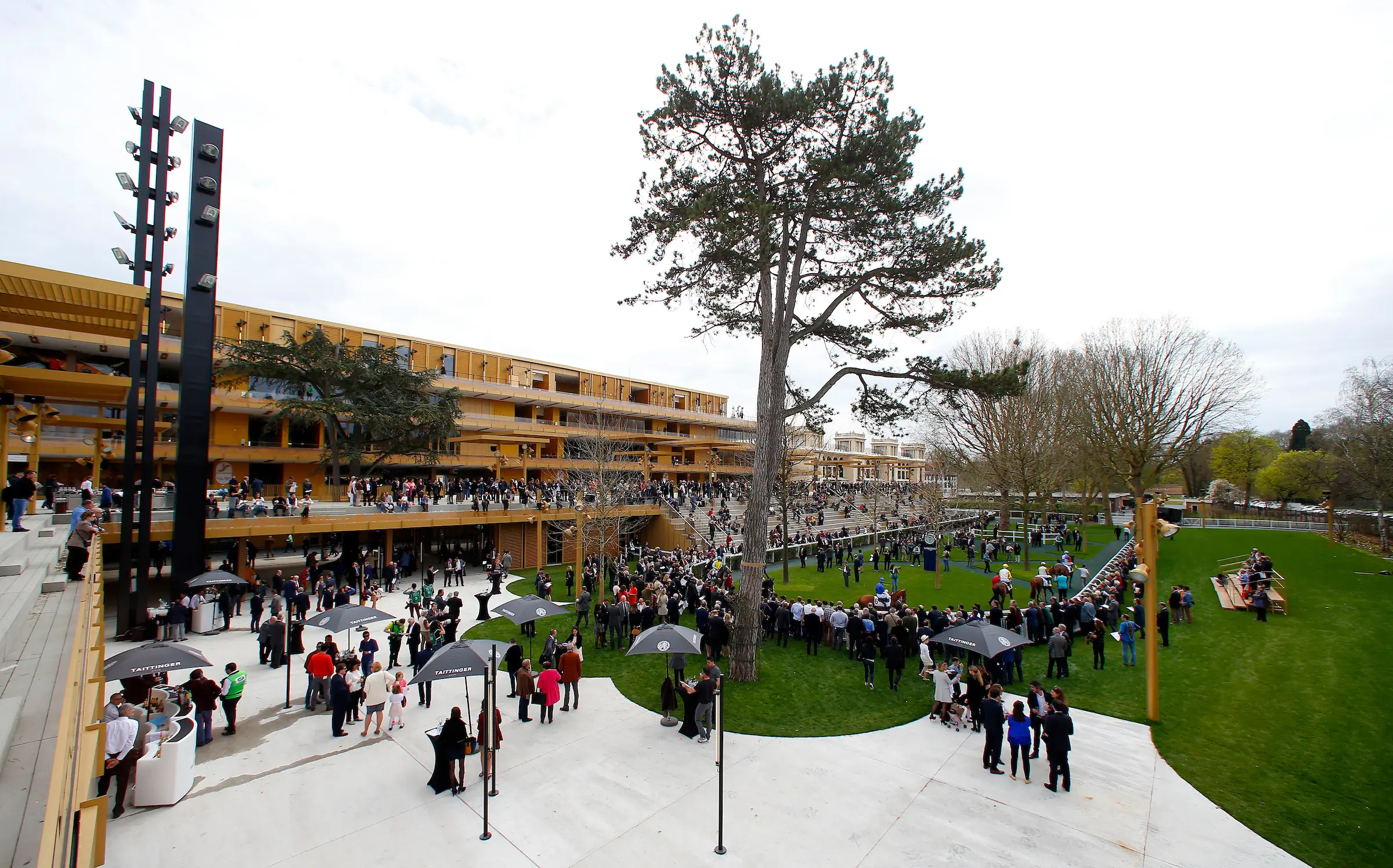
The parade ring at ParisLongchamp (FocusOnRacing)
It has a capacity of just 22,000 though and with a crowd of over 60,000 expected for Arc day there will need to be a lot of temporary structures put in place to accommodate the course’s biggest payday.
Last year Favetto Bon admitted that prices may well go up, saying: “We will of course be a little more expensive than before.”
And so it seems.
Ticket prices have been set at €15 for the Village De L’Arc on the infield, €30-60 for the Gradins De L’Arc that are also on the infield but will resemble the Royal Ascot boxes on the far side of the course, and €70-75 for the main grandstand.
Last year, at Chantilly, admission to the main grandstand was €30 and it cost €15 infield. Less than a decade ago admission for Arc day was €8, with ladies wearing a hat being allowed in free.
It costs roughly €15 more per person to install covered temporary seating, and following Sunday’s inauguration the hope must be that the racecourse executive dig deep in to their pockets.
A lot of the conversation for those who had never been to the new ParisLongchamp on Sunday focused on the golden, or sandy, hue of the grandstand that is said to mimic the autumn colours of the surrounding Bois Du Boulogne.
Many younger racegoers were delighted with what the architects and builders had done, impressed by how the sheen reflects the light and that the racecourse executive were making a modern statement to attract new blood to both the track and the sport in general. Those who had been to the old Longchamp were more reticent.
“It is a strong gesture, and you make a choice,” Favetto Bon said. “It is a bit like when they built the Louvre glass pyramid in the 1980s. It was a debate. It was on every talk show, with people for and against.”
Ultimately France Galop will be judged by whether they have grown the appeal of ParisLongchamp and there are trials of regular evening racing underway from May 17 through to July 12. Racing will commence at 4pm and finish by 9pm, followed by DJ sets long into the small hours not dissimilar to those at Goodwood during the summer.
If France Galop are looking for extra funding they received a windfall on Monday when it was announced that their Guineas would become the most valuable in Europe courtesy of backing from the United Arab Emirates.
The prize-money for the Poule D’Essai des Poulains, the French 2,000 Guineas, will be raised to €600,000, while the Poule D’Essai des Pouliches, the French 1,000 Guineas, will be €500,000.
From 2021 the purses for the two French Guineas will be raised again to €650,000 and €550,00. The French Guineas will be staged at ParisLongchamp on May 13.
This weekend’s Qipco-backed Guineas are both £500,000.
Related posts
Big-hitting punter wins £500,000 on O'Brien hotpots
Seamie Heffernan suspended for 14 days and Tony Martin fined €3,000
Ross Millar's Sunday tips: "She should be capable of winning this"
Jack Dace taken to hospital following Brighton fall
Monday tips: Mark Rowntree's four best bets
Featured offers

Get up to a £25 Bonus + 50 free spins with Genting
T&Cs Apply
Claim Now

Bet £10 get £30 in Free Bets with TalkSportBet
T&Cs Apply
Claim Now

Get a £50 free bet when you bet £50 with Coral
T&Cs Apply
Claim Now

Bet £10 Get £40 in free bets + Money back 2nd to SP fav with BOYLE Sports
T&Cs Apply
Claim Now
Copyright 2026 Racing TV - All Rights Reserved.
Please bet responsibly
Copyright 2026. All rights reserved