Login
WATCH FREE
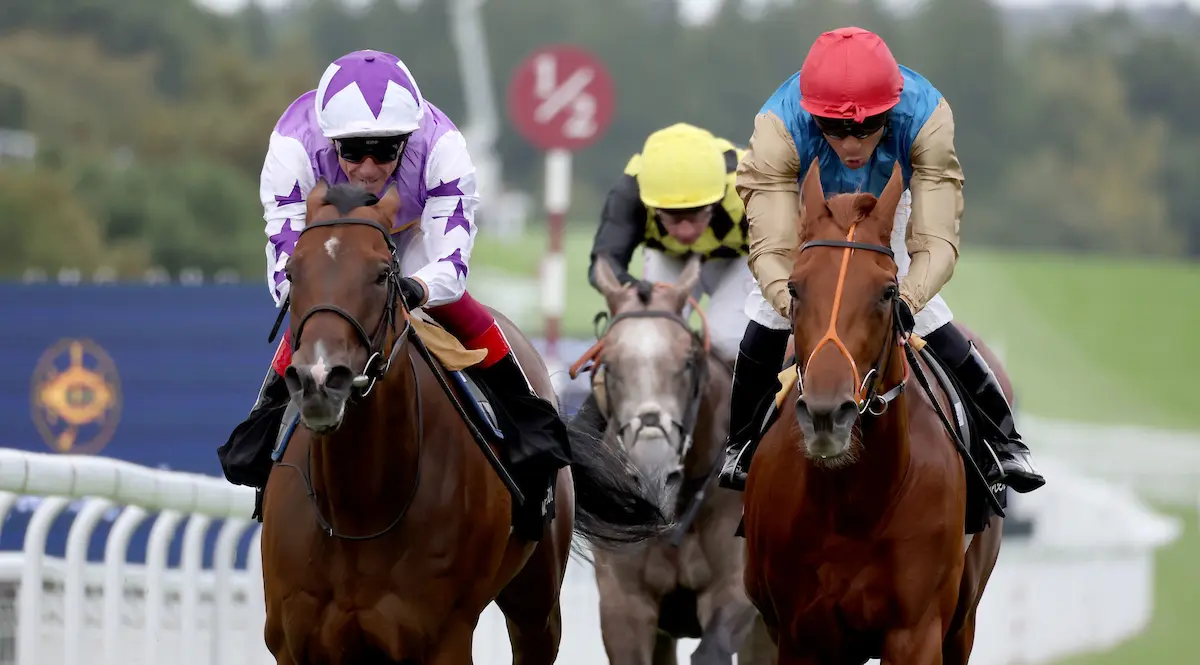
Five horses to follow at Goodwood based on RaceiQ data
By Page Fuller
Last Updated: Mon 29 Jul 2024
Page Fuller crunches the RaceiQ numbers to highlight five horses to follow at the Qatar Goodwood Festival that have produced some impressive figures recently.

The Parthenon
Race: HKJC World Pool Vintage Stakes - (2.25, Goodwood).

It was disappointing not to see him at Newmarket earlier this month, but I believe The Parthenon will be worth the wait.
Aidan O’Brien has minded this youngster and I find it hard to see why his patience won’t be rewarded. He may have been beaten first time out over six furlongs, but his win over seven furlongs next time suggests he was far better than that.
He showed considerable speed when winning at Gowran Park, clocking a Top Speed of 41.64mph. This was the highest Top Speed recorded by any runner in their previous races.
However, it is his stride length that has caught my eye. His peak stride length of 8.11m at Gowran was also the longest recorded by the field in previous runs, and his average stride frequency of 2.21 stride per second was the lowest.
This means that he was able to go through the race very efficiently and would back up why the step up to 7f brought out so much improvement. No different to humans, the faster you stride, the more energy you use. He was able to travel through the race using very little energy, and then quicken using his stride, so it was no surprise he saw the trip out so well.
I expect that improvement to continue here.
KINROSS
Race:HKJC World Pool Lennox Stakes - (3.00, Tuesday).
Page Fuller

Finished: 3rdSP: 7/2
I expect last year’s winner Kinross to bounce back to winning ways and retain his crown here.
He is undeniably a fast horse, but his strength in the sprint division lies with his stamina, and the data reflects that.
Ralph Beckett’s charge has followed a similar path to last season by getting beat twice over 6f before contesting the Lennox Stakes.
His run in the July Cup this month was not of the same standard as his run last year, but I believe it is the ground that has the biggest effect on him over 6f.
He needs to run in sprint races where stamina is a premium, but if the ground is too quick, he will be put under too much pressure early, which is what happened this year.
Art Power set a decent pace in the July Cup and covered the first two furlongs in 24.65 seconds, which was 0.83 seconds quicker than last year and shows how much pressure the runners were under early doors.
Kinross’ Top Speed in the race, 42.69mph, was also the third-fastest Top Speed that any of the contenders entered in the Lennox Stakes have recorded.
I would therefore be inclined to forgive his slightly below-par outing last time, and his form over the past couple of years sets the standard here.
ROSALLION
Race: Qatar Sussex Stakes - (3.35 Wednesday).

It is one-all between Rosallion and Notable Speech this season, but I can’t see the latter reversing the form of his Ascot defeat.
The same applies to Henry Longfellow (St James's Palace Stakes runner-up) as the RaceiQ data suggests the pair just aren’t fast enough.
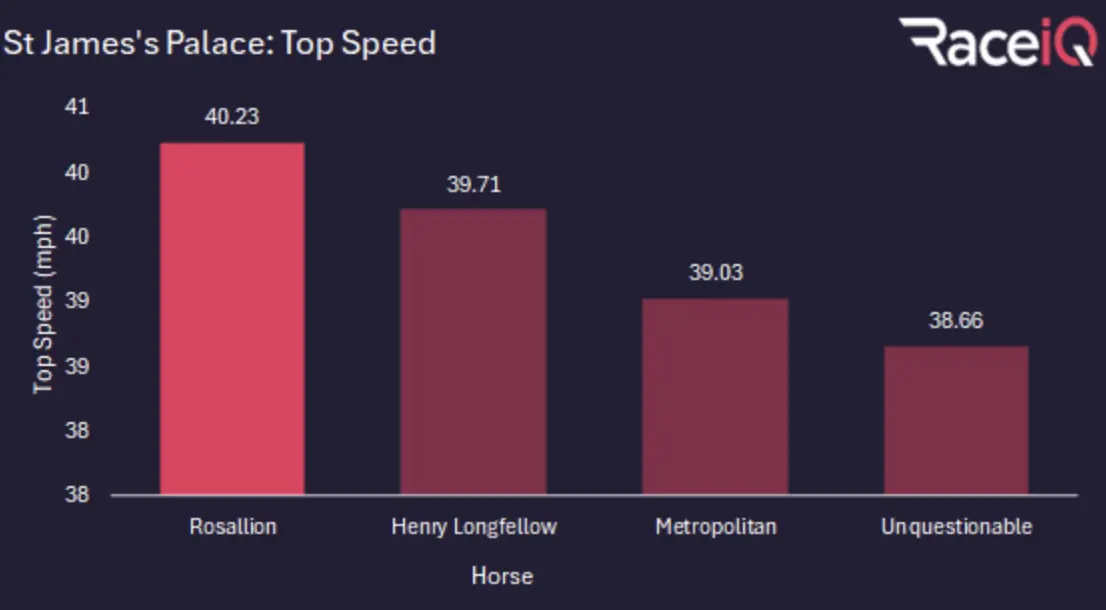
That speed proved crucial at Royal Ascot and he hit the front too soon in the Guineas at Newmarket which left him a sitting duck for Notable Speech.Sean Levey has made sure that mistake hasn’t been made since, and it is for this reason he will be very difficult to beat.He got a lovely tow into the race from Henry Longfellow at Royal Ascot and Levey timed his challenge to perfection. Rosallion’s raw speed quickly put the race to bed, and he posted a Top Speed of 40.2 mph. He was also the only horse in the race to break 40mph.I expect this will be a tactical affair, but however the race plays out, it’s hard to see what tactics could be implemented to blunt this horse’s raw ability.
Elmalka
Race: Qatar Nassau Stakes – (3.35, Thursday).
On their best form, Emily Upjohn and Insprial should be the market leaders for this race, but they have failed to impress so far this year, and this has left the door wide open for one of the exciting three-year-olds to take advantage of their generous weight allowance.
Opera Singer, Elmalka and the others that age will only carry 9st1lb here, in comparison to the 9st9lb the older mares will shoulder.
Opera Singer may hold the form advantage having just failed to win the Coronation Stakes at Royal Ascot. However, I think the step up in trip is just what Elmalka needs, based on the RaceiQ data.
She hasn’t got the most inspiring of run styles, and while being held up in the 1000 Guineas worked in her favour, it put her at a massive disadvantage at Royal Ascot last time out.
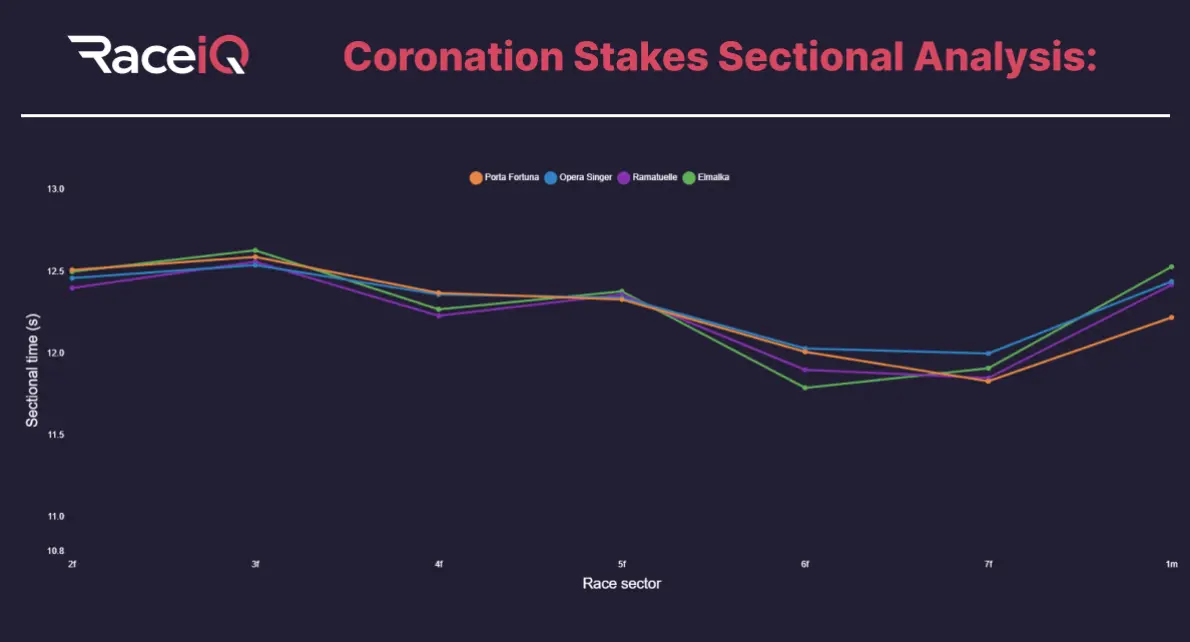
Comparing her sectionals in the Coronation Stakes with Opera Singer is interesting, too. Elmalka gave away 0.64 seconds to Opera Singer in the first furlong and was only beaten 0.48 seconds by her at the finish. Elmalka also posted the second-fastest furlong of the runners (11.79 seconds) three furlongs from home which brought her into contention. Porta Fortuna and Opera Singer were strong at the line, though, and she was always going to struggle to catch them.
Elmalka also covered the final two furlongs in the same time as Opera Singer (24.44 seconds) suggesting she saw out the trip just as well as her. I believe it also hints that the step up to 1m2f will help her make use of her tactical speed that Opera Singer lacks.
Believing
Race: King George Qatar Stakes – (3.35, Friday).
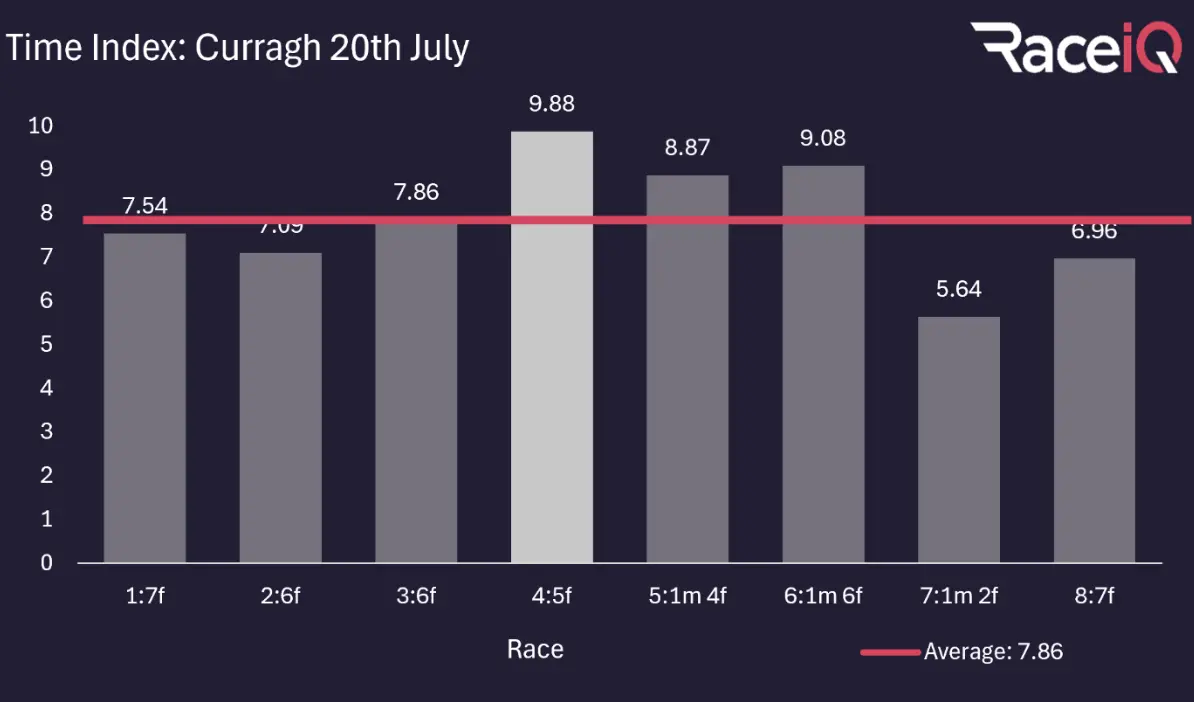
It might raise a few eyebrows to suggest Believing could reverse Royal Ascot form with Asfoora and Big Evs, but I believe she will as her performance in the Barberstown Castle Sapphire Stakes at the Curragh was exceptional.
Her Time Index score of 9.88 was easily the best of the whole meeting, and she showed a blistering turn of foot to post a 10.52 furlong, and an FSP of 104.21%.
She was aided by a superb ride from Ryan Moore who timed their challenge to perfection as every other horse posted their fastest furlongs in the second and third furlongs.
The four-year-old will have to step up, especially carrying a penalty for her efforts, but she is thriving off her racing and seems to be improving. She also remains unexposed over the minimum trip.
COWARDOFTHECOUNTY
Race: HKJC World Pool Vintage Stakes - (2.25, Tuesday).
*Now a non-runner*
This two-year-old was an impressive winner on debut beating July Stakes winner, Whistlejacket, decisively.
He then contested the Coventry Stakes at Royal Ascot but started slowly there and had an impossible task to get back into contention.
He was the slowest horse to reach 20mph in that race, taking 2.95 seconds. It also meant that by the end of the first furlong he was 0.51 secs (three lengths) behind the winner, Rashbar, and 1.14 seconds (six and a half lengths) behind the leader.
It was a similar story in the Anglesey Stakes last time out, too. He again took 2.95 seconds to reach 20mph, and then got interfered with after a few strides plus found himself way off the pace.
The RaceiQ data shows he was 2.47 seconds (14 and a half lengths) behind the pace and 1.27 seconds (seven and a half lengths) behind the winner, Babouche.
This youngster clearly doesn’t excel at the start of his races, but I have faith that the step up to 7f will counteract that and give him a better chance of staying in contention.
His stride length is huge, so it isn’t surprising that he takes so long to get going, and therefore finds 6f on the sharp side.
He had one of the largest average stride lengths at 8.1 metres in the at the Curragh, but his maximum stride frequency was the lowest at 2.27 strides per second.
This means that even though he’s able to cover the ground efficiently using his stride, he is not able to stride fast enough to lay up with the rest of the field, backing up what we see visually and another reason why the data suggests that the step up in trip will suit.
More Goodwood tips and insight:
Related posts
Sheikh Ahmed bin Rashid Al Maktoum dies aged 76
Richard Hannon breaks new ground with North American winner
Guinness Kerry National: guide to the key players
Craig Williams booked for James J Braddock mount in Melbourne Cup
Winless Ones To Watch: five more Jumps horses to follow this season
Featured offers
Bet £10 get £40 in free bets with Kwiff
T&Cs Apply
Claim Now
New UK customers. Place a £10 real money bet at min. 2.0 odds within 5 days of deposit. Get 4 x £10 Free Bets: 1 Single, 2 Accas & 1 Bet Builder (min. 3 selections each). Excludes cashout, E/W, Multis, Ineligible Markets & Odds Boosts. Credited after bet settlement. 7-day expiry. T&Cs apply. 18+ GambleAware

Bet £10 Get £40 in free bets + Money back 2nd to SP fav with BOYLE Sports
T&Cs Apply
Claim Now
BOYLE Sports: Bet £10 Get £40 in free bets + Money back 2nd to SP fav with BOYLE Sports. 18+ GambleAware

Bet £20 and Get £40 in Free Bets with Unibet
T&Cs Apply
Claim Now
Unibet: Bet £20 and Get £40 in Free Bets with Unibet

Get 50% back up to £50 with QuinnBet
T&Cs Apply
Claim Now
New UK Customers Only. Bet £10+ on any sportsbook markets at odds of evens (2.00) or greater. Get 50% back of your first day’s losses as a Free Bet up to £50, valid for 7 days. 18+ GambleAware.

Bet £10 get £30 in Free Bets with talkSPORT BET
T&Cs Apply
Claim Now
talkSPORT BET: Bet £10 get £30 in Horse Racing Free Bets. 18+ GambleAware
Copyright 2026 Racing TV - All Rights Reserved.
Please bet responsibly
Copyright 2026. All rights reserved