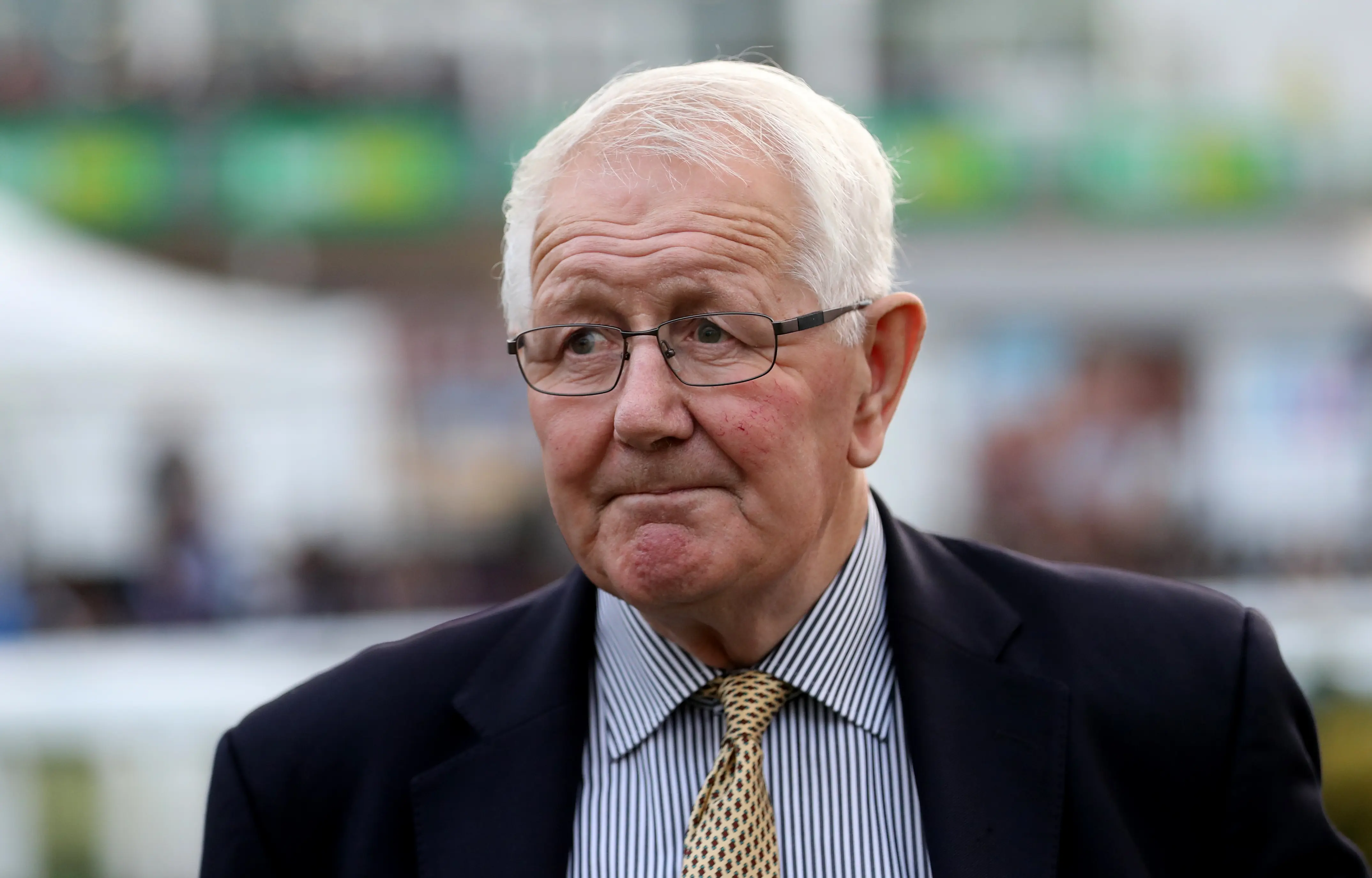
David Elsworth calls time on his glittering training career
By Racing TV
Last Updated: Tue 5 Dec 2023
David Elsworth, trainer of the great Desert Orchid, has announced his retirement after a long and illustrious career.
‘Dessie’, as the dashing grey was affectionately known by his adoring public, won the 1989 Cheltenham Gold Cup as well as the King George VI Chase four times and the 1990 Irish Grand National – among many other big races.
Elsworth won a host of major jump races, including the 1988 Grand National with Rhyme ‘N’ Reason and the Queen Mother Champion Chase with Barnbrook Again in 1989 and 1990.
The 82-year-old was a leading dual-purpose trainer for many years with the legendary stayer, Persian Punch, one of his most popular Flat horses.
But on Wednesday afternoon Elsworth confirmed he had decided to call it a day.
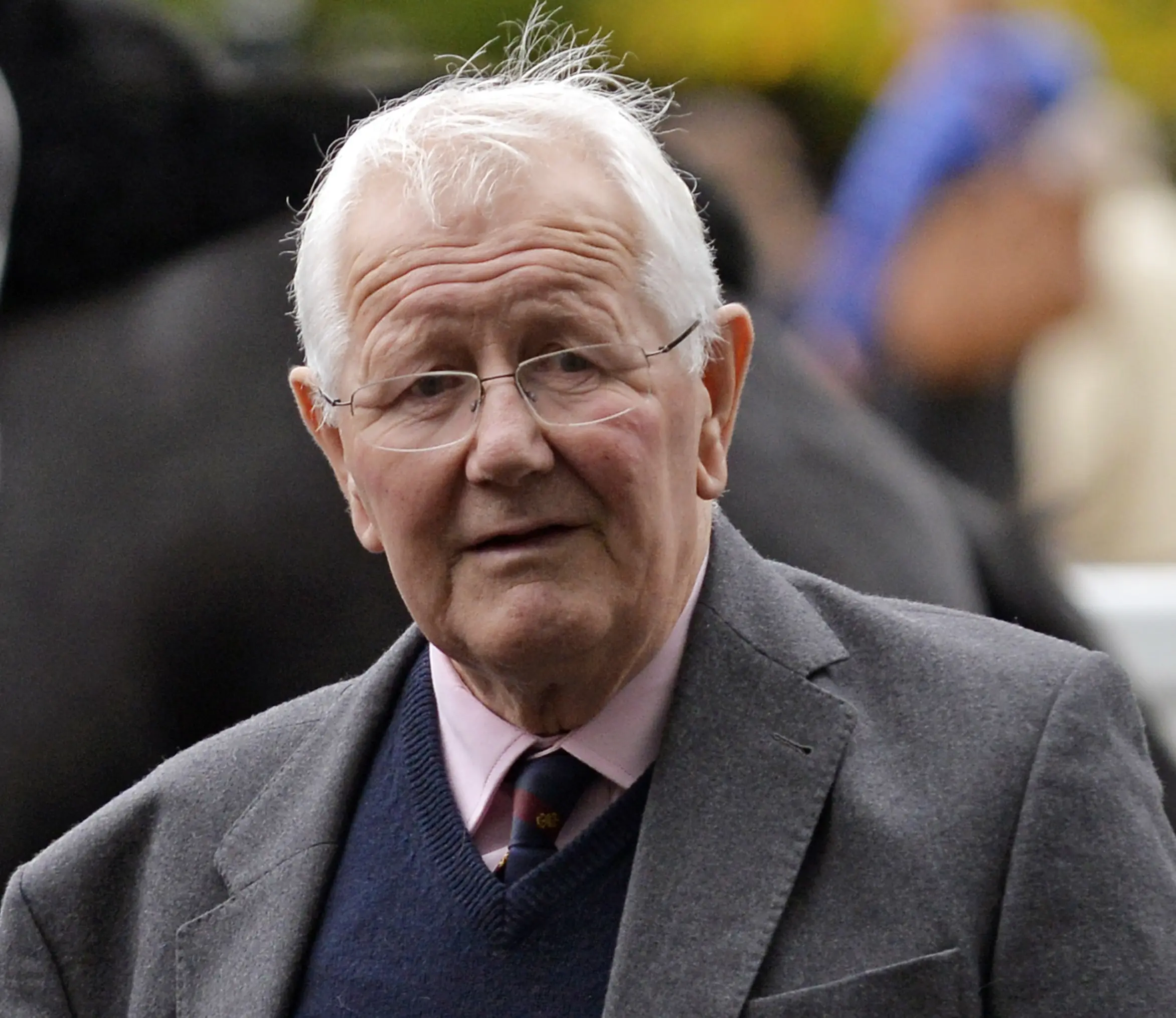
David Elsworth, Britain
He said: “If you go to a party, there is a time to go home.
“I’m not upset or downhearted about anything. It is just time to move on. I’ve had a great time.”
Among Elsworth’s other top-class performers were In The Groove, winner of the Irish 1,000 Guineas, Juddmonte International and Champion Stakes in 1990, and Arabian Queen – who took the Juddmonte International in 2015, beating Derby winner Golden Horn. He celebrated Group Two success as recently as 2019, with Sir Dancealot landing the Lennox Stakes at Goodwood.
Elsworth, based at Newmarket after many years at Whitsbury in Hampshire, has concentrated largely on the Flat in recent years.
“I feel I’ve been a very, very lucky man that I’ve been doing a job all my life – and it has not been a job. It’s a sport really, and I have been a participant in various ways,” he said.
“I’ve progressed over the years and we have had a degree of success, for which I feel very fortunate and we have been associated with some good horses, and it has been a great time.
“It creeps up on you. You are just doing your job and doing what you enjoy and when you win, it’s good. I’ve been very grateful and lucky. I feel very fortunate to be doing this for a long time.
“I started 67 years ago. I’ve started at the start and finished at the finish – I’ve gone through various stages of success and frustration like anyone else in any walk of life.
“I’ve had a lot of fun and it has been very good to me.”
Elsworth took out his full training licence in the 1978-79 jumps season following a career as a professional jump jockey from 1957-72 and a spell as assistant to Ricky Vallance.
After successfully applying for a licence in June, 1978, Elsworth started with three horses – Raffia Set, Skyline Drive and Cumberland Reel. All three made sure he would hit the ground running as they notched up eight victories between them in 1979.
An early example of how adept he was at the highest level under both codes came through Heighlin.
Bought to win the Triumph Hurdle, he duly did that to provide Elsworth with his first Cheltenham Festival winner in 1980, but he was also the trainer’s first Royal Ascot winner in the same year in the Ascot Stakes. He would go on to win the 1982 Goodwood Cup.
His move to Whitsbury Manor in 1981 signalled a real move into the big time and in 1983 Mighty Fly became the first horse to win the Lincoln and the Royal Hunt Cup in the same season.
Elsworth’s eye for a bargain never left him and the 22,000 Irish punts he paid for Indian Ridge, who won the Jersey Stakes in 1988 and the King’s Stand the following year, before going on to be a big success at stud, was one of his shrewder purchases.
It was during this era Elsworth enjoyed his golden spell over jumps, though and in Desert Orchid, Barnbrook Again, Rhyme ‘N’ Reason, Coombs Ditch, Floyd and Cavvies Clown were all top-class performers for a number of years.
If ever Elsworth’s skills needed advertising, however, a six-week spell in 1990 should be remembered. Desert Orchid won the Irish Grand National while In The Groove travelled over to win the Irish 1,000 Guineas.
Watch: Desert Orchid - His King George Story
For the past two decades Elsworth has trained almost exclusively on the Flat and moved to Newmarket in 2006 – but his exploits with the likes of Barshiba, her first foal Arabian Queen and Sir Dancealot proved he could still mix it with the best.
Elsworth said: “If you are a footballer, you need to be in a good team and racing is a team effort as well.
“I was surrounded by lots of people who were with me and they shared the ambitions and the hopes, and the success we had, I may have been at the helm, but you don’t get to be a successful racehorse trainer unless you are surrounded by good horses and good people.
“I have had them in abundance over the year and I have been very lucky.”
His finest horses
Desert Orchid
The most famous horse handled by Elsworth during his illustrious career, this gallant grey transcended racing to become a household name. It appeared his first race could be his last when he fell heavily on debut at Kempton. However, Desert Orchid eventually got to his feet and a legend was born, with his attacking style of racing and versatility in terms of distance making him a National Hunt great. A four-times King George VI Chase winner, he finally landed the Cheltenham Gold Cup in 1989, but while he did not lack for class, he also shouldered some huge weights – not least when winning the 1990 Irish Grand National, conceding a full two stone to all but one of his rivals. Desert Orchid helped to raise significant sums for charity following his retirement and his popularity barely waned until his death in 2006 when Elsworth said Dessie had died “in the same individual way that he did his living”.
Persian Punch
Another crowd favourite, Persian Punch racked up an amazing 20 wins from his 63 career starts – a statistic that perfectly encapsulates his famed tenacity. A fixture in the long-distance Cup races between 1997 and 2003, Persian Punch never managed to get his head in front at the highest level. While he could not secure a Group One victory, Persian Punch was just denied the stayers’ triple crown of Goodwood Cup, Ascot Gold Cup, and Doncaster Cup when Mr Dinos beat him into second at Ascot at the ripe old age of 10. He won three Jockey Club Cups, a Doncaster Cup, two Goodwood Cups, three Henry II Stakes, and two Lonsdale Cups, and also counted two memorable thirds in the Melbourne Cup on his record.
In The Groove
An exceptional filly who graduated from victory in the 1990 renewal of the Irish 1,000 Guineas to establish herself a middle-distance force. Only fourth to Salsabil in the Oaks at Epsom, In The Groove showed the colts and her older rivals a clean pair of heels in the Juddmonte International and while an Arc run yielded little joy, In The Groove sparkled again dropped back to 10 furlongs for the Champion Stakes. Kept in training as a four-year-old, In The Groove proved her 12 furlong pedigree with a Coronation Cup win in a campaign that encompassed some of the calendar’s biggest events and culminated in a Breeders’ Cup Turf defeat.
Rhyme ‘N’ Reason
Not even a terrible blunder jumping Becher’s Brook for the first time could derail Rhyme ‘N’ Reason’s challenge. A previous winner of the Irish Grand National, Elsworth’s runner had come to grief when still in contention for the Cheltenham Gold Cup the previous month and it looked as though the same fate awaited at Aintree before Brendan Powell somehow managed to maintain the partnership. He got himself back into contention and while for all the world Durham Edition seemed he had his measure, Rhyme ‘N’ Reason dug deep to give Elsworth victory in the world’s greatest steeplechase.
Barnbrook Again
A two-mile dynamo, Barnbrook Again was a back-to-back winner the Queen Mother Champion Chase at Cheltenham in 1989 and 1990. While he enjoyed his biggest moments at the minimum trip, Elsworth was quite clear he was not a one-trick pony, stating he could well have won a King George were it not for his stablemate Desert Orchid. Winner of 17 of his 31 starts over jumps, Barnbrook Again was part of a golden era for Elsworth’s jumps string.
Oh So Risky
This dual-purpose performer was another to be strutting his stuff to great effect in the early ’90s. Winner of the Triumph Hurdle in 1991, Oh So Risky did not get his head in front that many times during his lengthy career, but his honest attitude and near-misses, not least when runner-up in two Champion Hurdles, garnered a legion of fans. Good enough on the Flat to win a French Group Three at his peak, Oh So Risky recorded the last of his nine career wins over fences at Ascot in 1996, enduring a luckless final year.
Lear Spear
Lear Spear graduated from victory in the 1998 Cambridgeshire to a shock 20-1 success in the Prince of Wales’s Stakes at the following year. He had a superstar back in second that day in six-times Group One winner Fantastic Light. He went on to be an international contender for Elsworth, finishing third in the Hong Kong Cup before heading to Dubai, where he twice clashed with Dubai Millennium. Beaten into second on the initial match up, Lear Spear proved no match on the second occasion in the Dubai World Cup.
Related posts
Billy Loughnane hit with 21-day ban after Southwell incident
Five horses to follow from our experts on Saturday
Dave Nevison's Saturday tips: 16-1 and 12-1 picks among four bets
Ryan Moore's race-by-race guide to Dubai World Cup day
Angus McNae's six best bets for Dubai World Cup day
Featured offers
Get a £50 free bet when you bet £50 with Coral
T&Cs Apply
Claim Now

Bet £10 Get £40 in Free Bets + money back if 2nd to SP fav with Boyle Sports
T&Cs Apply
Claim Now

Bet £10 Get £50 in free bets in Multis with Betfair
T&Cs Apply
Claim Now

Bet £10 get £30 in free bets with Virgin Bet
T&Cs Apply
Claim Now

£30 in free bets when you bet £5 with Ladbrokes
T&Cs Apply
Claim Now
Copyright 2026 Racing TV - All Rights Reserved.
Please bet responsibly
Copyright 2026. All rights reserved