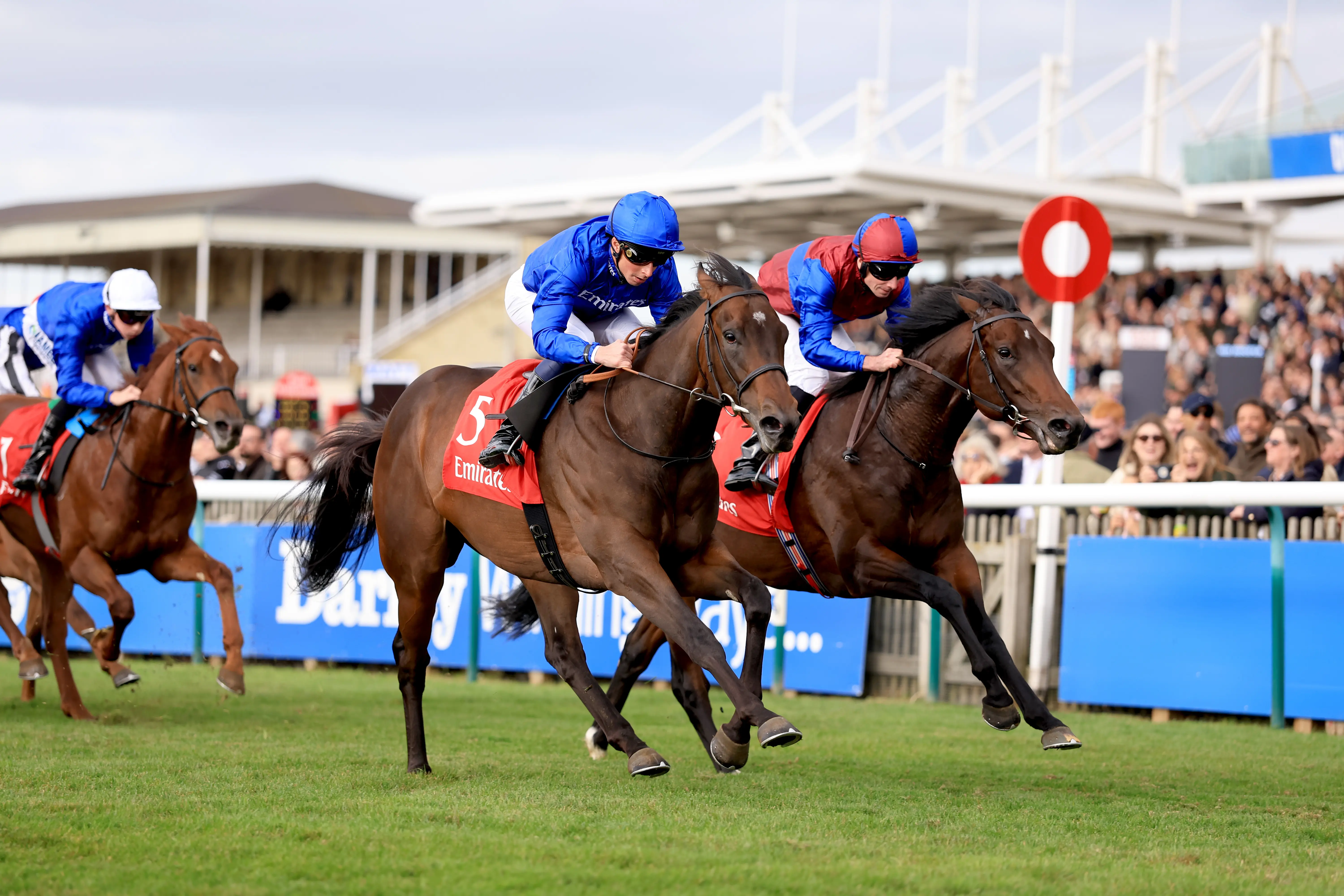
James Willoughby shares an "exciting" 25-1 tip for the 2000 Guineas
By Alex Scott
Last Updated: Sun 11 Oct 2026
Top analyst and pundit James Willoughby treated Racing TV viewers to some insightful data from Newmarket’s Dubai Future Champions Festival on Luck On Sunday this week.
“I just wanted to share my excitement. After a few fallow years, where we've gone into the winter confused about the 2000 Guineas, we’ve finally got something to get excited about,” explained Willoughby.
“We’ve got a competitive situation on our hands where not just two horses from the Dewhurst, but I believe, and this is what I wanted to share with you, there was a huge hidden performance on Dewhurst day in one of the other races.
“Nowadays we have a wealth of data to use to employ to understand races at a deeper level than before, and in particular this data helps us unravel the complexities of what was an absolutely fascinating Autumn Stakes.
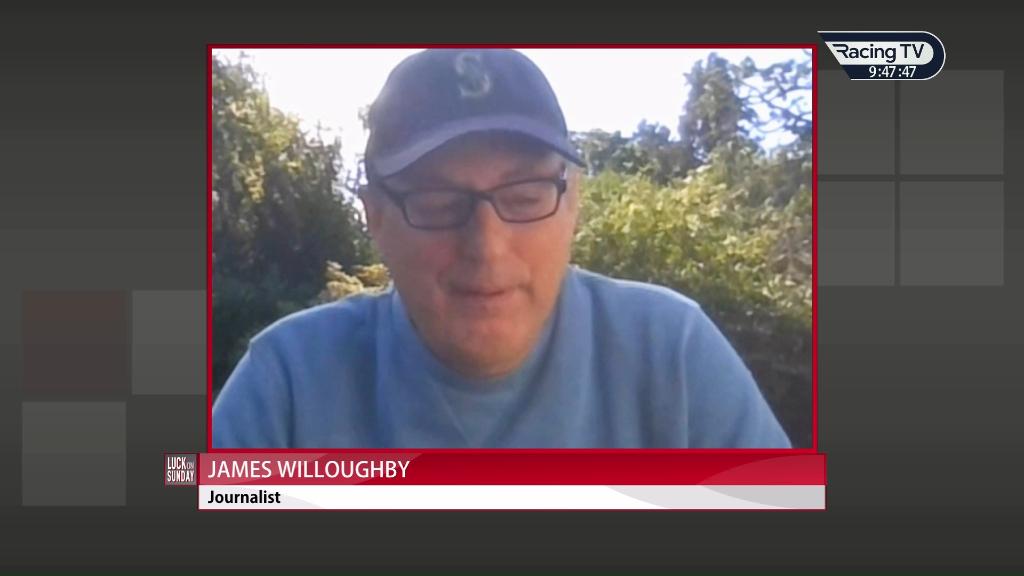
Watch what James Willoughby had to say on this week's Luck On Sunday.
“It’s a question of interpreting the run of the race in the context, as ever on the way it was run [the pace]. This race was different to the Zetland and different to the Dewhurst. It was less truly run through the early stages, and it featured a dramatic increase in pace from five down to four, much sharper than the Dewhurst which was relatively evenly run and Drumbeat’s Zetland Stakes was an absolute cavalry charge - an absolute all out test of stamina.
“That was not the case in the Autumn Stakes [won by Rock Montreal]. I want to draw your attention to stride-length data. Often horses are quite closely matched in terms of their cadence, which is the number of times they stride per second, and a horse’s cadence is strongly correlated with its ability to accelerate for obvious reasons. If you can't get your feet down quickly, it's difficult to change pace.
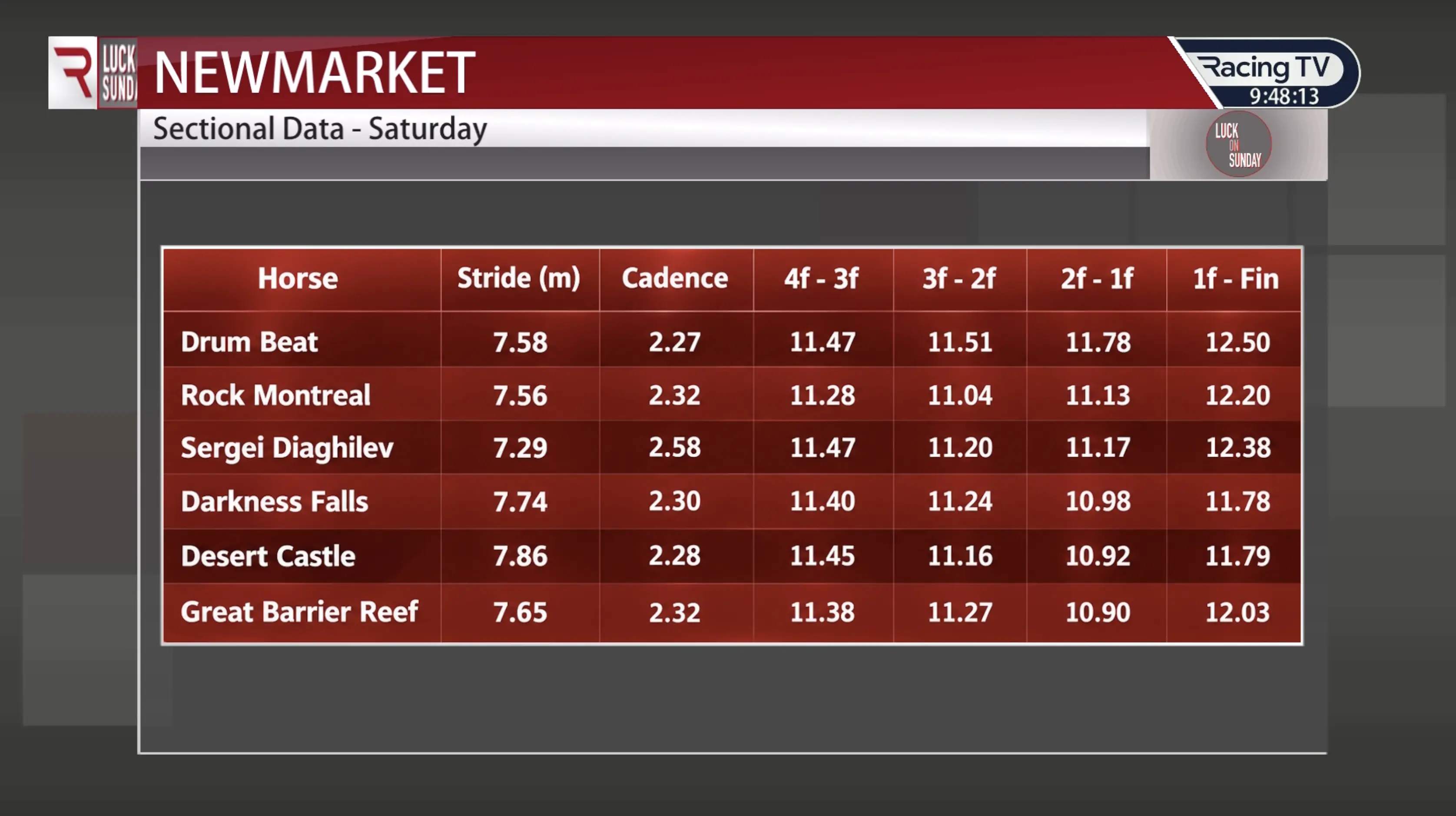
“This is Rock Montreal’s problem as a racehorse. He has very few problems, certainly his looks are not one, but his one problem is that he cannot quickly get into top gear. We’ve seen that in all three of his races to date.
“The reason for that is his stride length in this race [7.56 metres] detailed by RaceiQ and available on the Racing TV website, is not extraordinarily long by any means, but he was up against a horse in Sergei Diaghilev, who was custom made for yesterday's race and has a short stride length of 7.29 metres, but most importantly a quick cadence [a quick turnover].
“In the circumstances, the minute the pace accelerated, if you map the race granularly, that is if you look at every half-furlong in detail as to what happened, Sergei Diaghilev stole a lot of lengths very cheaply off Rock Montreal.”
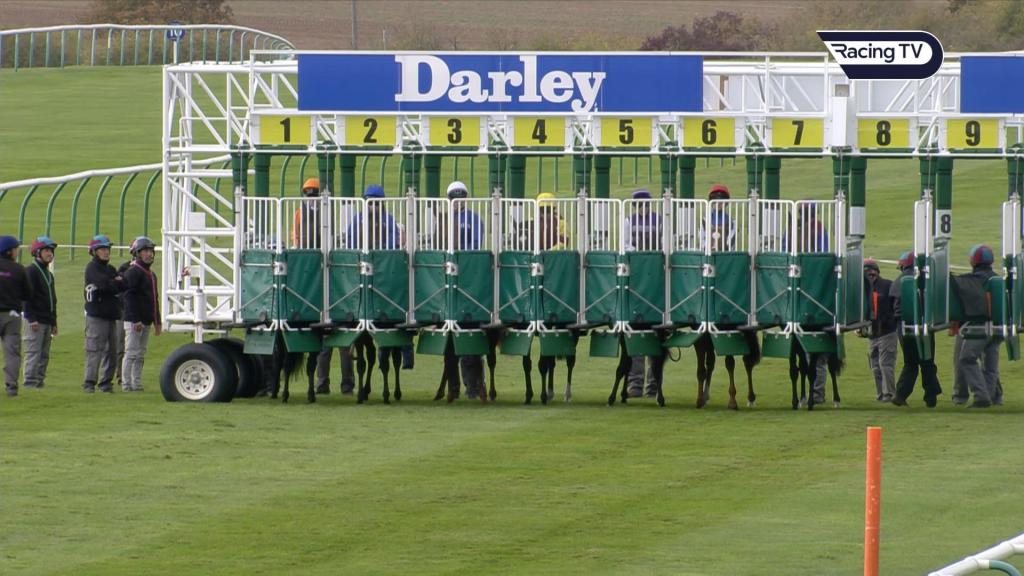
Watch a full replay of the Emirates Autumn Stakes.
Willoughby, who was highly impressed by Rock Montreal’s ability to run down the Aidan O’Brien-trained colt to win Saturday’s Group Three, later added: “Rock Montreal was forced by his own inadequacies by the fact that he can't turn over his legs very quickly, to concede three and a half to four lengths to Sergei Diaghilev cheaply, at the point at when this pace quickened, five down to four, and from that point on he was up against it - but from that point on, he showed what a really talented racehorse he is, because he ran down Sergei Diaghilev in cold blood.
“Rock Montreal is a very interesting horse. He appears to have learned an awful lot about getting competitive with each start. The first time he had nothing to beat, the second time he appeared dozy and didn't really understand what was going on, he just wanted to run along with the eventual winner of that race at Doncaster, but this time he had fire in his belly and, I believe, if you watch the video closely and use the RaceiQ data, you can see that he was worth, I would say, three to four lengths over the bare result.
"I'd have him a huge amount shorter than he is in the current ante-post market [for the 2000 Guineas]. Last night he was 25-1 and I think he should be single digits because he's a very, very talented horse."
Related posts
Five horses to follow in Britain and Ireland on Sunday
Five horses to follow at Newmarket and York on Saturday
David Casey: Willie Mullins-trained horses to follow plus youngsters to note
Darkness Falls denies Desert Castle in Dewhurst cracker
‘You have to be excited’ – Triple Crown dreams for O’Brien with Darkness Falls
Todays top offer

Bet £10 Get £30 in Free Bets + Money Back as a Free Bet if 2nd to SP Fav with BOYLE Sports
T&Cs Apply
18+. New UK customers (Excluding NI) only. Min Deposit £10. Min stake £10. Min odds Evs. Free bet applied on 1st settlement of any qualifying bet. 30 days to qualify. Free bets expire in 7 days. Cashed out/Free Bets won’t apply. Account & Payment method restrictions apply. 1 Free Bet offer per customer, household & IP Address only. T&Cs Apply 18+. IRE/NI & UK online only. Max Free Bet £/€10. Win or win part of e/w outright singles. 5+ runners. 1st bet on each race. Free/void/antepost bets don't qualify. In event of a dead heat, offer won’t apply. Applies to First Past the Post result. Unnamed 2nd Favs don’t qualify. Acc & Payment restrictions apply. T&Cs apply.
Claim Now
Featured offers

Bet £10 get £30 in Free Bets with talkSPORT BET
T&Cs Apply
Claim Now
New Customers. Opt in, deposit and bet £10+ on any horse racing markets within 7 days of sign up. Get 3 x £10 Free Bets for set horse racing markets. Bonuses expire in 7 days. T&Cs apply. Please gamble responsibly. 18+ GambleAware

Get 50% back up to £50 with QuinnBet
T&Cs Apply
Claim Now
New UK Customers Only. Bet £10+ on any sportsbook markets at odds of evens (2.00) or greater. Get 50% back of your first day’s losses as a Free Bet up to £50, valid for 7 days. 18+ GambleAware.

Bet £10 get £40 in free bets with Kwiff
T&Cs Apply
Claim Now
New UK customers. Place a £10 real money bet at min. 2.0 odds within 5 days of deposit. Get 4 x £10 Free Bets: 1 Single, 2 Accas & 1 Bet Builder (min. 3 selections each). Excludes cashout, E/W, Multis, Ineligible Markets & Odds Boosts. Credited after bet settlement. 7-day expiry. T&Cs apply. 18+ GambleAware

Bet £20 and Get £40 in Free Bets with Unibet
T&Cs Apply
Claim Now
18+. GambleAware.org. New GB customers only. Min £20 debit card or instant banking transfer deposit. Place a £20+ bet on Horse Racing at min odds 2/5 (1.4) each leg for 4x £10 Free Bets (can be used on Racing Bet Builder). Claim within 30 days. Valid for Horse Racing only. Geographical restrictions and Further T&C’s apply
Copyright 2026 Racing TV - All Rights Reserved.
Please bet responsibly
Copyright 2026. All rights reserved