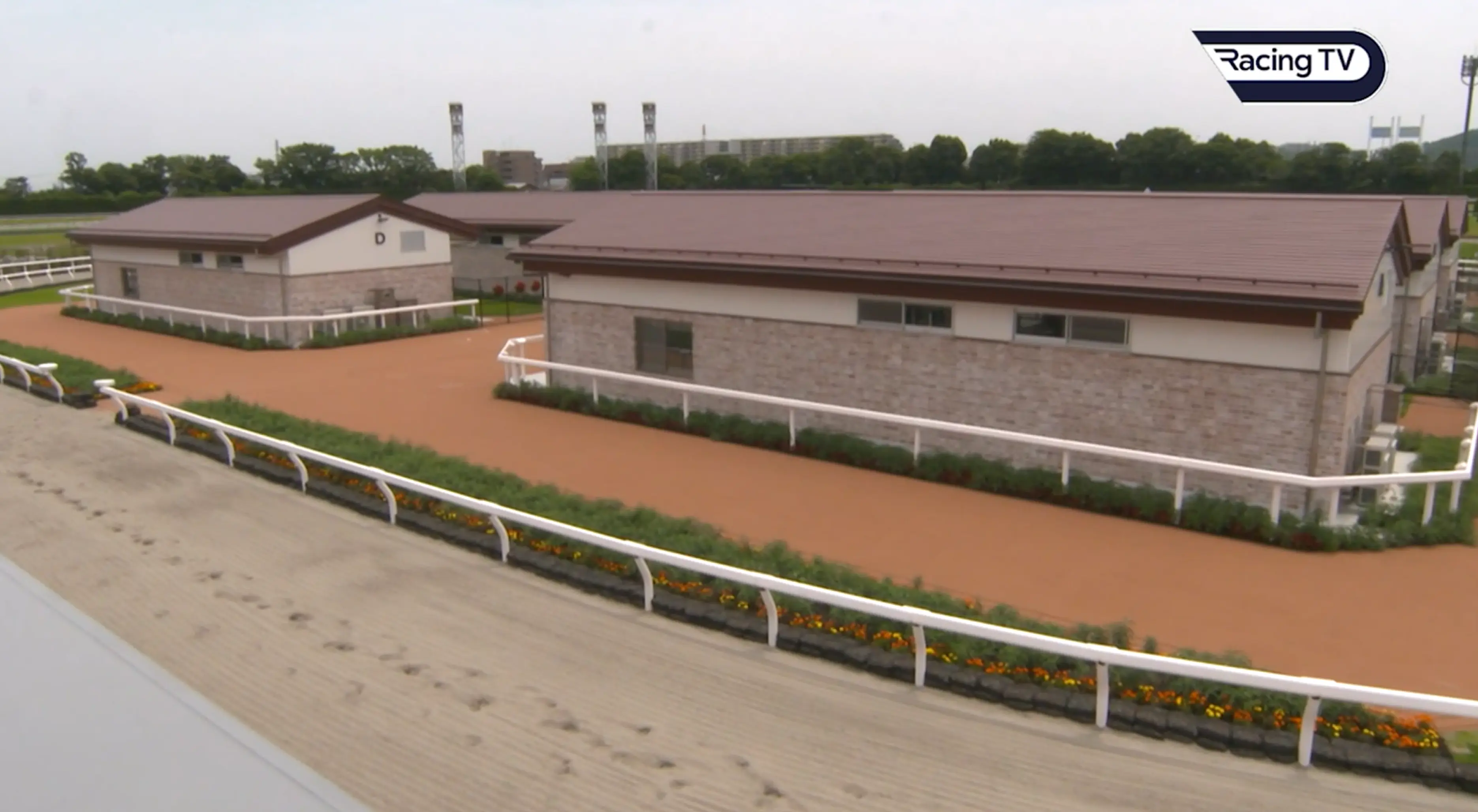
New quarantine stables await international runners in Japan

By Andy Stephens
Last Updated: Tue 5 Dec 2023
Beating Japanese horses on their own turf is a formidable challenge but those taking up the task can at least be assured that their horses will not lack for comfort or care during their time away.
The Japanese Racing Authority (JRA) have recently added impressive quarantine facilities to Tokyo Racecourse, home of the Japan Cup, where up to a dozen international raiders can be housed at any one time.
In the past, racehorses from abroad would have to undergo a seven-day quarantine period at a stable near the airport, but now they can go directly to the racecourse and enjoy top-class accommodation before competing.
Watch what awaits international runners in Japan
Our very own Fran Berry was recently given a guided tour of the new facilities by Dr Akiko Hirama, a JRA vet.
Hirama said: “We have six barns with two stables each. The quarantine protocol is that for the first 48 hours (after arrival when the horses are generally recovering from their journey) the horses must be kept within these walls. Of course, hand walking is allowed and there is a 300 metre dirt track where the horses can exercise. Once the initial 48 hours is up, they are allowed out to the (main) dirt course.”
The racecourse is on the outskirts of Tokyo, where the population is about 14 million, but horses are oblivious to the hustle and bustle because of sound-proofing. “I’m struck by how quiet it is. It’s so peaceful,” Berry observed. And Hirama added: “Even on race days we try to keep the noise out and keep the horses calm and comfortable.”
Horses can also indulge themselves in a deep, shaded sand pit, while weighing-scales are also readily available. A veterinarian and farrier are also on-site.
The stables are spacious with high ceilings and air conditioning, while a selection of bedding and food stuffs are available. Cameras in the stable mean grooms can keep an eye on their horses, not to mention trainers and owners who might be thousands of miles away. “A fantastic facility,” Berry said.
Fran In Japan: watch the whole 45-minute special show
“We have two stables in each barn and the dimensions are three metres by four metres, so it’s roomy,” Hirama said. “We have air conditioning in each barn, so it's nice and comfortable, and each stable has its own individual CCTV camera so the grooms and associations can check on their horse 24 hours a day.
“It's a quarantine stable, so we have to make sure that the windows can close, but we have tried to make it as light and roomy as possible. The JRA provides for food and bedding. Right now we have rice straw in, but there are a selection of wheat straw, wood shavings and papers.”
It was about a decade ago that the JRA made a concerted effort to make the turf course at Tokyo more cushioned. Hideto Shikauchi, manager of track maintenance, told Berry that softer conditions would again be the aim for this autumn. Tokyo is renowned as a fair racecourse, similar in nature to York. “It’s a wonderful track and generally the best horse wins the race,” Berry said.
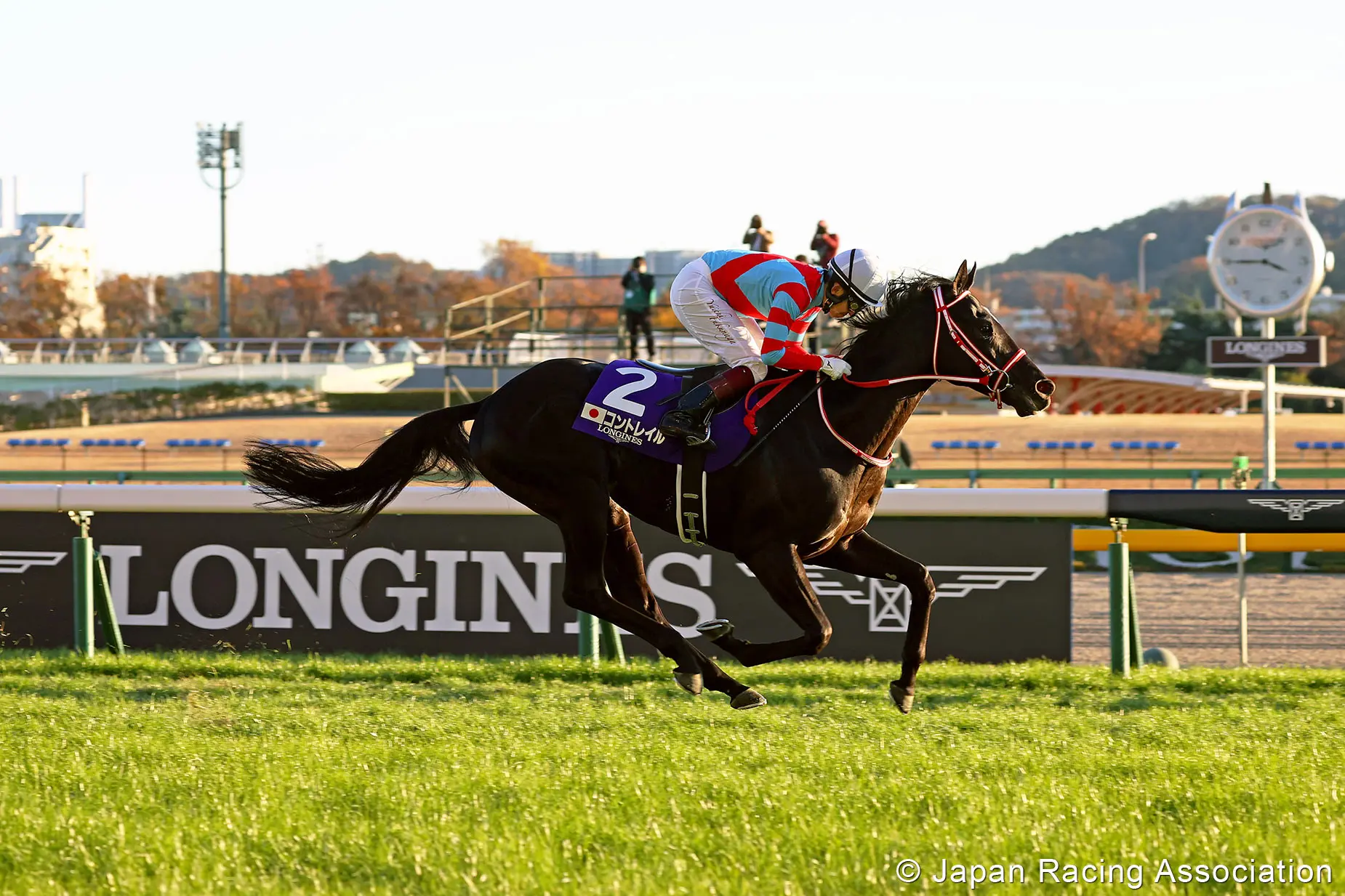
Contrail wins the Japan Cup last year (Pic: Japan Racing)
Sir Michael Stoute won successive renewals of the Japan Cup in 1996-97 with Singspiel (by a nose) and Pilsudski (by a neck) but there hasn’t been a British or Irish-trained winner since the Luca Cumani-trained Alkaased triumphed in 2005 under Frankie Dettori.
It’s a rare big race to have eluded Aidan O’Brien. He ran Japan, who finished eighth, and Broome, eleventh, in last year’s edition, which was won by Contrail.
This year’s renewal, on November 27, will carry prize money of more than £5.5 million with runners finishing in the top ten getting a slice of the riches.
It may feature Pyledriver, trained by William Muir and Chris Grassick. As the winner of this year’s King George VI and Queen Elizabeth Stakes, at Ascot in July, connections would be in line for a $3 million bonus if he goes on to win.

Racing TV
8.4K Videos204K Subscribers171.9M Views
Most viewed
Dave Nevison's Tuesday tips: three best bets at Wincanton
Gordon Elliott: the inside track on my runners over Christmas
King George VI Chase: a guide to all the possible runners
Ante-post tip for the Betfair Exchange Handicap Chase at Cheltenham
Saturday ante-post tips: big-race double for Pauling?
Copyright 2025 Racing TV - All Rights Reserved.
Please bet responsibly
Copyright 2025. All rights reserved