Login
Free Trial
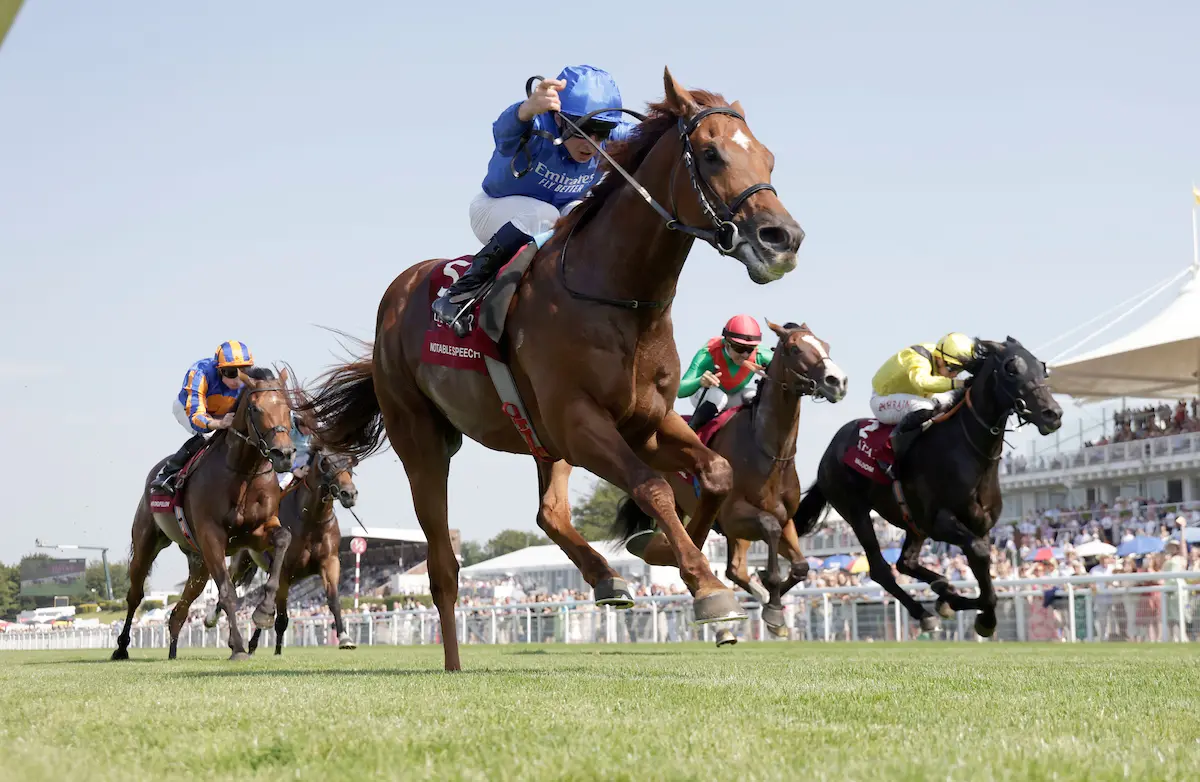
July Cup: what the RaceiQ data tells us about Notable Speech
By Andy Stephens
Last Updated: Mon 7 Jul 2025
July Cup winners require a need for speed, plus connections who get around to recognising the fact. The race’s rich roll of honour features many fabulous horses who have triumphed after being dropped back in distance.
Ajdal is the perhaps most famous example, winning the 1987 renewal after running in the Derby beforehand, although he was an extreme example. Having been run off his feet by Reference Point at Epsom, he was a decisive winner over half as far the following month, with his trainer, Sir Michael Stoute, admitting to "one of the biggest cock-ups" in the way he had been campaigned.
Alcohol Free, successful in 2022, has been the most recent example. She had run in the Lockinge that season, having taken part in the Juddmonte International over an extnded mile and a quarter the previous year.
US Navy Flag won in 2018 for Aidan O'Brien after running in the St James's Palace Stakes the previous month, while Stravinskyand Mozarthad also previously run at up to a mile before flashing home for the Ballydoyle maestro.
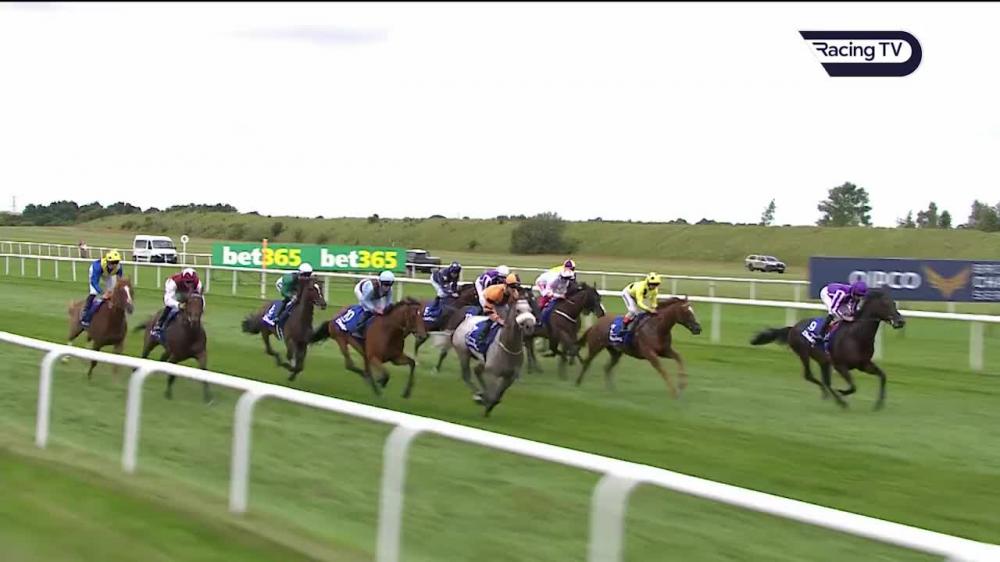
The first four home in 2019 had all run in a Classic that season
Limato won well after finishing fourth in the Lockinge, while Dream Ahead was another to contest the St James’s Palace Stakes immediately beforehand, even with Frankel among the opposition. And in 2019, the first four home - Ten Sovereigns (fifth in the 2000 Guineas), Advertise (15th in the 2000 Guineas), Fairyland (fifth in the 1000 Guineas and sixth in the Irish version) and Pretty Polyanna (second in the Irish Guineas) - had all run in a Classic earlier in the season.
On Saturday, Notable Speech will seek to emulate them, although he’s on a different level to those who have gone before, given that he has raced exclusively over a mile. Even Ajdal had begun life over six furlongs.
Notable Speech was supplemented for £36,000 on Monday and heads the ante-post betting, but how is he going to cope in racing’s fast lane?
He’s by an outstanding stallion in Dubawi, although he is not well known for top-class sprinters. His progeny have a 15 per cent strike rate over 5f-6f, but it rises to 20 per cent over 7f-11f, and 19 per cent over 12f-13f.
Notable Speech wins the 2000 Guineas
The RaceiQ data database has logged all eight of Notable Speech’s races in Britain and reveals he has never run faster than 41.72mph. The quickest furlong he has ever managed has been 10.81sec, towards the end of a steadily-run contest at Kempton in the spring of last year.
Even when winning Guineas, when the going was good and early tempo swift, he did not clock anything better than 11.29sec for a single furlong.
To put that in perspective, last year’s July Cup was also run on good going and the lowest speed any runner recorded was 42.42mph, with the highest being 43.36mph. And the winner clocked 10.75sec, 10.67sec and 10.84sec for furlongs two, three and four.
Notable Speech raced keenly, appearing to want to go quicker, when fourth in the Queen Anne Stakes last month. That may have been part of the reason for his team to belatedly change course with his programme.
However, we are talking chalk and cheese with what he will encounter at the weekend. In furlongs two, three and four at Ascot, he ambled along at 13.19sec, 13.04sec and 12.76 sec. Even when the pace finally picked up, he didn’t go quicker than 11.35sec.
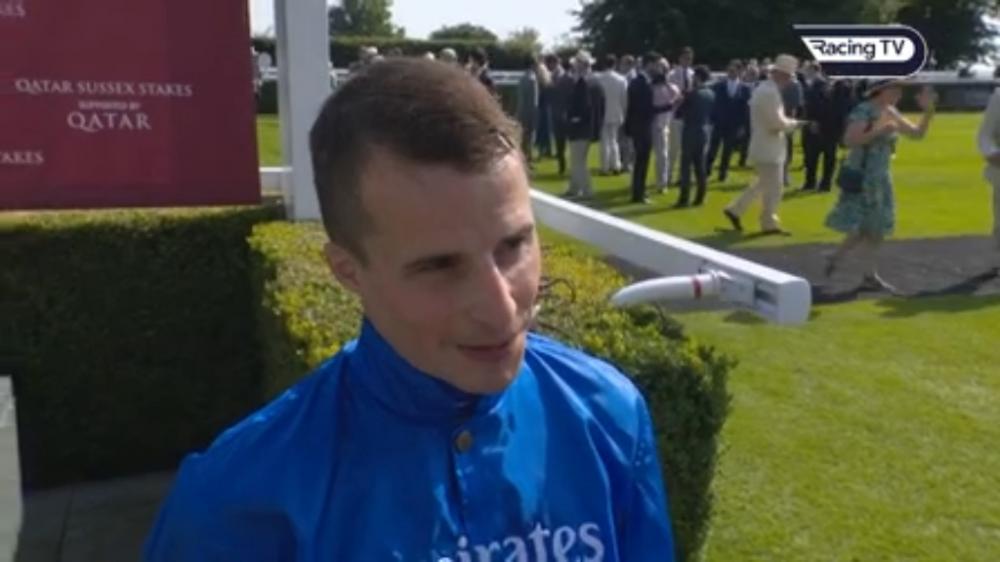
Flashback: Buick talks all things Notable Speech after his Sussex Stakes triumph
RaceiQ’s latest metric is Time Index, which gives us a meeting average and a Time Analysis. At a glance, we can spot the notable times (usually in races where runners sustain their speed after at an end-to-end gallop) from those that are average or worse. They do not tell us everything about a horse’s ability but do give us a clue as to what they can achieve under certain circumstances.
Notable Speech’s scores when victorious, out of ten, with the meeting average in brackets, have been 5.2 (5.3); 5.8 (6.7); 2.9 (4); 5.9 (5.4) and 9.1 (7.9). So, nothing special until the Sussex Stakes at Goodwood, when a decent tempo was able to show him to maximum advantage.
RaceiQ also gives us stride data information, with the common belief being that a high stride frequency helps horses achieve faster speeds. In short, a horse’s speed can be measured by the length of its stride in metres, multiplied by the number of strides it manages per second.
This yields mixed news for Notable Speeh supporters. He is far from the longest-striding horse in training, but on the plus side he can turn over strides swiftly. When winning the Guineas, for example, the average length of his stride was 7.32 metres, and he averaged 2.41 strides per second, the latter figure being the highest in the field.
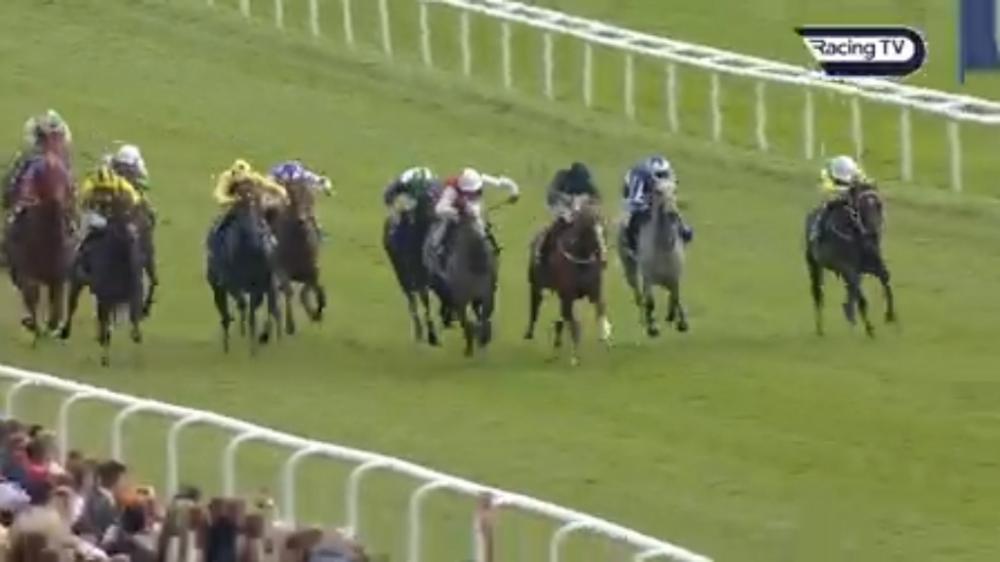
Mill Stream wins the July Cup under Buick
Mill Stream recorded 2.43 strides per second when winning the July Cup last year, although his average stride length was 7.7 metres.
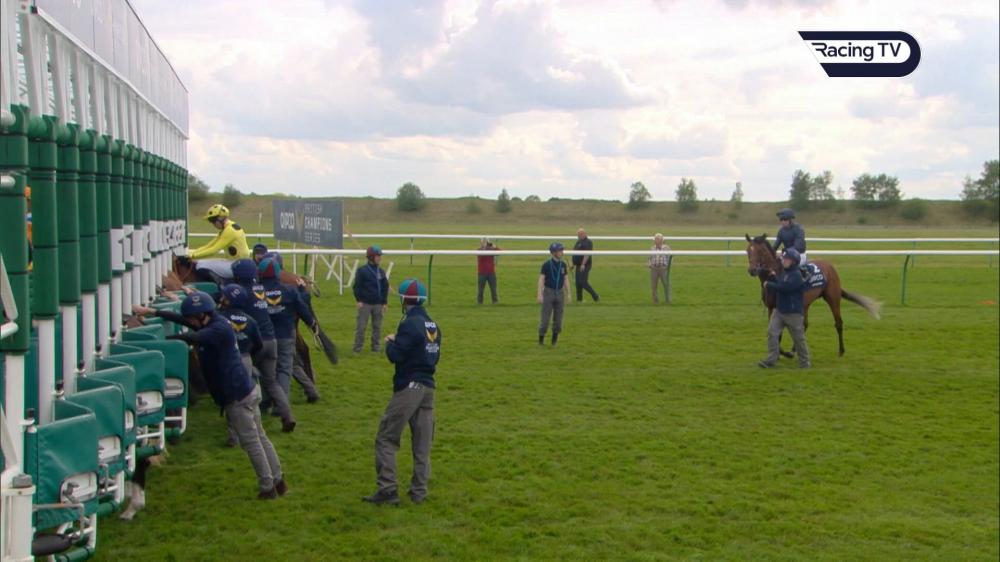
What about his gate speed? It had been nothing special, perhaps by design, until the Quen Anne when he shot out of the stalls and reached 20mph in just 2.03sec. Any sprinter would be happy with that figure, and William Buick, aboard Mill Stream 12 months ago, will not be grumbling if he breaks as smartly on Saturday.
You cannot win a race from the stalls, but you can lose one.
Overall, Notable Speech’s breeding and lack of any experience over 6f, coupled with some elements of the RaceiQ data, suggest his eighth successive Group One assignment on Saturday may be his toughest challenge yet.
But whatever happens, he adds a great intrigue to an edition lacking a bit of star quality. And if he is on the premises a furlong out, the others had better watch out.

Most viewed
Callum Shepherd: Isle of Jura allowed me to move on from Derby disappointment
The Debenhams July Festival: nine horses to follow
Monday tips: six selections for the action on Racing TV
Aidan O'Brien: York clash with Field Of Gold possible for Delacroix
Why Estrange remains one to follow and a 10-1 ante-post tip
Copyright 2025 Racing TV - All Rights Reserved.
Please bet responsibly
Copyright 2025. All rights reserved