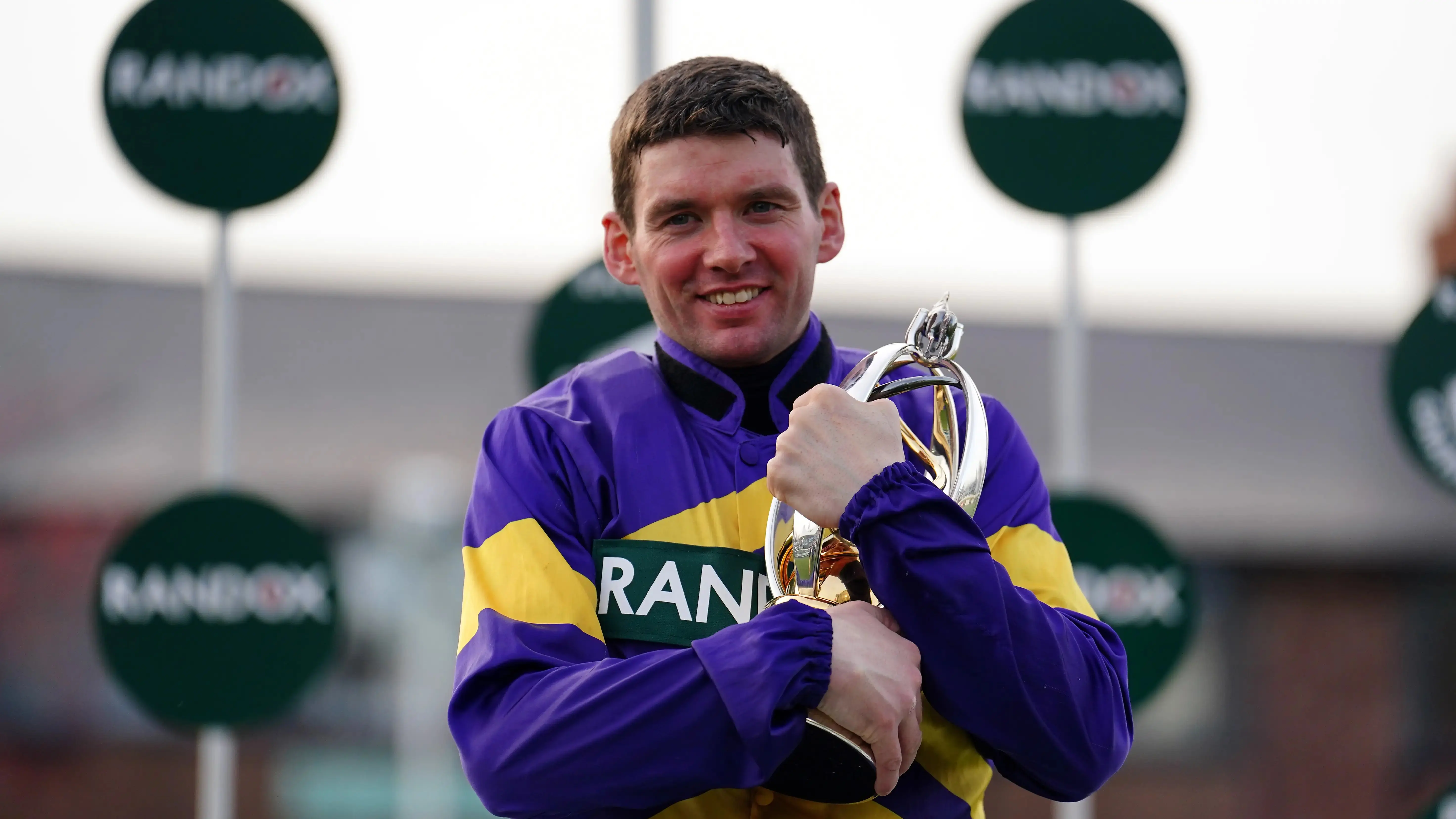
Grand National: Fox relaxed about testing ground for Corach Rambler
By Andy Stephens
Last Updated: Fri 12 Apr 2024
Derek Fox is relaxed about the prospect a heavy ground Randox Grand National at Aintree on Saturday as he seeks back-to-back victories aboard Corach Rambler.
Testing conditions are on the cards this weekend after more rain in Merseyside this week for a renewal where a maximum field of 34 has been declared. The word "heavy" has only featured in the going description for the race twice this century, in 2001 and 2018, but seems likely to resurface.
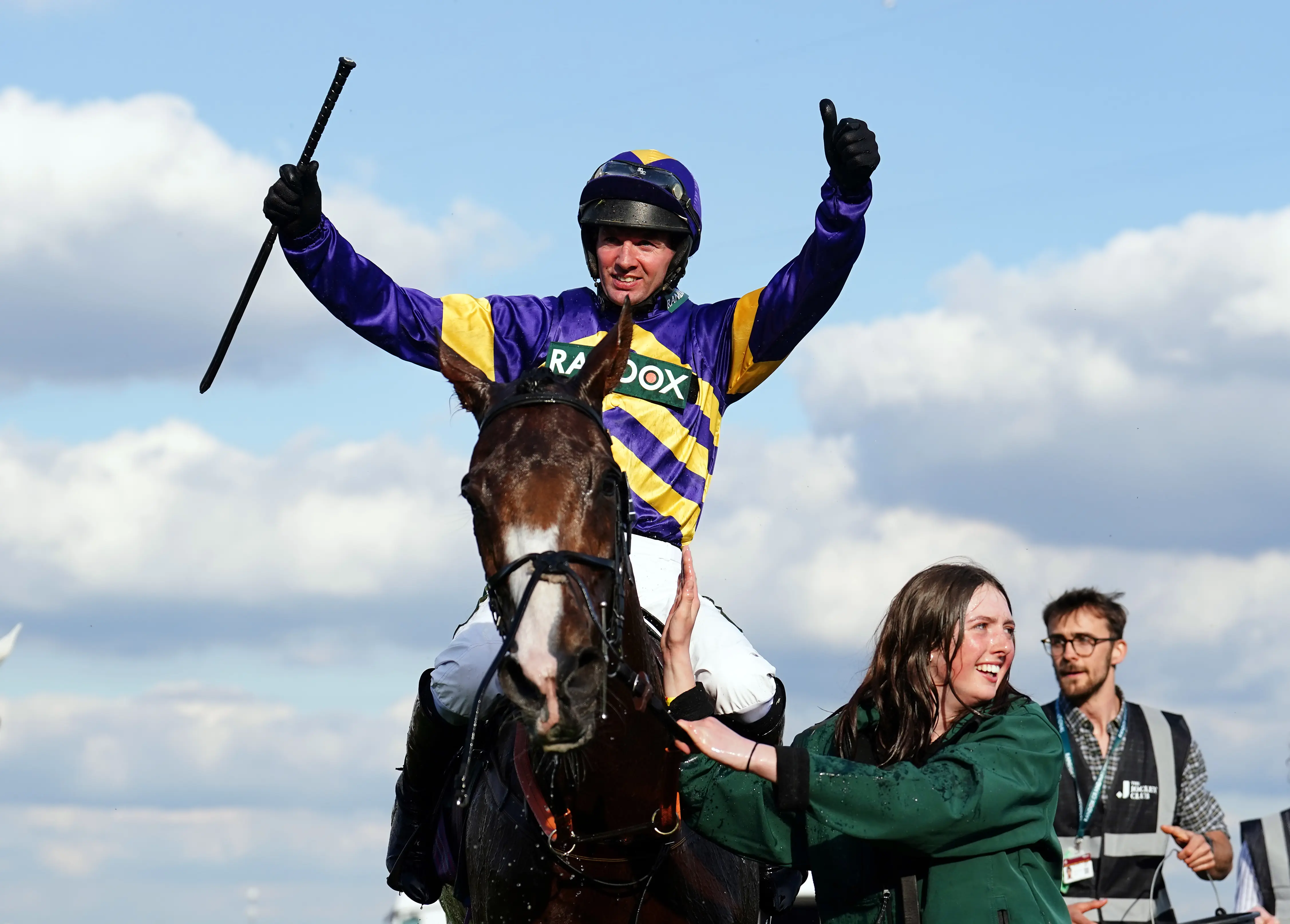
The going was assessed as good to soft when Corach Rambler was an emphatic winner 12 months ago, in the process giving Fox and trainer Lucinda Russell a second success in the great race after the victory of One For Arthur in 2017.
“In an ideal world I suppose I would just have it the way it was last year because that's what he won on over the distance,” Fox said in an exclusive interview for racingtv.com organised by AceOdds. “He’s an older horse and he has form in the bad ground. Hopefully, he’s able to cope with it as well as, if not better than, the rest of them.
“I remember winning a novice hurdle on him at Carlisle [in 2021], and it was extremely heavy. It was not nice ground [in the Gold Cup at Cheltenham last time]. I like to think his form is good enough on the bad ground.
“It would be a nicer race to ride in if it was slightly better conditions; I think everyone would enjoy it a bit more if it wasn't extremely heavy, but I'm not that concerned about it.”
Corach Rambler has regularly pounced from well off the pace in his races, such as when gaining his two wins in the Ultima Chase at the Cheltenham Festival. He also came from the back of the field when third to Galopin Des Champs in the Cheltenham Gold Cup last month.
However, he was never far off the pace when winning the National last year, and Fox is hopeful he will again play a prominent role from the outset.
“Corach Rambler developed his own tactics really,” Fox said. “It was never the intention to be so far back [in his races], but sometimes it takes him time to warm up. In the National last year, as the tapes went up and I give him a squeeze away at the start, he just landed in a very prominent position and I was happy to let him go as far as the first before I reigned him back a bit.
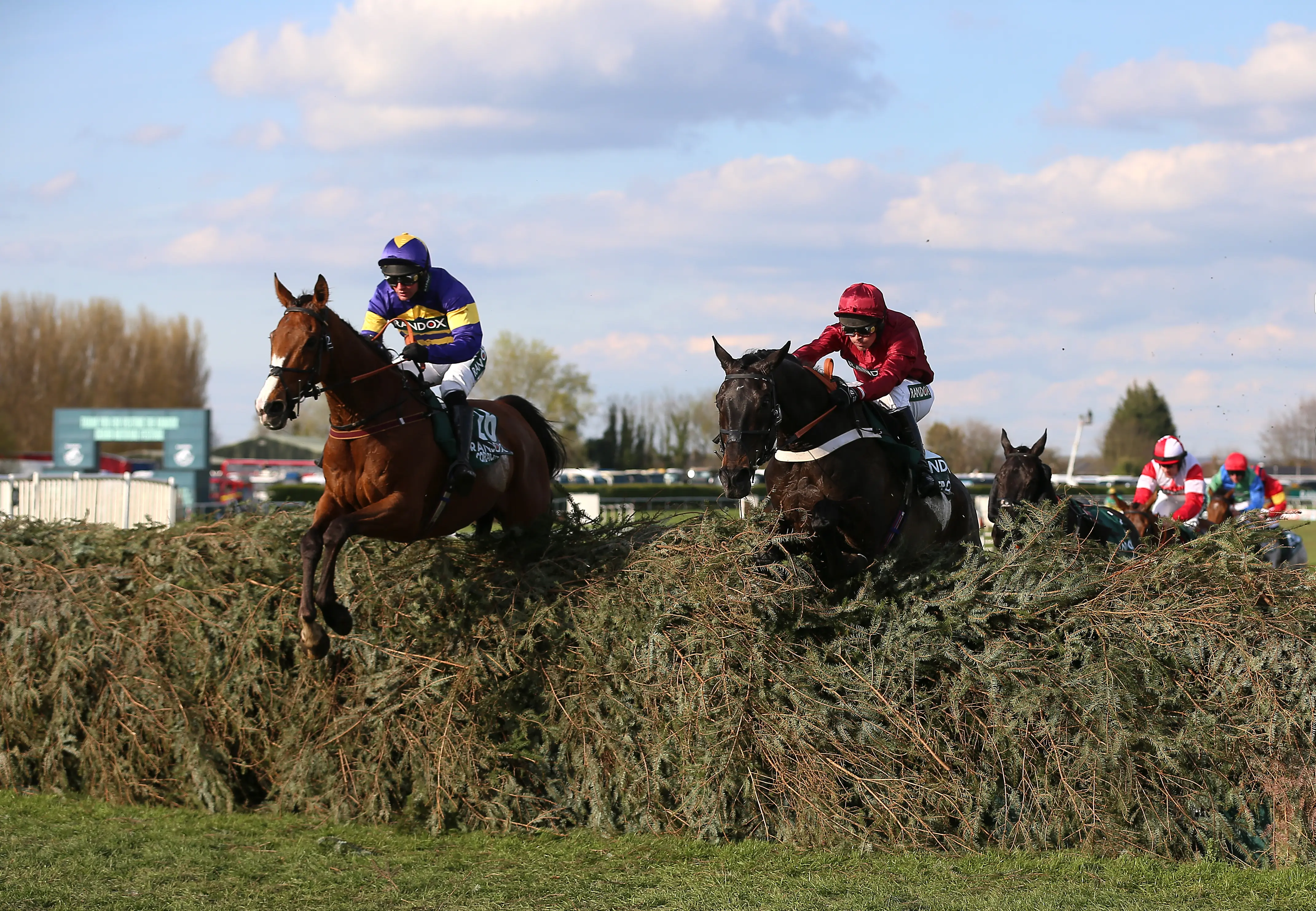
Fox and Corach Rambler, left, negotiate the final fence
“I was up out of the way and to my delight, through the race, I was sitting handier, which meant I could have a better view of things and didn't need as much luck in running by being up out of the way of the trouble.
“In an ideal world, he'll again jump sharp and be able to sit in the first ten. But it's like any race, you have to ride as it comes. If he is further back, so be it. I know he will stay on from the back as well, that'll be the plan anyway.”
Changes to this year’s race include a standing start, but Fox is not concerned, suggesting it was odds-on to happen regardless of the rules being rewritten.
He said: “From my experience, with big fields anyway, the standing start can happen. If you break the tape the first time, it goes back to a standing start. In a race like the Grand National, even without this rule, there was nearly a 70-30 chance of it happening as a standing start because people rushed the tape so often. So, instead of calling it a false start, they've gone straight for the standing start.
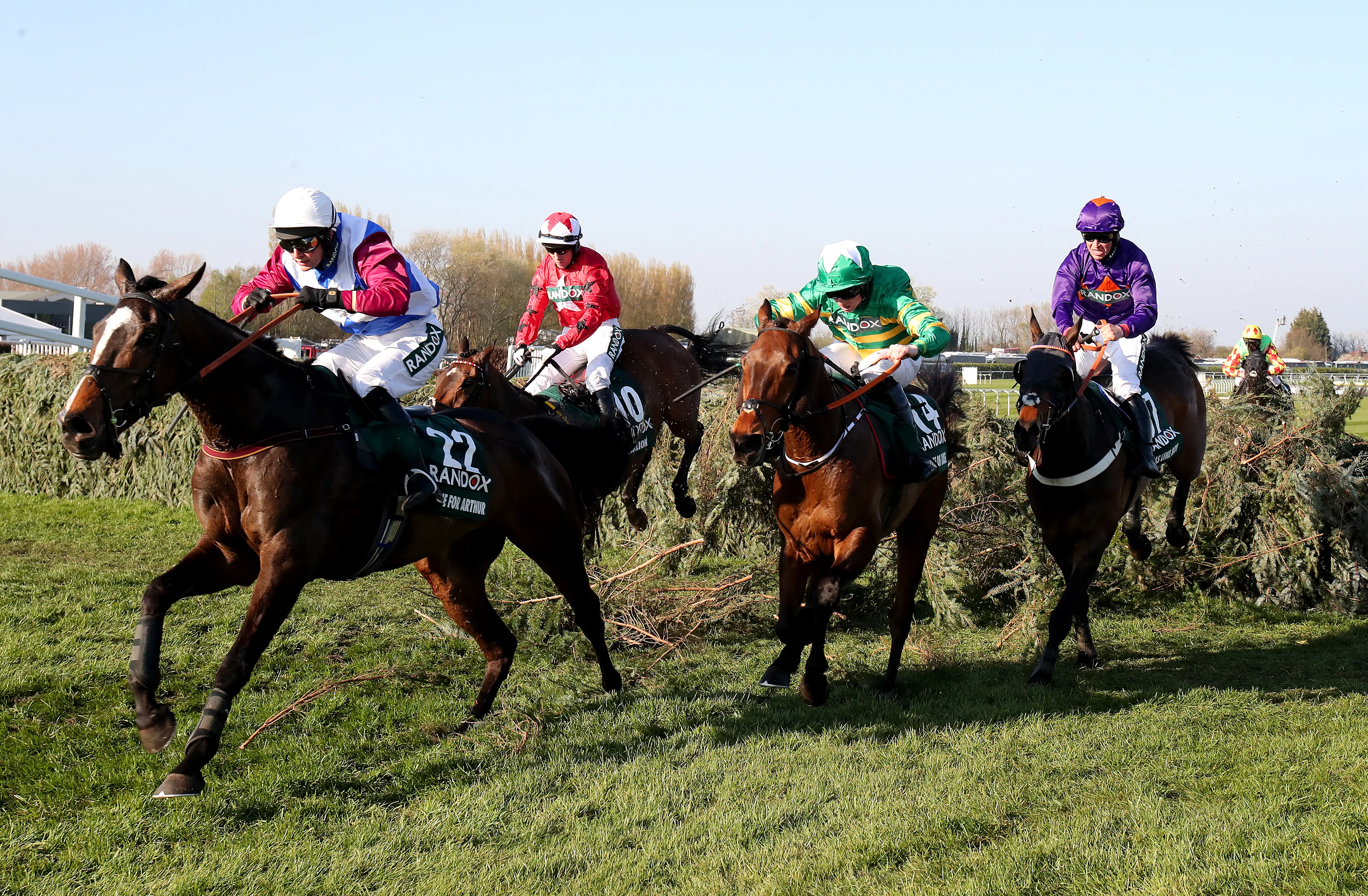
Fox and One For Arthur head for home in 2017
“I don't know how it's going to work. It is still going to be causing people to stand on top of the tape? Hopefully, everyone will take their time walking in and not get too close to the tape. I don't think it's going to be a big concern for me.”
On other changes, he added: “I don't know if the first fence being 60 yards close to the start will make a massive difference. It should help a little bit, but I think the main difference that we'll notice more will be the six fewer runners. It'll just create a bit more space going to the first fence. That’ll be the most drastic change.”
Some horses shine the first time they encounter the National fences but, for whatever reason, don't necessarily take to them on the second occasion. Does Fox have any reservations for Corach Rambler on that front?
He said: “Yeah, it can happen, but he hasn't shown any signs of that having an effect on his jumping this year, and it's not true for all horses.
“One For Arthur ran very well in the Becher Chase to finish fifth on his first time over the big fences. He didn't actually jump that well, he made a few mistakes over the first few and then, by the time he ran in the Grand National, he jumped better. I'm hoping that that's not going to be a problem for Corach Rambler and that he'll jump with confidence.”
Fox will be the most successful National-winning jockey in Saturday’s race, although the five wins that George Stevens achieved in the race between 1856 and 1870, remains quite a task. He recalls his first experience of the course, when riding Portrait King in the 2015 Becher Chase, ending in frustration.
“I was staying on and going to be in the shake-up,” he recalls. “Unfortunately, I jumped left and caught the heels of the horse in front of me and I fell at the second last when staying on from the back. It was very annoying at the time.”
Two years later, that was all forgotten as One For Arthur won the National. And then came his second success 12 months ago.
“Before I won the National, I was going around under the radar,” he said. “When I won on One For Arthur, that kind of propelled me into the spotlight. To win it again on Corach Rambler just made me twice as well-known. It's been life-changing.”

Don’t miss a second from Aintree and join Racing TV for just £12 a month for an entire year, saving over £215 – OFFER ENDS SUNDAY! Click here for more details.
Related posts
Five horses to follow at York on Wednesday
Sky Bet Ebor Festival tips: Peter Naughton's five best bets
Dave Nevison's Tuesday tips: "he looks set to get an uncontested lead"
2026 Juddmonte International: runner-by-runner guide and tip
Ryan Moore: the inside track on my Day One rides at York
Featured offers

Bet £10 get £30 in Free Bets with BallyBet
T&Cs Apply
Claim Now

Bet £10 get £40 in free bets with Kwiff
T&Cs Apply
Claim Now

Bet £10 get £30 in Free Bets with talkSPORT BET
T&Cs Apply
Claim Now

Bet £20 and Get £40 in Free Bets with Unibet
T&Cs Apply
Claim Now
Copyright 2026 Racing TV - All Rights Reserved.
Please bet responsibly
Copyright 2026. All rights reserved