Login
WATCH FREE
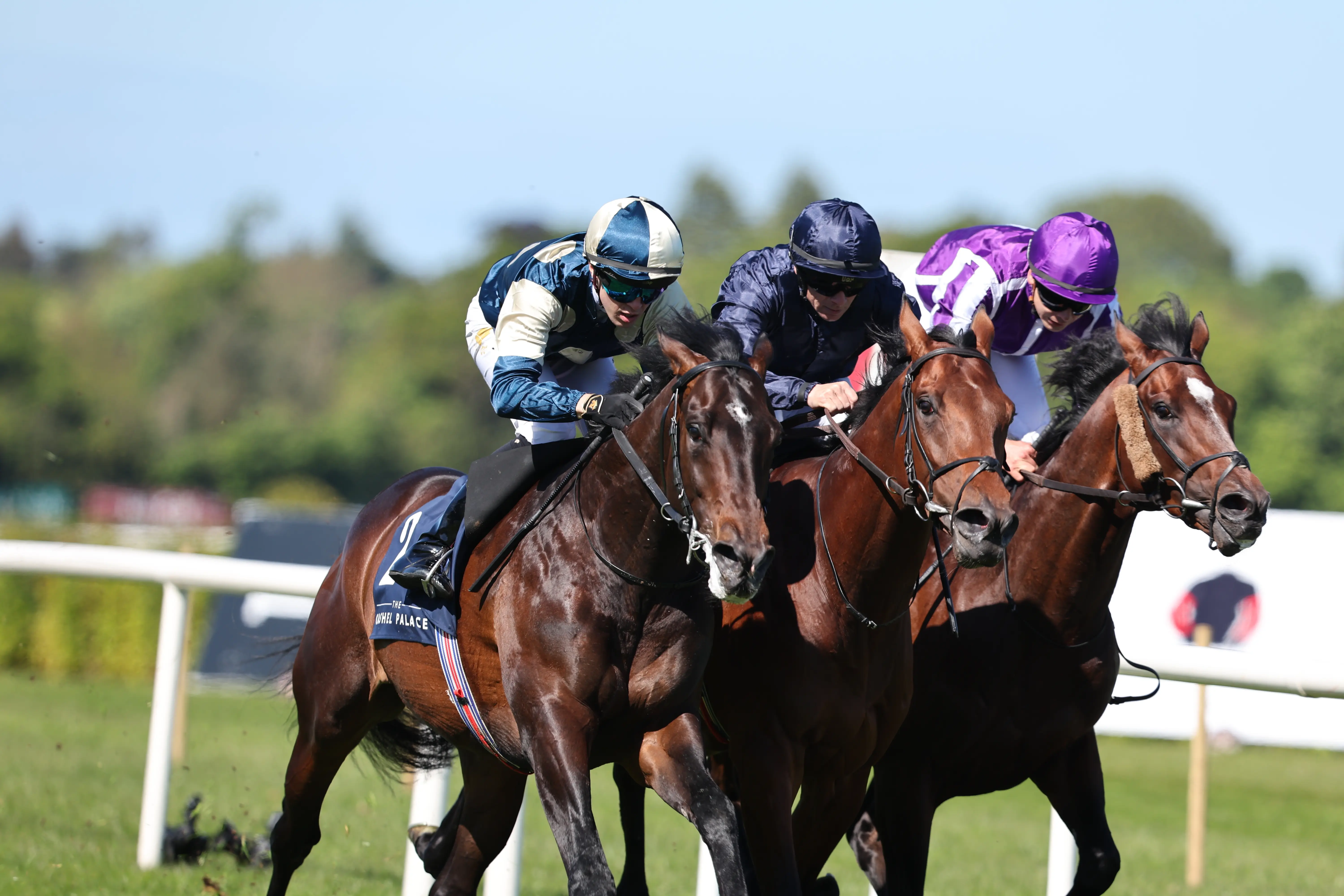
Derby stride data: a 12-1 chance who fits the bill
By Racing TV
Last Updated: Wed 3 Jun 2026
What does the stride data tell us about the leading contenders for the Betfred Derby at Epsom on Saturday? Sam Kirwan, a Data Scientist for Ellipse, tells us more and shares his fancy for the premier Classic.
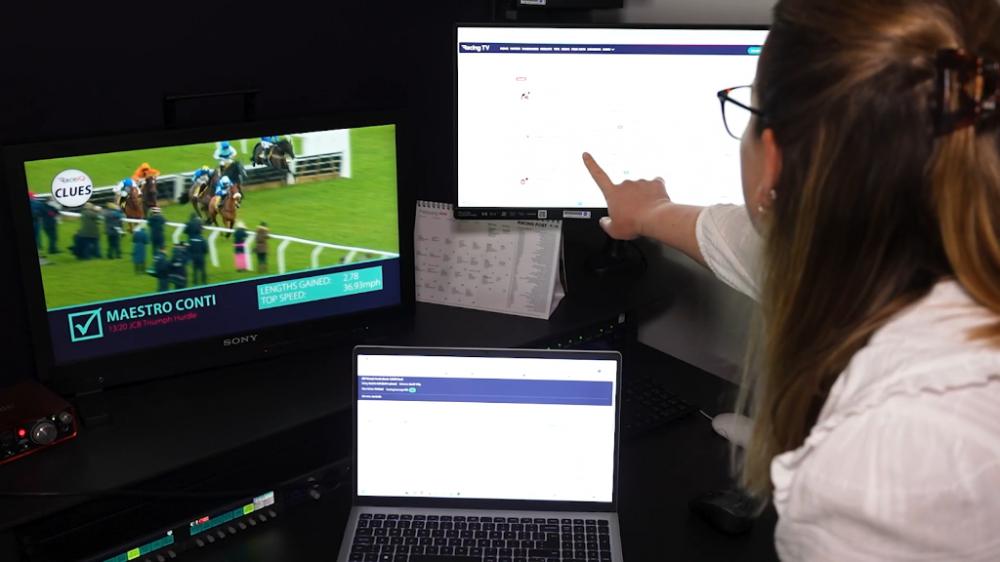
Where racing meets data! Angus McNae tells us more
Many of the Betfred Derby runners will be having their first run over a mile and a half at Epsom on Saturday. Some will relish the extra demands made of their stamina, while others will find the test too much.
The 247th running of the great race gives us the opportunity to compare stride patterns of horses who ran in the traditional trials over recent weeks.
We can also compare some of the stride patterns of the main contenders to their siblings, to see what that reveals.
Benvenuto Cellini's low glow
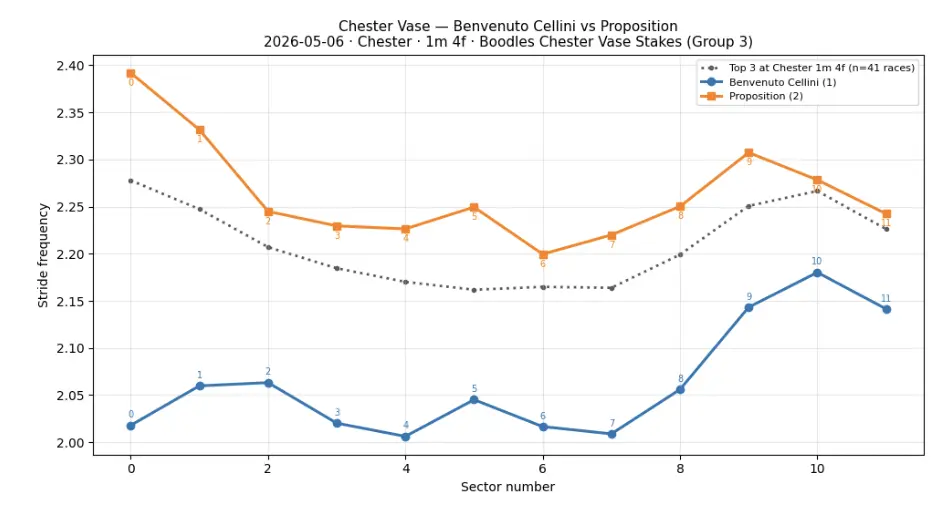
The favourite for this year’s Derby, Benvenuto Cellini, has an incredibly low stride frequency.
Over all trips that he has raced over, he strides much slower than the population average.
This points to him using a monster stride length to win his races. It also suggests he has stamina in abundance.
We already know he stays a mile and a half, courtesy of his emphatic victory in the Chester Vase last month, which produced a Time Index of 9.64.
Stamina will not be an issue for this highly unusual 12-furlong horse.
His sister, Giselle, was a very smart 12f filly before injury cut short her career after the Oaks.
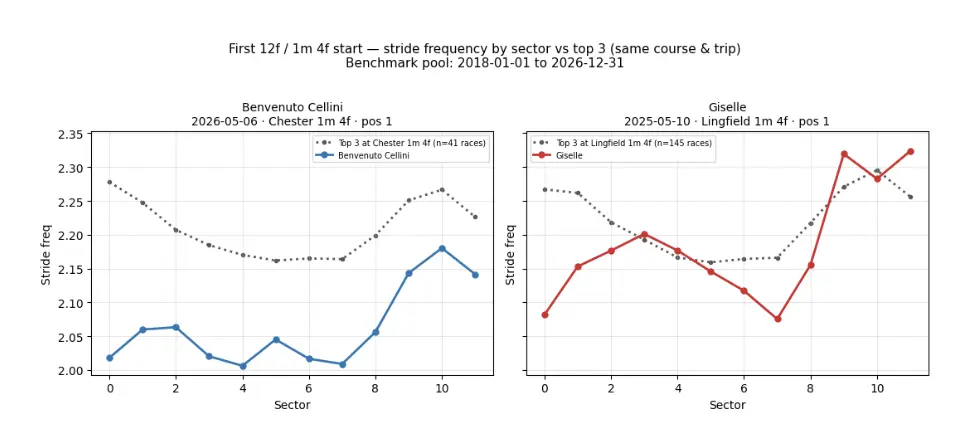
Benvenuto Cellini's stride pattern, above, compared to that of his sister, Giselle
The above shows how unusual Benvenuto Cellini is.
It also goes to show how full siblings can be very different horses, with Giselle striding like a typical smart 12f horse.
For all stride length is an indication of ability, it is a concern just how reliant Benvenuto Cellini is when it comes to stride length.
He is a good mover and the rain forecast to fall at Epsom over the coming days raises the possibility of him not getting the fast ground that clearly serves him well.
In addition, Ryan Moore, who seems sure to ride him, is likely to take a brave route on him, staying as close to the rail in order to counteract the Epsom camber and let his mount stride out to the best of his ability.
Moore got all the breaks adopting this tactic on City Of Troy a couple of years ago, but will he get the same breaks this time?
A side note: Proposition chased home Benvenuto Cellini at Chester and the pair could meet again, but looking at his stride pattern he will be suited by a return to 10f. Regardless of trip, he is capable of taking a step forward when not setting an overfast pace, as he did on the Roodee.
Proposition came home with a Finishing Speed Percentage (FSP) of 101%, compared to par of 103.8%. His Chester effort, overall, was taking, not least as it was only his third start. He has gone in the notebook for the long term.
Item takes chance to shine in Dante
During his two-year-old career, connections campaigned Item in the manner of an average horse, rather than a smart one.
Wins in low-key races at Kempton and Bath meant he went into the Dante with a lot to find on form, but it did not stop him winning in convincing style.
He and the Dante runner up, Action, are both sons of Frankel, but stride differently, and this tells us who is more likely to be suited by the step up in trip.
Action did not get an efficient start to the Dante, as the whole field went faster than par in the first part of the race and he was rushed to the front during the hottest part to make the running.
A better beginning would have probably seen him getting closer to Item. However, that is where the positives come to a stop for him.
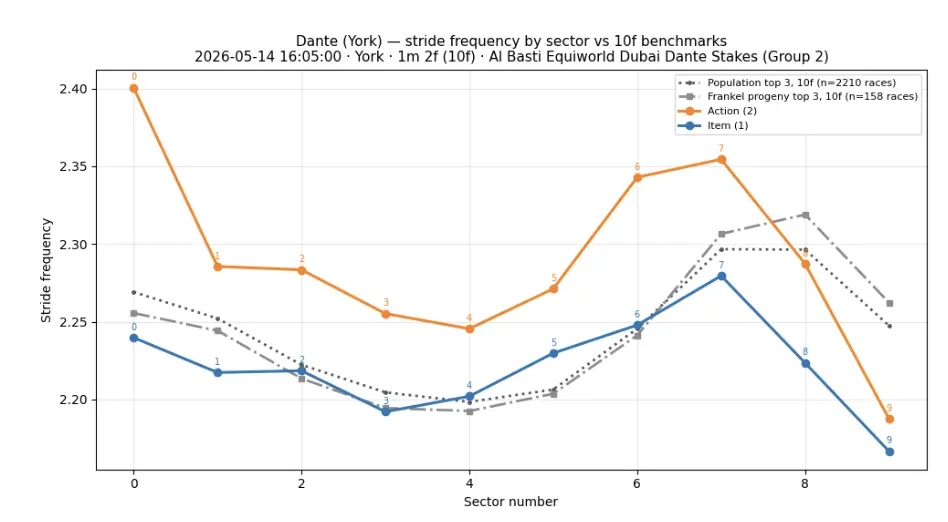
The above graph shows Action is a high striding horse and that the Derby trip is likely to stretch him. By contrast, it reveals how Item will be suited going up in trip.
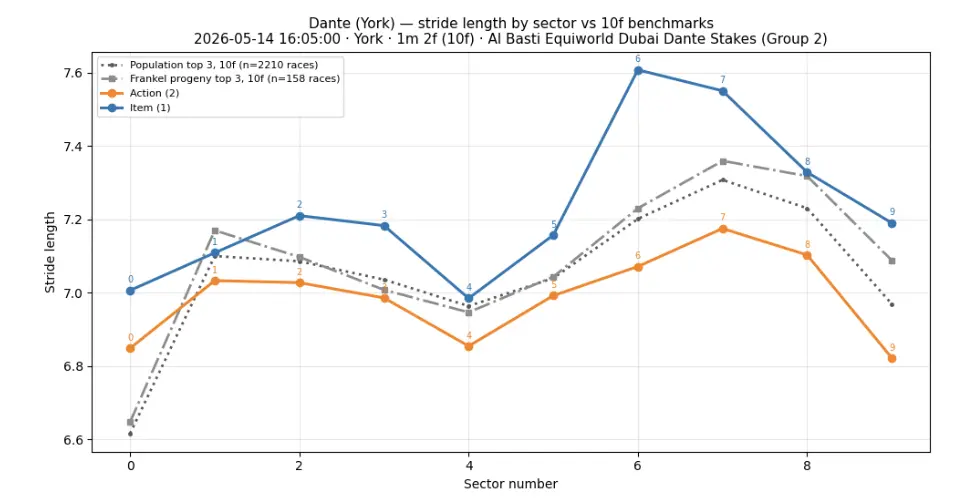
A look at the stride lengths of the top two from that encounter shows how Item stretched out to make ground and get past the leader before idling in the last furlong.
He is also less exposed than most of the rivals he will face at the weekend and he looks to have a big chance. However, that is reflected by his prominent place in the ante-post betting.
Like his stablemate, Proposition, Action is a horse to keep onside when given a fair go at 10f.
He may be in here to make the running for better fancied stablemates. If that proves the case, I suspect he will show up for a large part of the race before fading.
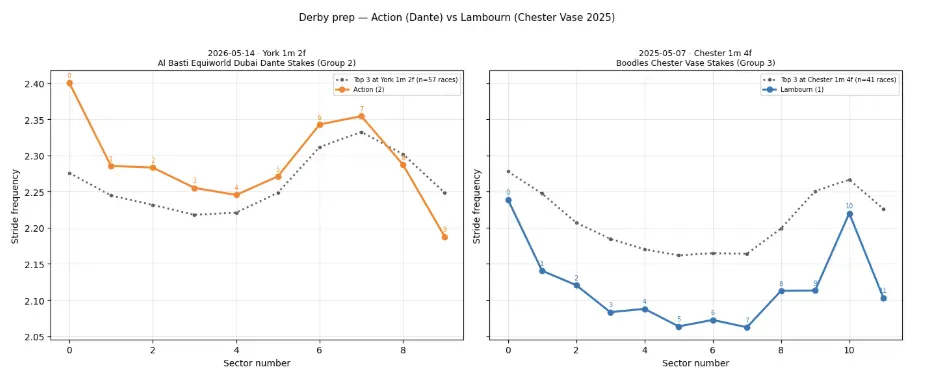
Action is a half-brother to last year's Derby winner, Lambourn, who was fancied by many experts because of his low cadence despite jockey bookings suggesting he wasn't the stable’s No 1.
A look at the below graph shows how Action’s stride cadence was much higher in his Derby trial compared to his older brother, Lambourn, whose stride was much lower than the population average.
This provides another example of siblings racing in very different manners, and that stride data can predict preferences more accurately than pedigree analysis alone.
Pierre and James to meet for third time
Pierre Bonnard and James J Braddock are probably on first named terms as they have already met twice in Derby trials this season.
Their first encounter came in April, when they were both in need of the run. They stepped forward when flashing past the post as one in the Derby Trial last time.
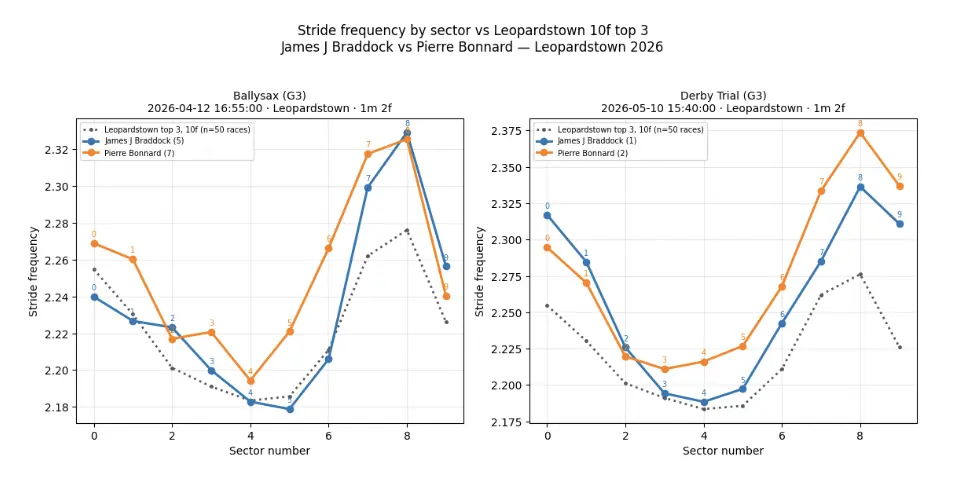
On both occasions, James J Braddock, a son of Zarak, strode like he will be better suited better for going up in trip then Pierre Bonnard.
This is even more significant when you look at the average stride frequencies of Zarak’s progeny over 12 furlongs compared to the population average.
Zarak’s offspring have a high stride frequency over 12f compared to the population overall.
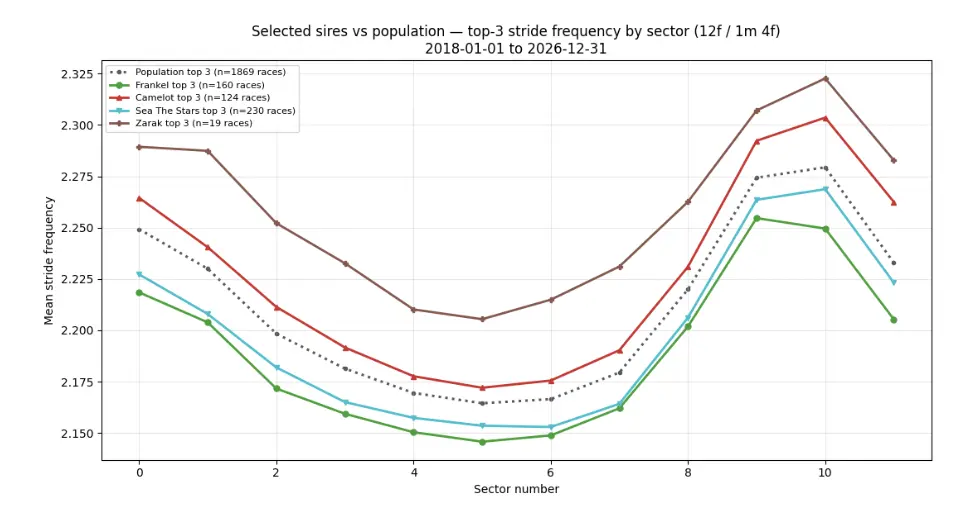
Top stallions and the stride data of their progeny
Similar can be said for Camelot, the sire of Pierre Bonnard, but nowhere to the same degree.
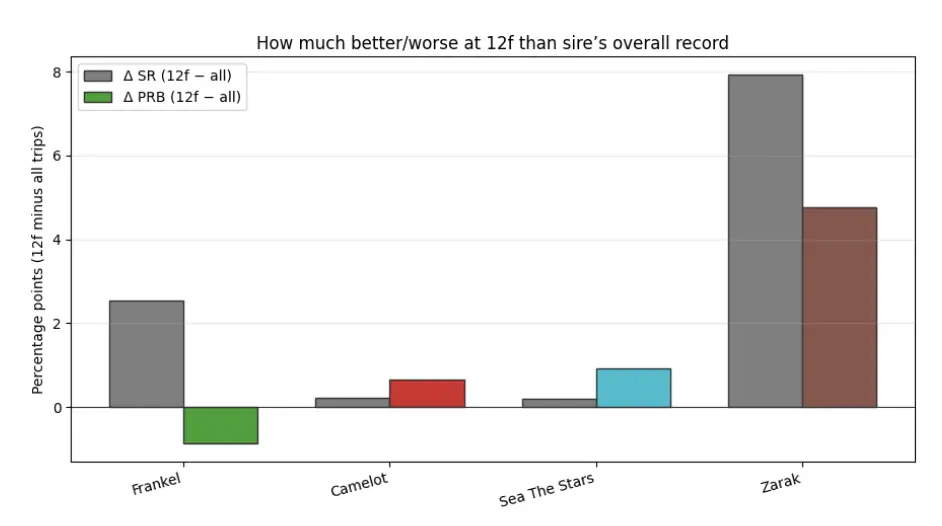
This is an unusual thing to see, and made me curious as to how do Zarak’s progeny perform over 12f compared to all other trips.
The results were surprisingly strong. See below.
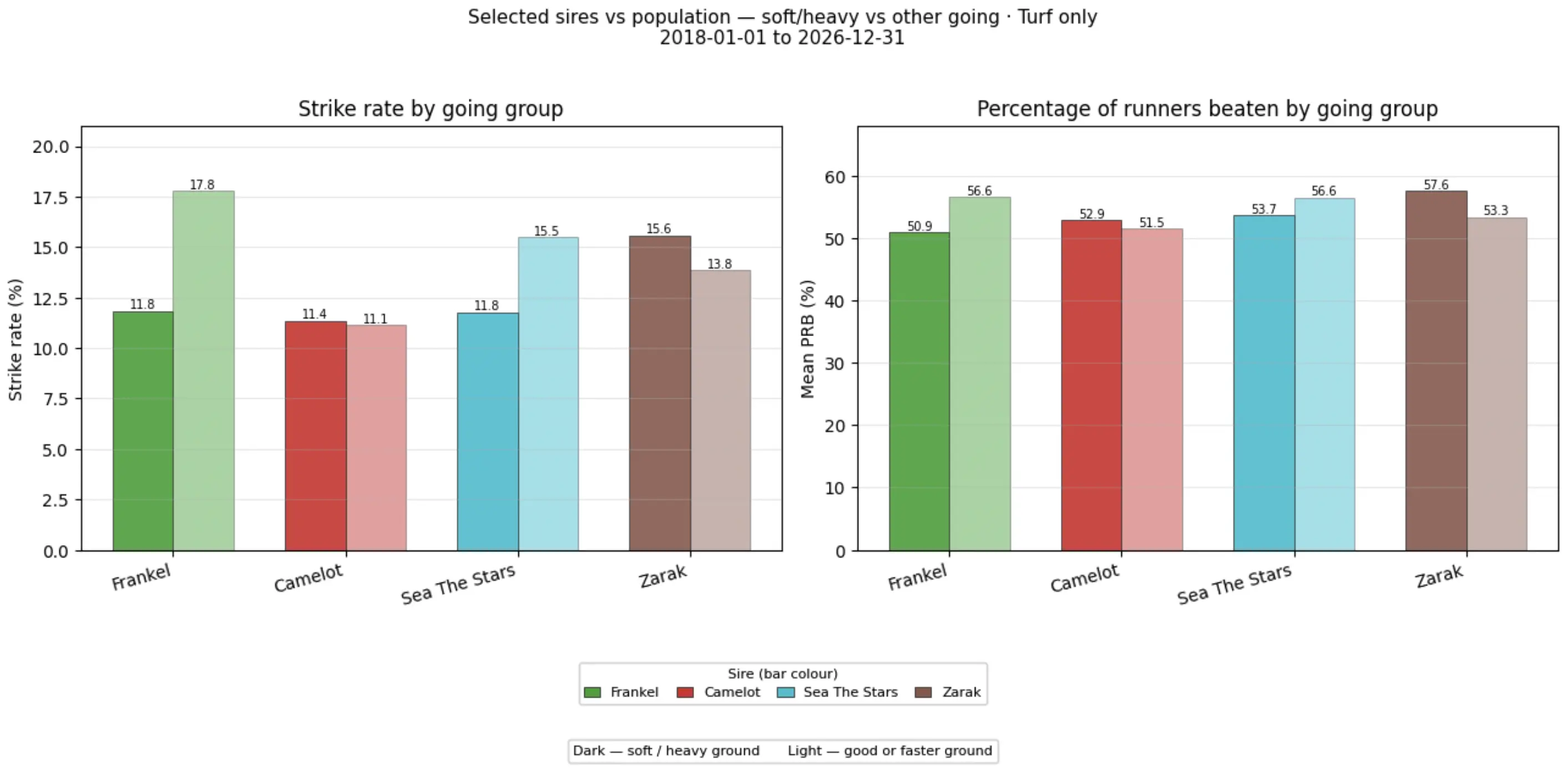
Also, with rain forecast, I looked at how Zarak’s stock fare on slow ground. It yields another positive for James J Braddock as the strike rate and percentage of runners beaten by his sire’s progeny increases on slower ground.
A wet build-up could certainly be to his advantage.
Back to the action that unfolded at Leopardstown: finishing speed percentages point to the race being slowly run, with the winner having an FSP of 106% compared to par of 101%.
James J Braddock would have been seen to greater advantage had the pace been stronger, plus the runner up had first run on him.
One thing the data cannot quantify is how much potential improvement could come from Pierre Bonnard.
He looked green in the closing stages and, if he was mine, I would be reaching for head gear.
However, there are far more positives pointing towards James J Braddock to confirm the form.
Overall, the Leopardstown Derby Trial looks to be the form line that is offering punters the value in the Derby market.
Strong preference is for James J Braddock, who did well to beat Pierre Bonnard given the circumstances and is open to more improvement, yet he is a bigger price.
CONCLUSION: BRADDOCK TO STAY A STEP AHEAD
This year’s Betfred Derby gives us many angles to explore when it comes to stride patterns, and has unearthed a value bet in the form of James J Braddock as everything points to the Joseph O’Brien-trained colt improving for the test.
He strides like a horse will see out the 12f, and that’s before considering the stride influence of his sire, Zarak.
And, going forwards, keep Proposition and Action in mind for the months ahead when they run over a mile and a quarter, regardless of whether they run at Epsom or not.


We’ve collated some of the ways people can behave when their gambling is not under control. To find out more click here to head to our dedicated website page.
Betfred Derby Festival 2026 - Unmissable content!
Related posts
Under The Radar: Paddy Magee nominates three to follow
Ross Millar's Monday tips: "he is undeniably well handicapped"
William Buick set to be reunited with Touleen at Ascot
Bond Thoroughbreds: the inside track on their top team
Trustyourinstinct flies home to land Curragh Cup
Featured offers

Bet £10 get £30 in Free Bets with TalkSportBet
T&Cs Apply
Claim Now
Bet £10 get £30 in Free Bets with BallyBet
T&Cs Apply
Claim Now

Bet £10 Get £40 in free bets + Money back 2nd to SP fav with BOYLE Sports
T&Cs Apply
Claim Now

Get a £50 free bet when you bet £50 with Coral
T&Cs Apply
Claim Now

Bet £10 get £40 in free bets with Kwiff
T&Cs Apply
Claim Now
Copyright 2026 Racing TV - All Rights Reserved.
Please bet responsibly
Copyright 2026. All rights reserved