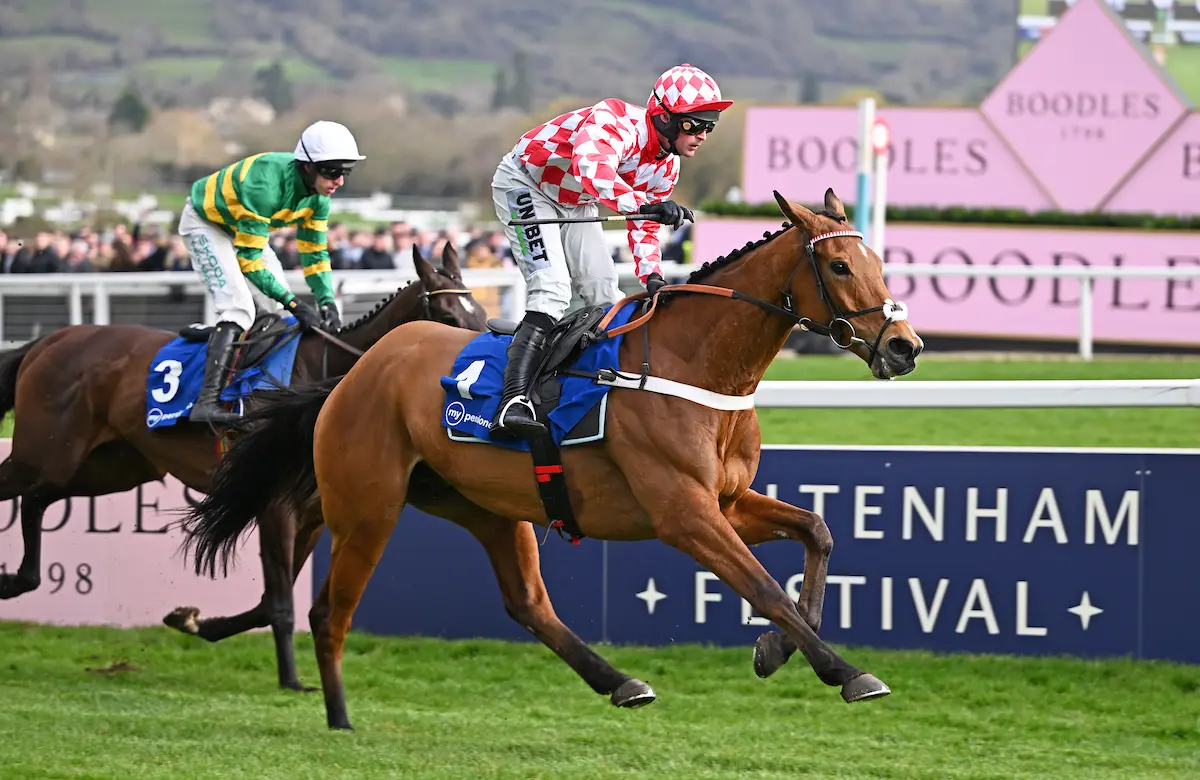
Pedigree Meets Performance: Finding the 2026 Gold Cup Edge
By Jess Stafford
Last Updated: Mon 16 Feb 2026
In this year's Weatherbys Cheltenham Festival Betting Guide, Jess Stafford has combined RaceiQ data and pedigree analysis to help us find the winner of this year's Gold Cup.
Win Cheltenham Festival tickets, a 50" TV and a 12-month Racing TV membership! Enter below!
Analysing a horse’s pedigree to sharpen betting strategy is something I’ve been fascinated by for many years. When it comes to Cheltenham, it has always felt like the edge I wanted to explore and share - leaving form students and professional tipsters to their own conclusions while I focused on the long-term breeding patterns that might point us towards a Festival winner.
More often than not, that approach has proved valuable. From season to season, the meticulous work done by breeders - producing the next generation of National Hunt talent for agents, owners, trainers and jockeys to capitalise on - continues to inspire this column. Fashionable bloodlines come and go, the latest ‘next big thing’ is often fawned over, yet traditional, old-fashioned influences have a habit of resurfacing when it matters most.
Pedigree analysis is one of the most compelling aspects of our sport, supported by a wealth of data stretching back more than 15 years thanks to Weatherbys, whose work in compiling sire, dam and damsire details for every Cheltenham Festival runner is invaluable. Their daily celebration of Festival-winning sires and breeders is something I’d love to see pushed even further - after all, breeding success deserves centre stage during Cheltenham week.
Like every industry, racing must continue to modernise. We have already embraced technology - from the early days of sectional timing to far more advanced performance metrics. In National Hunt racing in particular, stride length, jump efficiency, jump index and lengths gained at fences now provide meaningful insight. Platforms such as RaceiQ draw on billions of datapoints and AI-driven modelling to deepen our understanding of race performance. Trainers, too, increasingly rely on heart-rate monitors and biometric data to track a horse’s wellbeing and conditioning.
Breeding has not been left behind. Artificial intelligence and genomic tools are now being used to complement traditional pedigree analysis, helping breeders identify optimal stallion-mare matches based on DNA compatibility. What does this mean for Cheltenham? For now, probably very little. It is highly unlikely that the horses lining up over the four days have been materially influenced by AI-led mating decisions. But the future is coming — and Festival performance data may yet become another key reference point for National Hunt breeders when selecting stallions.
That intersection - where pedigree trends meet modern data - is where things become particularly interesting from a betting perspective.
With that in mind, I’ve taken a closer look at the pedigrees and performance data of several leading Gold Cup contenders, exploring what their bloodlines and numbers tell us about their prospects at this year’s Festival. With the established Gold Cup form already well documented, attention here turns to those yet to line up in the race but whose pedigrees hint at untapped Gold Cup potential.
Jango Baie – stamina promised, still maturing
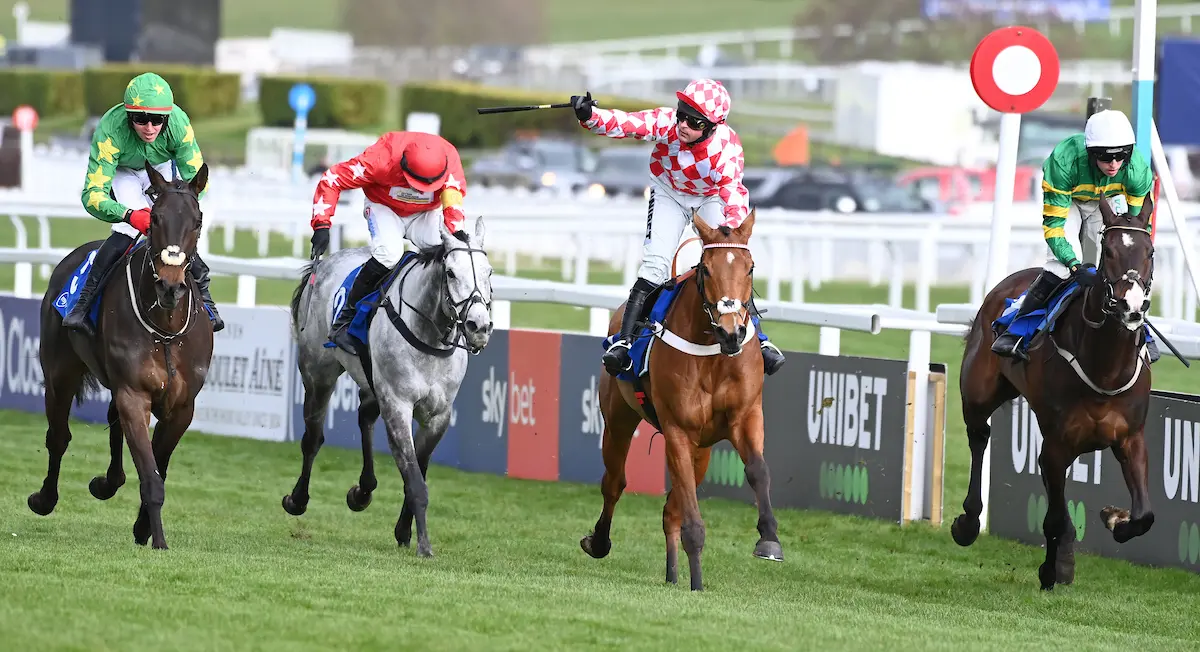
Can Jango Baie repeat last year's Cheltenham Festival win in the Gold Cup? Despite his modest Jump Index, the step up in trip looks a positive. (Healy Racing)
Jango Baie will be the first son of Tiger Groom to line up in a Cheltenham Gold Cup. Tiger Groom, a useful French hurdler who stayed well, hails from a deep Aga Khan family, with his dam a middle-distance winner whose progeny performed to a high level across both codes. Although Tiger Groom has only one Festival success to his name - Jango Baie’s Arkle victory - the line has produced honest, durable types, including Behrajan, fifth in Best Mate’s 2003 Gold Cup.
Jango Baie is out of Tenessee, a daughter of the influential Kapgarde. While Kapgarde is yet to establish himself as a Gold Cup-producing damsire, he has already tasted success in the race as the sire of A Plus Tard. Tenessee’s family is stacked with staying, cross-country performers, reinforcing the stamina influence.
The wider family further supports that profile: younger brother Kador Baie has excelled over staying trips in France, while half-sister Imany Baie improved markedly with distance later in her career. Stamina, on paper, is not the issue.
Jango Baie already owns a Cheltenham Festival victory, his Arkle success showcasing high cruising speed (36.22mph top speed; 104.91% finishing speed) despite a relatively modest jumping index (7.8) and a short average stride length (6.24m). This season’s step up in trip has brought mixed but encouraging signals: a win in the 1965 Chase at Ascot and a respectable fourth in a high-class King George.
Key data:
1965 Chase: Jump Index 8.2 | Lengths gained jumping 7.17 | Avg stride 6.47m
King George: Jump Index 7.3 | Lengths gained jumping -1.75 | Avg stride 6.46m
The improved stride length suggests growing comfort over longer distances, though inconsistency in jumping efficiency remains a concern. The pedigree screams improvement with age, and while he may still be learning his trade at Gold Cup level, Jango Baie looks a horse whose best days may yet lie ahead.
The Jukebox Man – stout blood, efficient execution
Like Jango Baie, The Jukebox Man offers us two valuable data points this season. Pedigree-wise, he brings far fewer unanswered questions. A son of Ask - a Coronation Cup and Prix Royal-Oak winner - he represents one of the great value success stories in National Hunt breeding.
Ask proved a prolific sire of stayers, producing the likes of The Wallpark, Ask Dillon and Ask Me Early. Crucially, the Ask–Flemensfirth cross (Flemensfirth being The Jukebox Man’s damsire) has already delivered high-class staying chasers, with Flemensfirth’s reputation as a broodmare sire beyond question — Noble Yeats and Nick Rockett among his standout descendants.
Add in Ask’s Sadler’s Wells influence, and the stamina credentials begin to stack up convincingly.
From a data perspective, The Jukebox Man’s King George performance paints a fascinating picture: a solid jump index of 8.2, shorter stride length (6.42m) and modest lengths gained jumping (2.86). That profile suggests a horse who jumps smoothly and efficiently, maintaining speed through accuracy rather than raw galloping power. The question for the Gold Cup is whether that blend of speed and jumping precision will translate over a relentlessly run three-and-a-quarter miles.
Spillane’s Tower – pedigree power meets performance
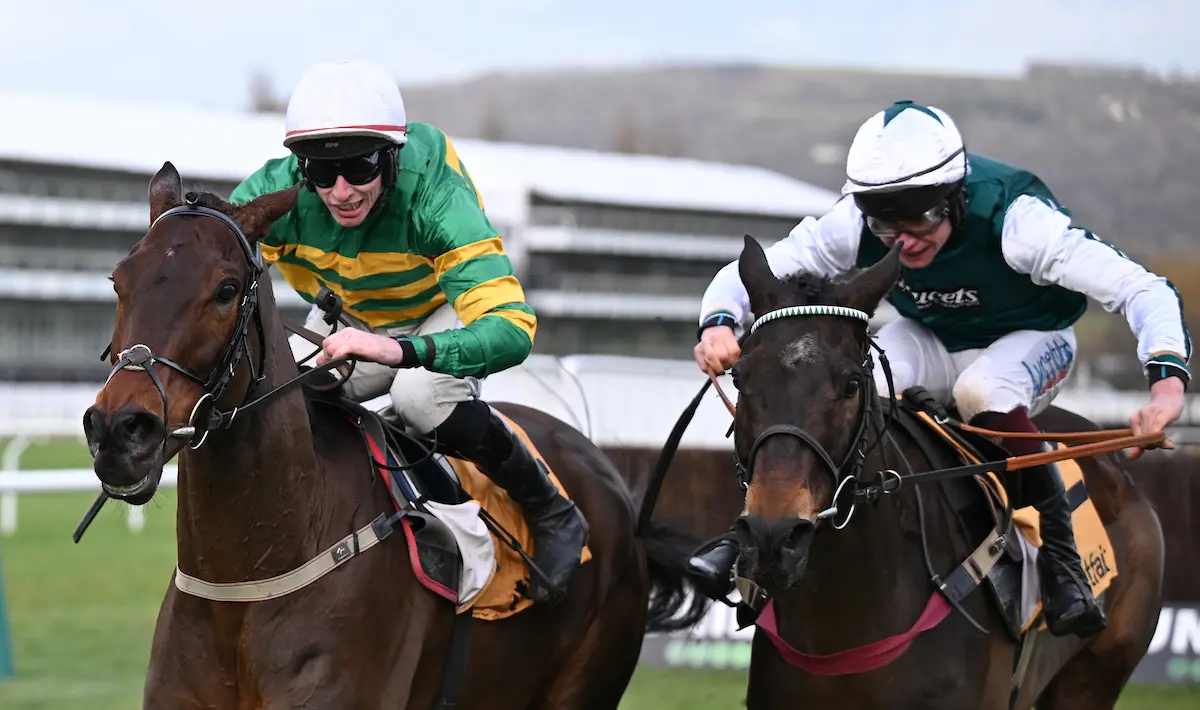
Spillane's Tower comes out well on the RaceiQ metrics. (focusonracing.com)
Spillane’s Tower booked his place in the 2026 Cheltenham Gold Cup with a resolute and thoroughly professional performance in the Cotswold Chase, a race that often serves as a reliable barometer for Festival staying chasers. Carrying the familiar silks of JP McManus, he offers the leading jumps owner a genuine opportunity to land back-to-back victories in the Festival showpiece with yet another son of Walk In The Park, bred by his wife, Noreen McManus.
Until relatively recently, Walk In The Park’s relationship with the Gold Cup had been curiously underwhelming. Despite establishing himself as the dominant National Hunt sire of his generation, he had yet to saddle a runner in the race, and his overall Cheltenham Festival record stood at a respectable but unspectacular five winners from 44 runners. That narrative began to shift decisively in 2024, when Inothewayurthinkin delivered a clear-cut success in the Kim Muir. The result was particularly satisfying from a breeding perspective, forming part of a Festival double for the McManus-owned mare Sway, whose daughter Limerick Lace also captured the Paddy Power Mares’ Chase.
The following season marked a watershed moment. Inothewayurthinkin returned to Cheltenham in 2025 and delivered Walk In The Park his first Gold Cup victory, while another of the sire’s representatives, Monty’s Star, emerged from the race with immense credit in fourth. In the space of two Festivals, Walk In The Park had gone from Gold Cup absentee to headline act - and it comes as little surprise that his influence is now being felt even more strongly.
This year’s Gold Cup entries include no fewer than seven sons of Walk In The Park, five of them drawn from the same 2017 crop - just his second season standing at Grange Stud. From the moment he arrived in Ireland, Coolmore committed wholeheartedly to him, sending an extraordinary 1,121 mares across his first five seasons. Unlike the Flat, National Hunt breeding rewards patience, with results often taking years to crystallise, but it is now abundantly clear that Walk In The Park hit the ground running with his Irish books. From his first crop emerged Nick Rockett, a Grand National winner, and Facile Vega, victorious in the 2022 Champion Bumper. From the second crop - nine years on - we are now looking at a cluster of legitimate Gold Cup contenders.
Spillane’s Tower is very much a product of that early faith. His dam, In The Habit, visited Walk In The Park in both his first and second seasons at Grange Stud. On paper, she may not have possessed the same racetrack credentials as Sway, a multiple Listed winner in France who performed with distinction in Britain, but her pedigree was quietly compelling. Unraced herself, In The Habit hails from a deep German family on her dam’s side, notably including her half-sister Cherry Danon, producer of the German Group One winner Calif over ten furlongs.
Crucially, In The Habit carries Monsun as her damsire - a name that has become almost priceless in modern National Hunt breeding. While Monsun’s legacy as an elite German Flat sire is well established, his influence on jumps racing has been profound. He has played a pivotal role in shaping this generation of National Hunt stallions, appearing as sire or broodmare sire of the likes of Network, Shirocco, Getaway and Ocovango. The presence of Monsun in a pedigree is now synonymous with soundness, stamina and durability - traits that breeders actively seek when aiming at the very top staying prizes.
Spillane’s Tower therefore benefits from two of the most powerful and proven influences in National Hunt breeding, one on either side of his pedigree - and that genetic promise has translated convincingly to the racetrack. His Cotswold Chase victory was a textbook Gold Cup trial, showcasing both his jumping fluency and his ability to sustain pressure over a demanding trip. The data only reinforces that impression: a jump index of 8.8, 6.34 lengths gained jumping, and an average stride length of 6.22 metres underline his efficiency and balance, with the jump index in particular standing out as highly encouraging for a Gold Cup contender.
Spillane’s Tower is a horse who blends pedigree power with polished performance - and, perhaps most importantly, one who still appears to have room for improvement. In a division where incremental progress can make all the difference, that combination places him firmly among the leading contenders for the 2026 Gold Cup.
Haiti Couleurs – the French anomaly that keeps proving us wrong

Haiti Couleurs: a son of Dragon Dancer, who stood for just €1,000 at Haras du Saz. (focusonracing.com)
What makes this year’s Gold Cup picture so compelling is the sheer diversity of pedigrees and profiles converging at the top of the staying chase division. There is no single blueprint, no dominant stallion line or prevailing fashion - and few horses illustrate that better than Haiti Couleurs, the 2025 Irish and Welsh National winner and a striking example of creative, conviction-led French National Hunt breeding.
Haiti Couleurs is by Dragon Dancer, a son of Sadler’s Wells whose own racing career was defined more by courage and character than by silverware. His sole victory came in the Listed August Stakes in 2007, but he remains best remembered for his gallant, front-running display in the 2006 Derby, where he was beaten just a short head after wearing his heart firmly on his sleeve from the outset. That willingness to battle - to go forward, to keep finding - has clearly been passed on to his best progeny, none more so than Haiti Couleurs, whose popularity has grown steadily on the back of his relentless galloping style and refusal to yield.
Haiti Couleurs is very much the product of Haras du Saz’s belief in Dragon Dancer, whom they stood in Nantes from 2013 to 2016. The Simon family, who own Haras du Saz, are well known for backing their stallions with mares they value, and while Dragon Dancer may not have possessed an especially fashionable race record, his pedigree carried genuine depth and quality. He is, of course, by the great sire of sires Sadler’s Wells, while his dam Alakananda is a half-sister to both Alborada, the dual Champion Stakes heroine, and Albanova, a multiple Group One winner. That kind of family may not shout instant commercial appeal, but it speaks volumes about latent class and durability.
Where Haiti Couleurs’ pedigree truly begins to stand out, however, is on the dam side. He is out of Inchala, who was tried once over hurdles without success but did manage to win on the Flat at Nancy in her early career. Inchala hails from an AQPS family, with her dam Betty Royale and granddam Lady Royale bred by the iconic Cypres family, whose influence on French jumping bloodstock is difficult to overstate. The Simon family initially sent Inchala to their stallions Early March and Johann Quatz before electing to try her with Dragon Dancer in the final year he stood at Haras du Saz. At that time, Dragon Dancer was standing for just €1,000, covering small books, and like much of the Haras’ produce, Haiti Couleurs was sent to the sales at a young age.
With only Lady Royale and her Listed-winning son Hidalgo Royale carrying black type in the family, it is little surprise that Haiti Couleurs failed to set the sales ring alight. Yet the page contains a crucial and easily overlooked influence - Royal Charter, the damsire of Inchala. A hugely important broodmare sire, Royal Charter has left an indelible mark on staying chasers, appearing in the pedigrees of horses such as Eldorado Allen, Quel Esprit, cross-country stalwart Auvergnat and multiple Cheltenham winner Diesel d’Allier. It is an influence the Simons were clearly right to believe in.
Haiti Couleurs was sold as a two-year-old at the Arqana Mixed Sale for just €7,000 to Luke Cummins through George Mullins, went unsold as a store in 2020, and ultimately found his way to Rebecca Curtis for £68,000 after two runs in Irish point-to-points - the second a far more encouraging effort than the first. His name, I’m told, comes from a French song, which feels fitting for a horse whose story is steeped in French breeding philosophy.
What is most striking about Haiti Couleurs is that his pedigree does not scream greatness, nor does it advertise obvious Gold Cup star quality at first glance. Instead, it exemplifies the traditional French approach - unwavering support of home stallions, patience over fashion, and faith in families built on toughness rather than hype. Haiti Couleurs may yet prove an outlier, but he is equally an embodiment of a breeding system that refuses to follow the crowd.
In that sense, his story is not entirely dissimilar to that of the two-time Gold Cup winner Galopin Des Champs, himself by the relatively unfashionable Timos, who later stood in Tunisia and Libya, and out of a modest but winning jumps mare in Manon Des Champs. Prior to producing Galopin Des Champs and his Listed-winning full-sister Flute Des Champs, Manon Des Champs had enjoyed only limited success as a broodmare. The cross with Timos was simply the one that clicked. It is tempting to wonder whether the Dragon Dancer and Inchala mating represents a similar moment of alignment.
What truly elevates Haiti Couleurs into Gold Cup contention, however, is not sentiment but data. He outperforms many of his principal rivals when it comes to jump index and lengths gained jumping, metrics that are increasingly important in assessing staying chasers at the very highest level. His Welsh National victory, while not achieved in Grade One company, was a performance of that calibre, and the numbers demand respect. An average stride length of 6.51 metres, combined with 8.50 lengths gained jumping and a jump index of 7.0, paints the picture of a relentless, efficient galloper - one whose profile closely mirrors that of Galopin des Champs at a similar stage in his Gold Cup journey.
Haiti Couleurs has shown that he can jump, gallop and stay - the three non-negotiables for a Gold Cup contender. The question that now remains is whether he possesses the necessary class, or the ability to shorten his stride when the tempo lifts, to live with faster horses at the very top of the division. If he can, then this French-bred anomaly may yet have more to say on the sport’s biggest stage.
Gaelic Warrior and Fact To File: Will they or won’t they?
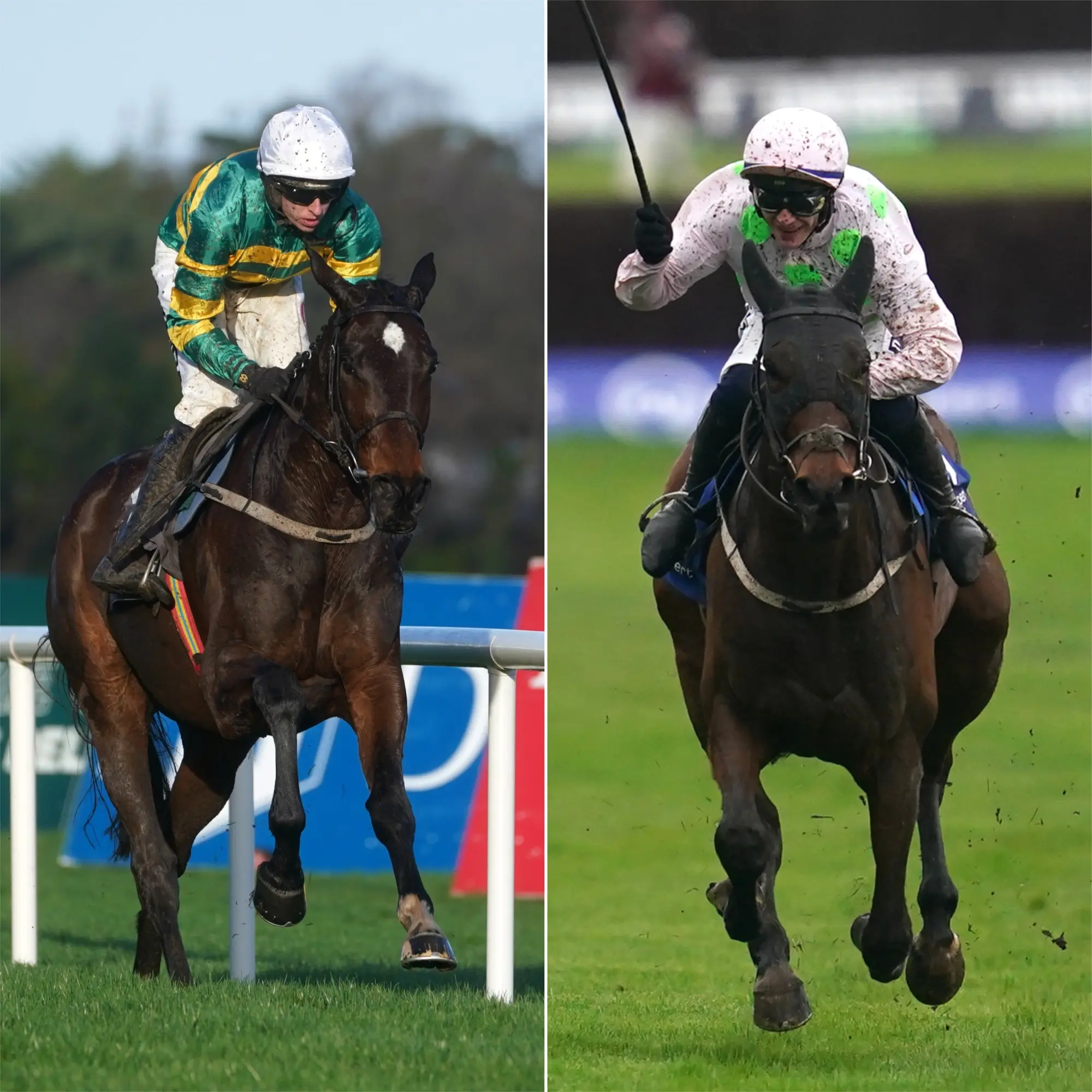
The final two horses worthy of serious pedigree consideration ahead of any potential Gold Cup tilt are the two Willie Mullins-trained runners who, at the time of writing, may yet be steered towards the Ryanair. Fact To File and Gaelic Warrior have already produced a compelling mini-rivalry this season, and on form alone, a Gold Cup rematch would feel entirely justified.
Fact To File was breathtaking in the Irish Gold Cup, turning the tables decisively on Gaelic Warrior with a five-length victory, having previously come off second best in their John Durkan clash in November. Both horses also emerged with credit from the King George, further underlining their class at the highest level. While connections of Gaelic Warrior appear keen to keep the Gold Cup option open, Fact To File was left out at the entry stage - prompting the inevitable question: will he be supplemented, and does his pedigree offer enough reassurance that he will stay?
On breeding, there is every reason for confidence. Fact To File is from the final crop of the outstanding French stallion Poliglote, whose influence at Cheltenham has been profound. He sired a Gold Cup third through Don Poli in 2016, while his most celebrated son, Sire Du Berlais, relished the Cheltenham hill when landing two Pertemps Finals and the 2023 Stayers’ Hurdle. Fact To File’s own family reinforces the stamina message: his half-brother Charlatemps was a multiple chase winner over extended trips in France, and his dam is a half-sister to proven staying chasers Khelkalou and Tempoline.
While there is speed throughout the pedigree - particularly on his dam side, where many relatives were effective at intermediate distances - Fact To File appears to have inherited the ideal blend. His Irish Gold Cup performance produced a finishing speed of 102.48%, a figure that points to stamina with the ability to quicken when required. From a pedigree and performance perspective, he has all the makings of a legitimate Gold Cup contender.
Gaelic Warrior, by contrast, presents more of a puzzle over the full Gold Cup trip. By Maxios, a high-class flat performer from a mile to ten furlongs, and out of a Niarchos-bred mare with strong Flat credentials including Italian Classic form in the family, his profile leans more towards speed than stamina. The influence of Monsun, Maxios’ sire, may yet assert itself, but Gaelic Warrior’s exuberant racing style raises the question of whether he will settle well enough to truly see out the Gold Cup distance.
From blue-blood powerhouses like Spillane’s Tower to unconventional success stories like Haiti Couleurs, the 2026 Gold Cup presents a true melting pot of pedigree philosophies. When layered with modern performance data, those bloodlines begin to tell an even richer story.
Pedigree alone will never pick a Gold Cup winner - but when it aligns with the numbers, it can still give us a valuable edge.
Spillane’s Tower sets the benchmark for the 2026 Gold Cup on pedigree and data, Haiti Couleurs brings proven stamina and jumping toughness - but Jango Baie is the one to side with for upside, his pedigree suggesting he may still be improving into a peak Gold Cup horse.
How Kirsten Rausing’s ‘A’ family shapes Cheltenham contenders
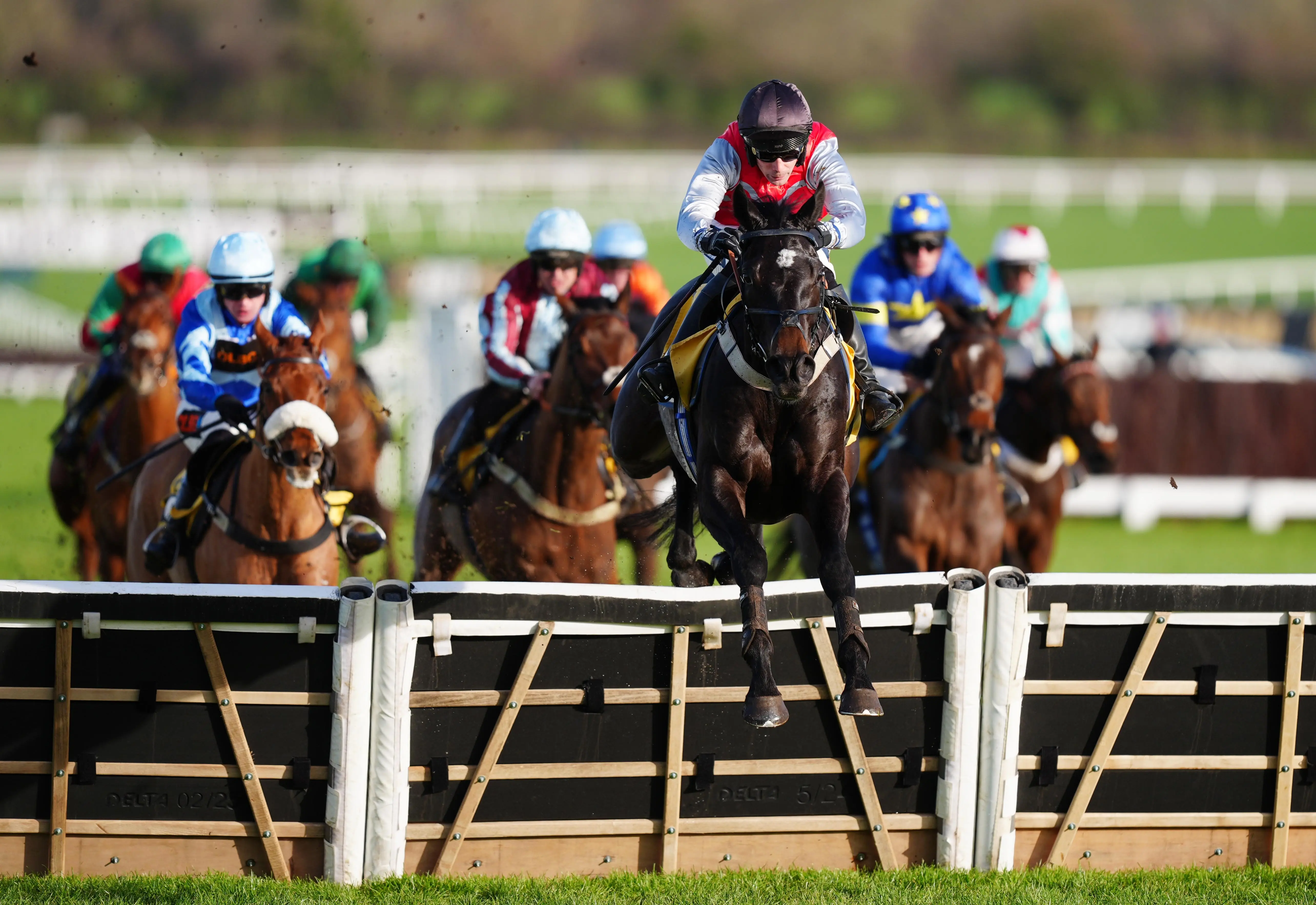
Minella Study: the Triumph Hurdle contender was bred by Kirsten Rausing.
We have become increasingly familiar with flat-bred horses making a successful transition to the National Hunt code, and it remains a constant fascination of mine to study the families of these converts in search of the clues hidden within their pedigrees. More often than not, the ingredients are there in plain sight: size, scope, balance and - perhaps most importantly - the attitude to adapt to hurdling and, in time, chasing. But it is when those flat-bred crossovers begin to link seemingly unrelated Cheltenham Festival contenders that my bloodstock-focused appetite is truly whetted.
When Minella Study lit up our screens in the Triumph Hurdle Trial at Cheltenham in December, it would never have occurred to me that he hailed from the very same influential family as the sire of Haiti Couleurs. Yet, a deeper dive into the page reveals precisely that - and in doing so, highlights once again the remarkable versatility of one of the most celebrated families in the modern Thoroughbred.
Minella Study was bred by champion flat breeder Kirsten Rausing of Landwades Stud, a name more readily associated with Prix de l’Arc de Triomphe and Champion Stakes glory than with Cheltenham Festival contenders. That said, Ms Rausing is no stranger to seeing her homebreds grace the Festival stage. Tritonic’s fifth-place finish in the 2021 Triumph Hurdle offered a notable example, while her stallion Sea The Moon has also made his presence felt at Cheltenham through Allmankind’s third in the 2020 Triumph.
The Triumph Hurdle, with its emphasis on speed and agility in juvenile hurdlers, has long been the natural home of ex-flat recruits, and Minella Study fits that mould perfectly. He is by Study Of Man, a stallion who has made a rapid impact on the Flat, highlighted most recently by his exceptional daughter Kalpana, who landed back-to-back Group One victories on Champions Day at Ascot. This March will see Study Of Man represented by his first Cheltenham Festival runner in Minella Study - but the dam side of the pedigree is already well acquainted with elite Festival and championship-level success.
Minella Study is out of Albamara, a member of the extraordinary ‘A’ family that Ms Rausing has cultivated so masterfully over several decades. Albamara is a daughter of Albanova, herself a dual Group One winner and a full-sister to the dual Champion Stakes heroine Alborada. Albanova, in turn, has become one of the great matriarchs of the modern era, her influence extending through elite performers such as Alpinista and Eldar Eldarov, the latter now beginning his own chapter as a National Hunt stallion. It is this deep-rooted quality that Minella Study draws upon - a pedigree steeped in class, toughness and adaptability.
So where does this leave Haiti Couleurs? A closer inspection of his pedigree reveals a fascinating connection. His sire, Dragon Dancer, also descends from the same ‘A’ family through his dam Alakananda, who is a half-sister to Alborada. That relationship makes Dragon Dancer and Minella Study close cousins - an unexpected but compelling link between two very different Cheltenham hopefuls.
Does this bode well for either horse? Perhaps not in isolation, but it certainly reinforces the notion that the ‘A’ family possesses an innate versatility that transcends codes. The National Hunt success already delivered through Dragon Dancer - most notably via the heroic exploits of Haiti Couleurs - suggests that this blue-blooded flat family is more than capable of producing elite jumpers. Minella Study may yet add another chapter to that story, further underlining the depth, durability and adaptability of one of the sport’s most distinguished breeding dynasties.
FREE Racing TV Calendar, Notebook and Pen Bundle!


Racing TV encourages responsible gambling - to find out more click here to head to our dedicated website page.
Related posts
Last Saturday was one of the worst days of my career, says Pauling
Cheltenham Festival: Willie Mullins' handicap chase jinx
Richard Johnson: my Cheltenham Festival bankers and other tips
Josh Stacey's 2026 Cheltenham Festival tips: four best bets
Gary O'Brien Cheltenham Festival Q and A: "I think he wins"
Featured offers

Bet £10 get £30 in free bets with BetVictor
T&Cs Apply
Claim Now

Bet £10 get £50 in Free Bets with Boyle Sports
T&Cs Apply
Claim Now

Bet £10 get £40 in free bets with TalkSportBet
T&Cs Apply
Claim Now

Get £30 in free bets when you bet £5 with Coral
T&Cs Apply
Claim Now

Bet £10 Get £30 in free bets with Betano
T&Cs Apply
Claim Now
Copyright 2026 Racing TV - All Rights Reserved.
Please bet responsibly
Copyright 2026. All rights reserved