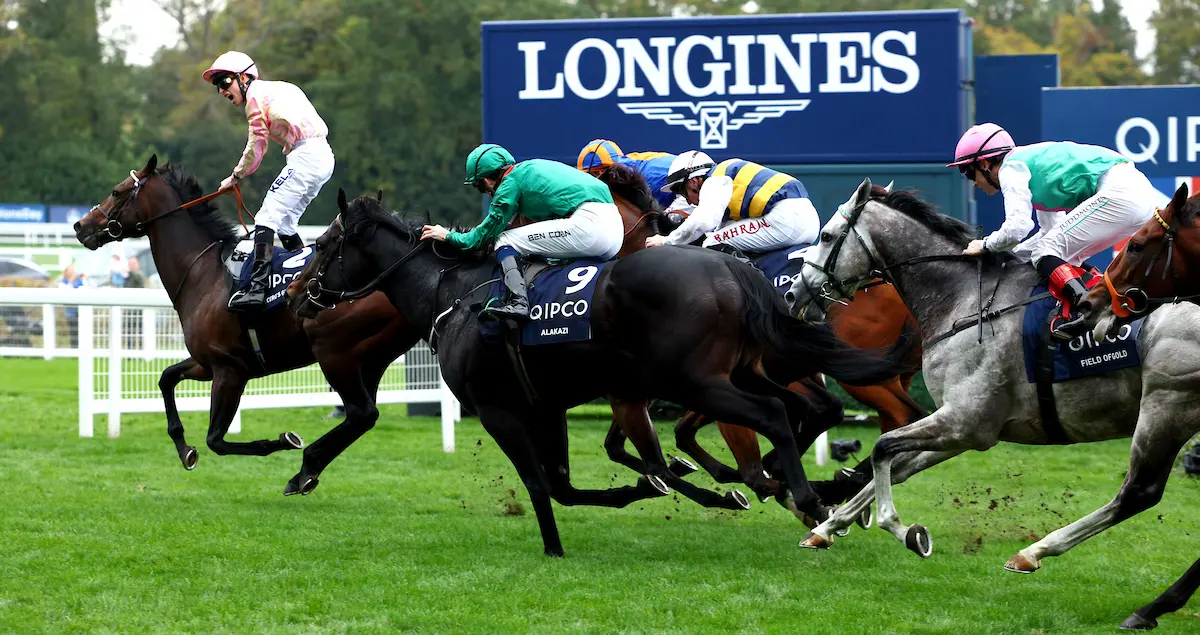
Champions Day: what the RaceiQ told us and analysis
By Andy Stephens
Last Updated: Sun 19 Oct 2025
How good was Calandagan in the Qipco Champion Stakes, and how did two massive outsiders prevail? Andy Stephens looks at everything that unfolded in the Group races on a spectacular day of racing at Ascot.
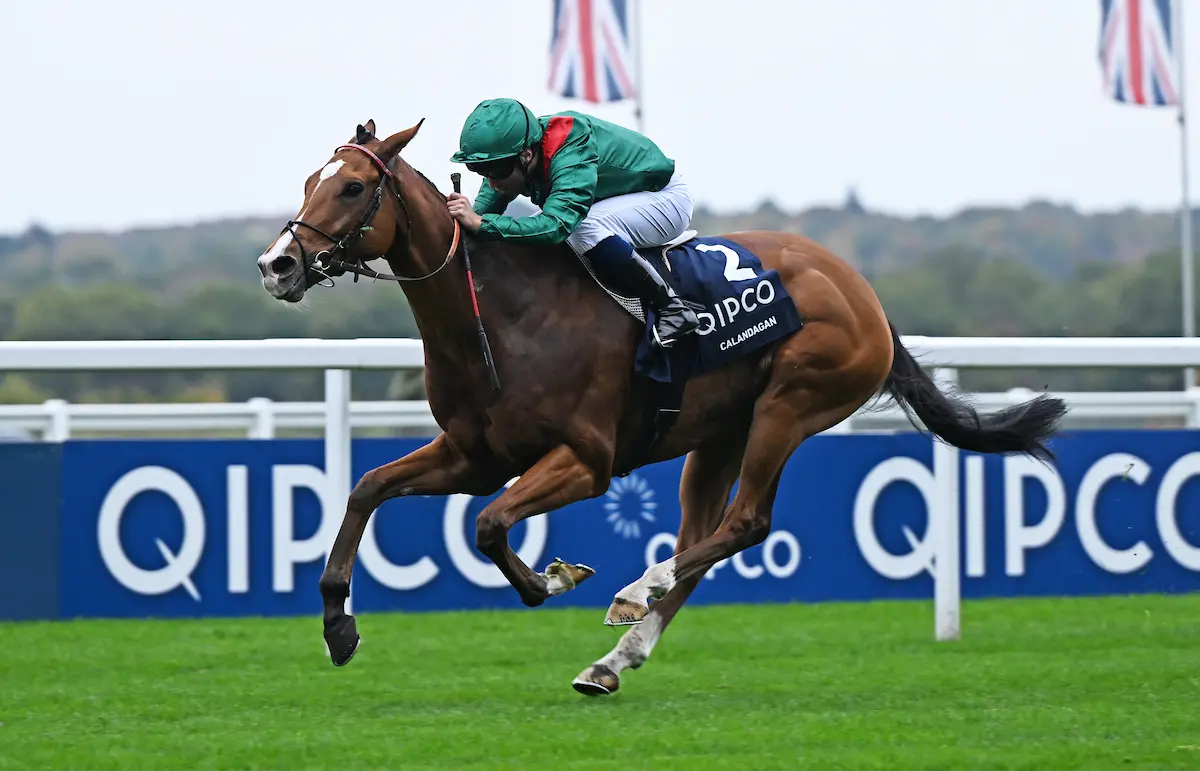
Calandagan in full flow (focusonracing.com)
Calandagan proves a class apart
🇬🇧 RaceiQ Time Index: 8.6 (Meeting average 8.3). Winner’s top speed: 40.07mph. Winner’s fastest furlong: 11.34sec (the 8th furlong).
This was a top-class edition of the Champion Stakes featuring the best from England, Ireland and France in the shape of Ombudsman (official rating 128), Delacroix (126) and Calandagan (125). The trio arrived at the peak of their powers, having between them won three of the season’s biggest prizes on their previous starts: the King George VI & Queen Elizabeth Stakes, Juddmonte International and Irish Champion Stakes.
It did not disappoint, either, going to script after the previous two races on the card had been won by runners chalked up at 200-1 and 100-1.
A feature of Calandagan’s data on RaceiQ have been some of his exceptional sectionals and that was again evident as he swept from the back of the field in imperious fashion. This was a flawless performance and a pleasure to watch.
His final five furlongs were all fast or “very fast”: 12.16sec, 11.92sec, 11.34sec, 11.54sec and 12.19sec. He nudged more than 40mph in the eighth furlong and, as befits a horse who stays a mile and a half well, he was still pouring it on at the finish. His Finishing Speed percentage was 105.77%.
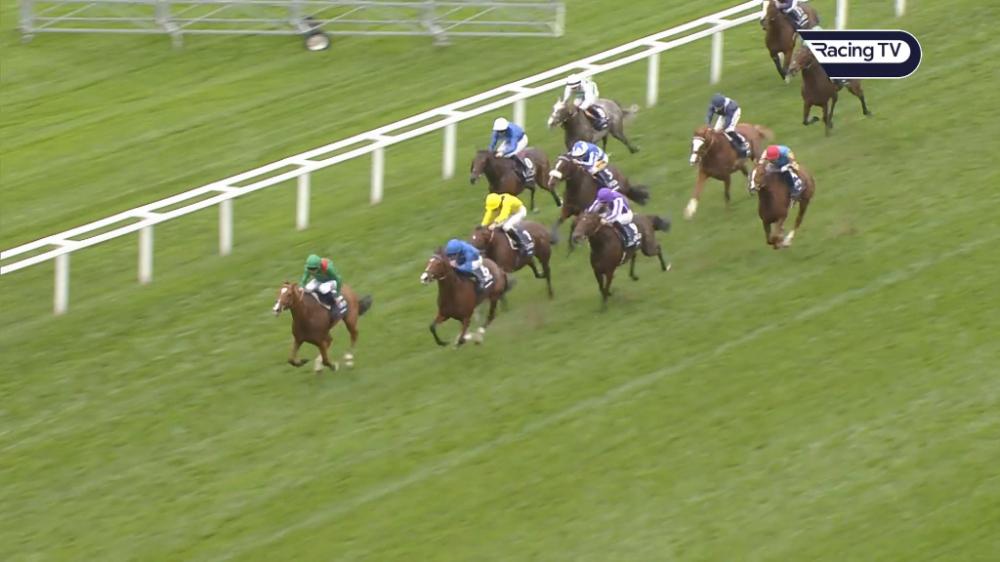
Enjoy a full replay
As a four-year-old gelding, we are going to be seeing plenty more of him and, while he’s around, the debate about whether geldings should be allowed to run in the Pric De L’Arc de Triomphe will rumble on.
I don’t think it’s as straightforward as yes/no as Francis Graffard, his trainer, again spoke afterwards about the Calandagan’s wild nature before being gelded. He made it sound like nobody could get in his stable, let alone harness all his powers.
William Haggas was asked on Luck On Sunday what difference a gelding operation can make to a colt. To summarise, he said geldings were better mannered, more focused and better physically. Clearly, then, they have potential advantages over would-be stallions.
Perhaps a compromise can be found whereby geldings must concede colts and entire horses a certain amount of weight in the Arc, much as colts do to fillies. Maybe up to 3lb? I don’t know, but it is odd we can enjoy him in all of Britain’s top middle-distance races when he’s not allowed to take part in France’s premier all-aged contest. The Arc will again be poorer without him next year.
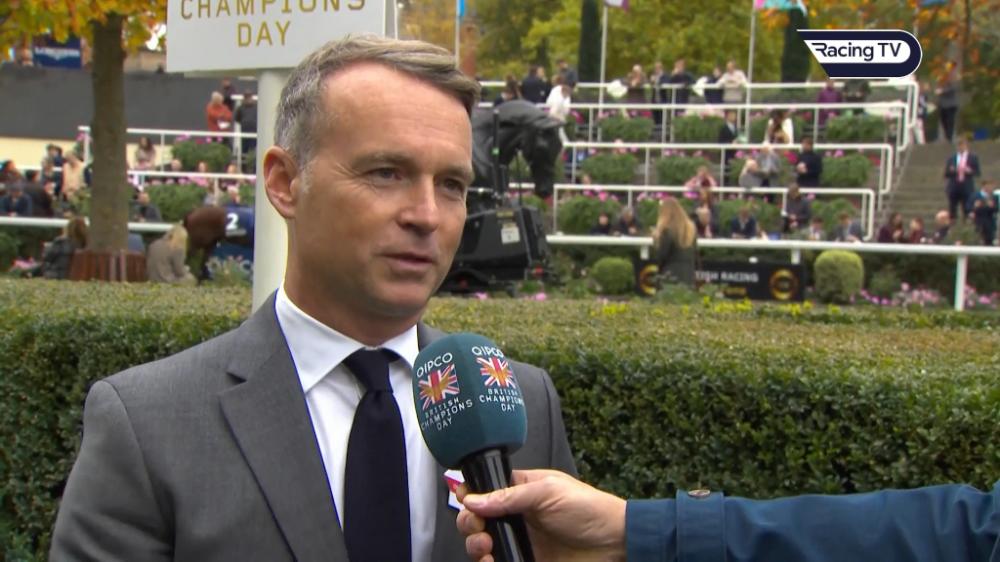
For what it’s worth, Graffard said he had worked Calandagan with Daryz, his Arc winner, in the build-up to this contest and suggested the former had been “laughing” by the end of it. “Everything comes easy to him in the morning,” he said. Given his penchant for Ascot, it would be no surprise if the Prince of Wales’s Stakes, King George and Champion Stakes are at the top of his agenda next year.
Ombudsman sat last under William Buick and followed the winner through, but simply could not get to grips with him. He recorded the highest speed in the race – 40.59mph – but simply lacked the zip of the winner in the final quarter of a mile, being 0.36sec slower. This was still an excellent effort from a horse who had won the Prince of Wales's Stakes and Juddmonte International earlier in the campaign, and by all accounts he stays in training next year.
Alamqam had been the conqueror of Ombudsman at Sandown earlier in the season and showed that was no fluke, stalking the pacemakers and never being out of the first three. It could be argued he was at a positional advantage, but he could not live with Calandagan when it mattered most, being 1.6sec slower than him in the final three furlongs. It will be worth exploring 12 furlongs with him next season.
There had been talk of Delacroix being retired to stud after his win in the Irish Champion Stakes, but he was allowed to take his chance. He was something of a handful beforehand and gave it another good go without quite being good enough. Aidan O’Brien has now run 27 male horses in this race and all have returned to Ballydoyle defeated.
The rest were outclassed with Economics failing to figure on his belated return. Unfortunately, he again bled from the nose, which is the third time this has occurred.
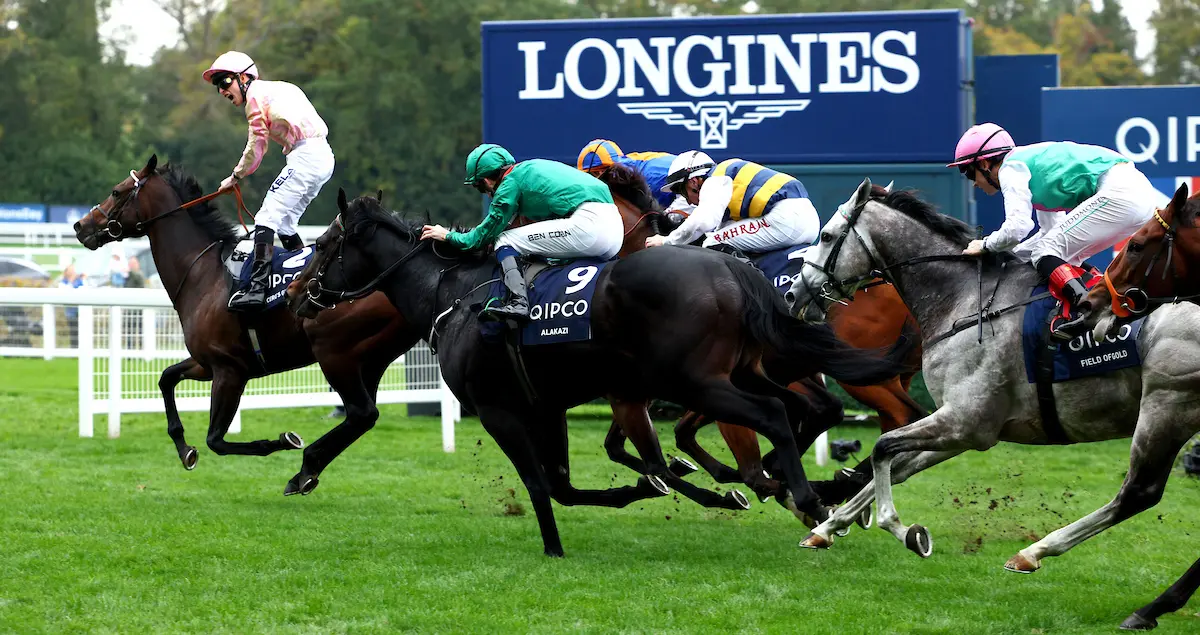
Jason Watson roars his approval after guiding Cicero's Gift to glory (focusonracing.com)
A Gift that we all overlooked
🇬🇧 RaceiQ Time Index: 8.7. Winner’s top speed: 40.91mph. Winner’s fastest furlong: 11.08sec (sixth furlong).
Eight of the 21 Group One winners in action on Champions Day lined up here, with three others in the field having previously come agonisingly close to winning at the highest level.
All bar two of the 15 runners lined up with an official rating of at least 114 – Field Of Gold headed them all on 126 - so nobody could dispute there was plenty of depth to the mile feature. However, it was a 109-rated gelding, Cicero’s Gift, having his first run at the highest level, who prevailed, 12 months on from finishing seventh in the Balmoral Handicap.
In addition, all his best previous efforts on turf had been achieved on soft ground, so this performance took some fathoming.
One plausible explanation is that he was the only runner to stick close to the far rail from his draw in stall 1. The Lion In Winter, in stall 2, ended up being second although he did not explore the same route.
Maybe Cicero’s Gift found a golden highway, but I’m not convinced. We will never know because bafflingly the runners in the Balmoral Handicap, over the same trip an hour or so later, migrated to the other side of the track. On a day of shocks, that was perhaps the biggest.
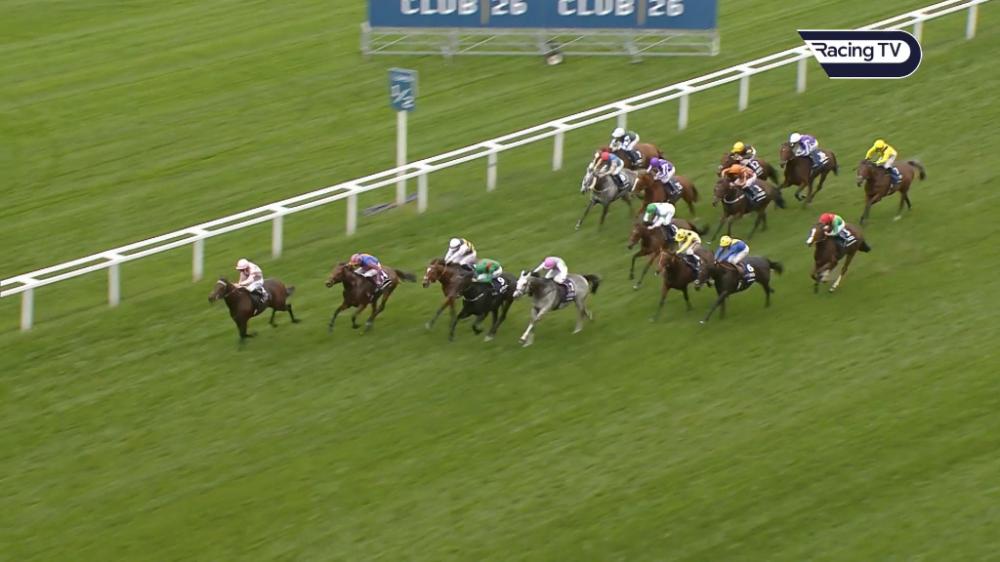
See how the race unfolded
On the face of it, Cicero’s Gift produced an exhilarating performance and it could be he has not been given the credit he deserves.
He alternated between 12th and 13th for the first five furlongs before moving through the gears and powering to the front. And it was not as if the race fell into his lap with the leaders going too quick, for all he was one of only three runners to have a Finishing Speed percentage of more than 100%.
His sixth furlong of 11.08sec was the fastest in the field (he was not up against the far rail at the time) and he was again No 1 in the penultimate furlong, polishing that off in 11.67sec. That swept him to the front, with his final furlong of 12.68sec sealing the deal. Docklands, who jumped from stall 12, was quicker than him through the last furlong and Rosallion (stall 15) was just as quick, diluting any theories about him being on the quickest bit of turf.
The Lion In Winter has not scaled the heights expected of him at the start of the season, when he was favourite for just about every race going, but this was his third near-miss at the highest level. He was a sweaty mess beforehand but was in the thick of the action much of the way.
Field Of Gold and Rosallion looked to have troublesome wide draws beforehand, especially with no obvious speed horses immediately around them. However, it would surely be stretching the imagination to suggest either was unfortunate not to win.
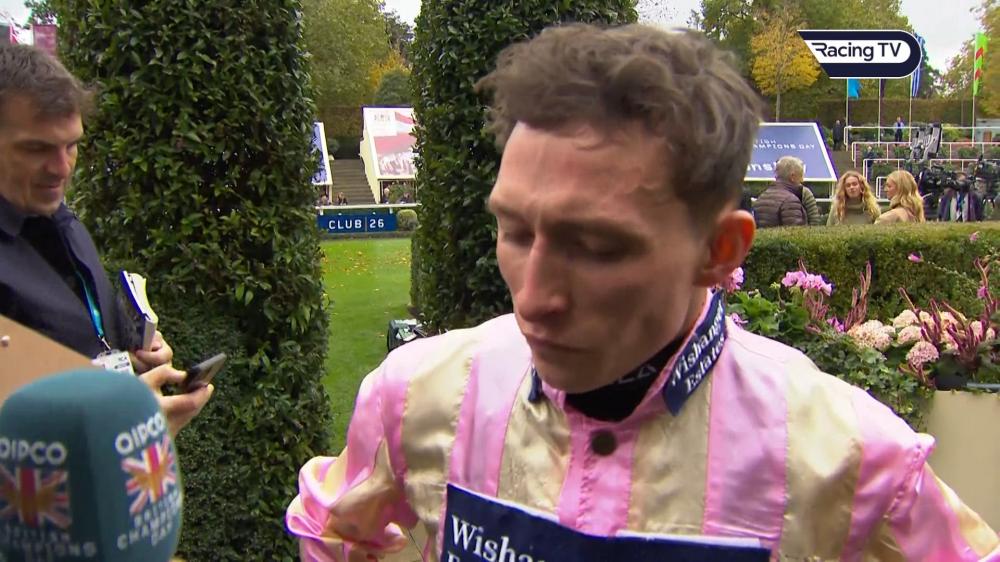
Watson rejoices in victory
Field Of Gold was in the second half of the field for the first six furlongs before moving from ninth to fourth with an 11.88sec penultimate furlong (only Cicero’s Gift was swifter). He could not sustain that in the final furlong, though, with the other six horses in the first seven all being quicker.
John Gosden, his co-trainer, blamed lack of “match practice” after his 80-day break although that theory was puzzling given he had run in the Craven, 2000 Guineas, St James’s Palace Stakes and Sussex Stakes in the first half of the season.
Rosallion has had a luckless campaign but simply did not seem at his peak, finishing a never-nearer sixth. Unusually for him, he was never quicker than third fastest in any of the furlongs.
Fallen Angel lined up as the day’s most prolific Group One winner (she’s had five victories at the highest level) and she led early on, but the writing was on the wall for her from some way out, with only one horse being slower than her in the fifth furlong. Similar followed as she faded to finish tenth.
She’s had a fabulous year but perhaps this was one race too many.
Spencer takes the Glory
🇬🇧 RaceiQ Time Index: 9.5. Winner’s top speed: 41.83mph. Winner’s fastest furlong: 10.86sec (furlong four).
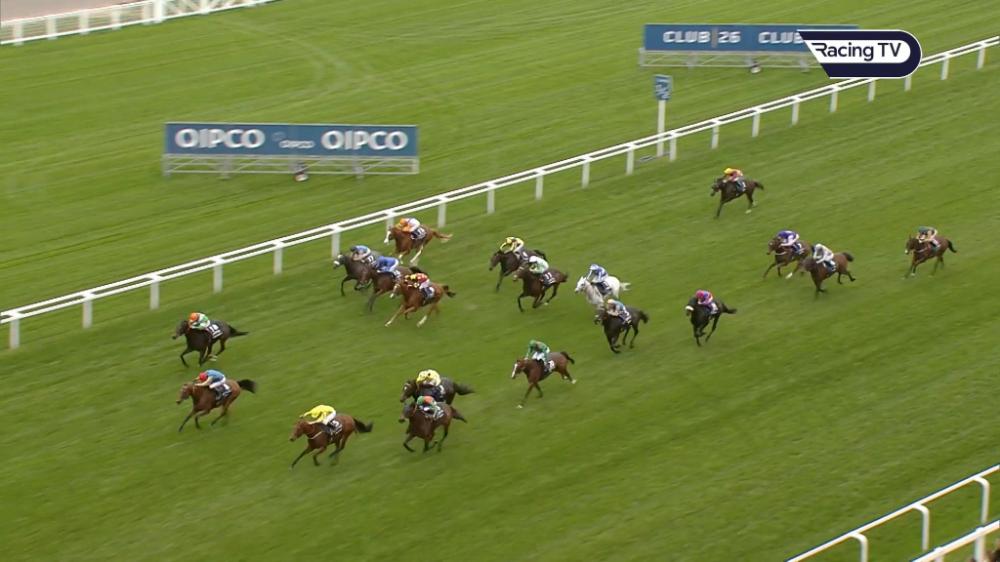
Seeing is believing . . .
What a difference a decade makes. Muhaarar crowned a glorious sprinting campaign when taking this prize in 2015 but the class of 2025 have adopted an unpredictable “whose turn is it today” attitude, with all the form lines a tangled mess.
This one took the biscuit, with lightly raced three-year-old Powerful Glory prevailing at 200-1, the biggest price any Group One winner in Europe has ever returned. The only surprise perhaps is that he was not an even bigger price, given he had finished last of five in a minor event at Beverley last month and beaten only home on his previous run this year, at Haydock in May. In between, he’d had a breathing operation.
Powerful Glory lined up with an official rating of 100, which was the lowest any of the 20 declared runners. He was fortunate that there was not another runner rated more than 100 thrown into the mix – there had been at the five-day stage - because otherwise he would have not made the cut.
Jamie Spencer, his jockey, was enhancing his reputation as a specialist on Ascot’s straight track and there is no dispute this was a “Spencer Special” as he loitered in rear for most of the race before pouncing in the closing stages.
Spencer let Powerful Glory do his own thing through the first half of the race and the combination were only fifteenth of the 19 runners with two furlongs left to run. Time was running out and there was a lot of work to be done.
But unknown to us all, Spencer had already pushed the button in the fourth furlong, which Powerful Glory completed under the radar in 10.87sec (the fastest by any runner in the race) and he carried that momentum through the penultimate furlong, which he negotiated in 11.39sec. That was on a different plane to the opposition and enabled him to zoom past a dozen rivals.

Richard Fahey, the trainer of Powerful Glory, was a guest on Luck On Sunday
He was also fastest in the final furlong, though it was less pronounced, and that enabled him to edge out Lazzat, the favourite, by a neck.
Lazzat had been in the thick of things from the outset after ducking right when the stalls opened but he could not keep the winner at bay after looking likely to replicate his triumph at the Royal Meeting in June.
Front-running Quinault ran the race of his life in third but the five-year-old, having his 30th run and fully exposed, rather holds down the form. No Half Measures, the July Cup winner, was an admirable fourth on ground that was probably as quick as she wants.
Of the rest, sixth-placed Reyevka looked like she was coming with a promising effort before running out of puff in the closing stages. She has stacks of speed and could be the one to look out for over the minimum trip next season. The other eight in the first nine were all faster than her in the last 220 yards.
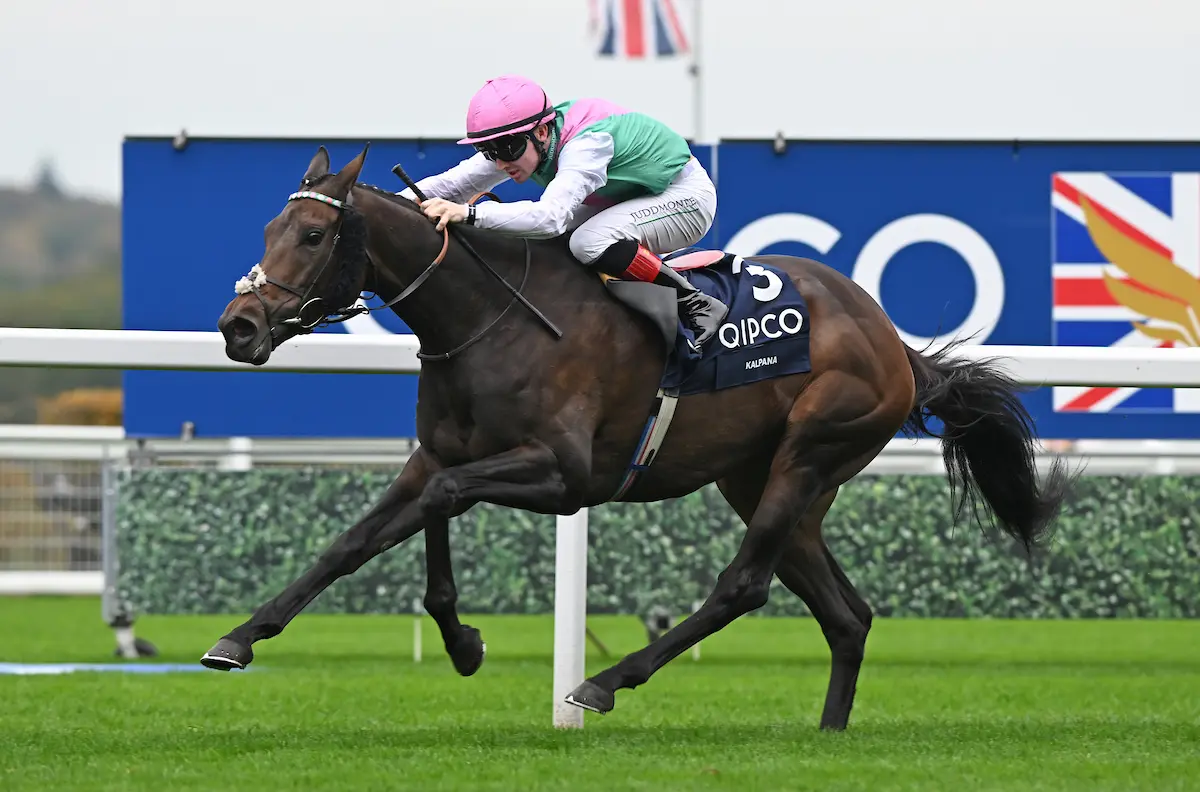
Kalpana handed things on a plate
🇬🇧 RaceiQ Time Index: 4.3. Winner’s top speed: 40.87mph. Winner’s fastest furlong: 11.17sec.
Kalpana had been an emphatic winner of the Fillies & Mares Stakes last year and repeated the dose.
She had failed to win in the interim but had run some terrific races, including when splitting Calandagan and Rebel’s Romance in the King George at Ascot in July. There had never been such a highly rated horse in this race (she has a mark of 122) and made her class tell, for all that she got an astute ride in a slow-run race where those held up off the pace were at a significant disadvantage.
The first mile was run at a sluggish pace, at best, with the RaceiQ charts being a sea of blue (indicating slow and very slow furlongs).
Colin Keane had Kalpana stalking Ballet Slippers, the leader, from the outset and consequently was perfectly placed to put her stamp on the race when the pace finally picked up with half a mile left to run.
And when she completed the penultimate furlong in 11.17sec – the fastest in the race – it was all over.
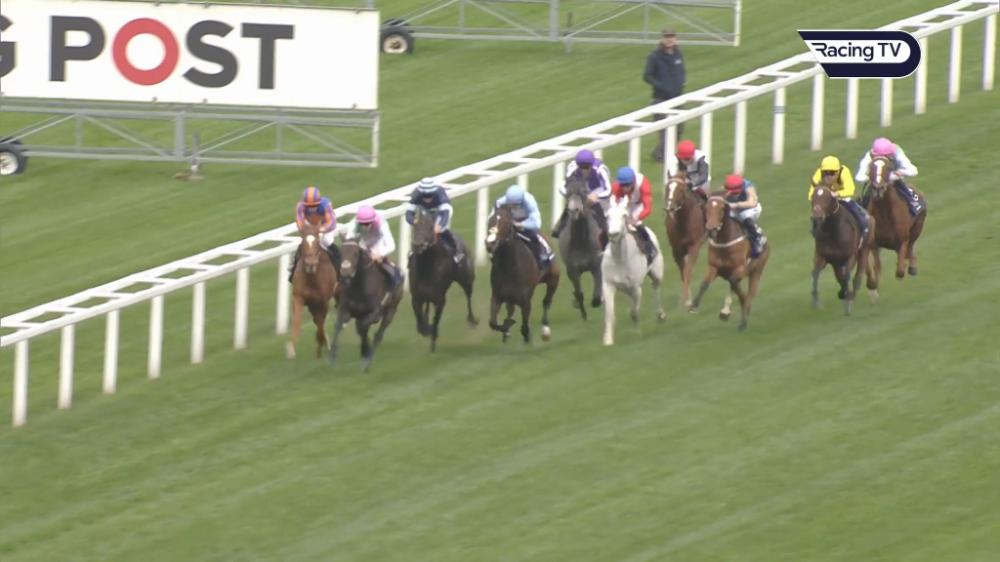
Kalpana was always in a prime position
Estrange was never further back in fifth but she got a little stuck on the rail, from her draw in stall 1, and the damage had been done by the time she got out. The ghostly grey completed the final three furlongs in the same time as the winner (34.66 sec) and left the impression this did not get to the bottom of her.
To rub salt in the wound, the stewards gave Danny Tudhope a six-day ban for “improper riding” for manoeuvring his mount left-handed and making contact with First Look. Waardah was left short of room in the same incident.
Quisisana, who like the winner had contested the Arc 13 days before, stuck on for third without convincing she got home. By contrast, Bedtime Story and Danielle kept on well (they were only marginally slower than Kalpana through the final three furlongs) but they had been held up and had no chance the way things unfolded.
Trawlerman nets another record time
🇬🇧 RaceiQ Time Index: 10 (meeting average 8.3). Winner’s top speed: 38.48mph. Winner’s fastest furlong: 11.85sec (furlong 6).
And, finally, let's go back to how the day started.
Elevated to Group One status for the first time, it was unfortunate that this edition of the Long Distance Cup drew its smallest field since being run for the first time in 2011. Indeed, no race on Champions Day has ever featured fewer runners.
Kyprios was not back to defend his crown, having been retired early in the season, while his stablemates Scandinavia, winner of this year’s Goodwood Cup and St Leger, plus Illinois, runner-up in the Gold Cup and Goodwood Cup, were also absent.
In addition, impressive Irish St Leger winner Al Riffa did not show, while the connections of the first three home in the Prix Du Cadran – Caballo De Mer, Coltrane and Queenstown – spurned the chance to pick up some more guaranteed prize money. And, of course, we should not forget that three-time winner of the race Trueshan was sadly lost in late July.
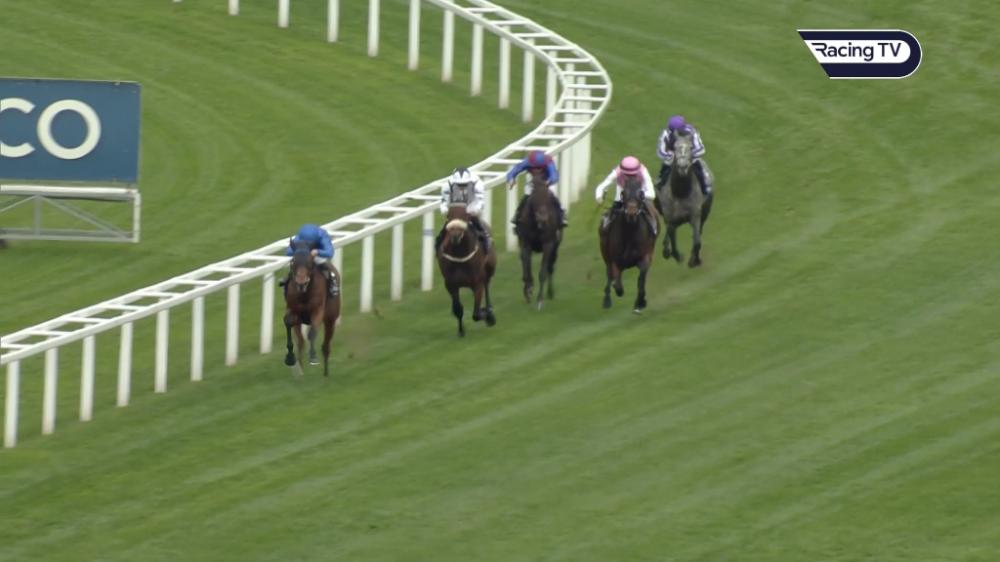
Trawlerman won in another rapid time
But never mind the quantity, feel the quality. This year’s outstanding stayer Trawlerman stood out on form and capped a fabulous campaign with a typically rugged performance in a rapidly run renewal where he smashed the previous course record, much as he had done in the Gold Cup in June.
He stopped the clock at 3min 22.29sec, easily the quickest time recorded in editions of this contest not run on the tighter Inner Course. Even allowing for different ground conditions, he won in a time more than 15 seconds quicker than some previous winners, and more than four seconds swifter than when Fame And Glory won on good ground in 2011. Little wonder that RaceiQ awarded him a Time Index of 10 (meeting average 8.3) and had him winning in a time 6.7sec quicker than par.
Trawlerman had not impressed all paddock watchers and was friendless in the betting, going off at 5-6 after being as short as 4-9 in the morning, but those who kept the faith were well rewarded. The seven-year-old pinged the gates and led in the early stages but William Buick wisely resisted a speed duel when front-running Al Qareem looked him in the eye and went past in the fourth furlong.
Buick bided his time for another mile or so, in his slipstream, before regaining the lead turning for home and surging several lengths clear, threatening to repeat the drubbing he dished out in the Gold Cup when triumphing by seven lengths.

However, Trawlerman had worked hard to re-establish his authority and his typically patiently ridden stablemate, Sweet William, still had to be repelled.
It briefly looked like the two-time Doncaster Cup winner may get in a serious blow, especially when clocking 12.52sec in the penultimate furlong. Trawlerman managed only 13.03sec and the momentum was shifting, but he pulled out a bit to prevail, being only 0.1sec slower than his old adversary in the final furlong. He's met Sweet William six times now and finished ahead of him on all but one occasion.
Al Qareem finds this trip a stretch and faded to be third, reflected by his Finishing Speed percentage dipping to 94.93%, with the two Aidan O’Brien-trained challengers, Stay True and Saratoga, being beaten out of sight. The former had been a fine third in the St Leger but that race had possibly left a mark as he looked uncomfortable from a long way out. He was beaten before the trip came into the equation. Meanwhile, Saratoga was simply out of his depth.
Twenty-two members of the Classic generation have now contested this race since Champions Day first took place in 2011 and none have won.
Enjoy our YouTube treasure chest!
Copyright 2025 Racing TV - All Rights Reserved.
Please bet responsibly
Copyright 2025. All rights reserved