Login
WATCH FREE
What Is A Lucky 31 Bet In Horse Racing?
In horse racing, bettors have access to a wide range of betting options, from simple singles to more complex multiples designed to boost potential returns. Among the most popular of these multiple bets is the Lucky 31, a popular option for bettors who watch horse racing and cover several selections, which provide numerous chances for a return.
A Lucky 31 bet involves five selections and combines singles, doubles, trebles, four-folds, and a five-fold accumulator into one wager. While it may require a larger stake than simpler bets, the built-in structure means this bet method can provide successful wagers even if not all selections win. In this guide, we’ll explain what a Lucky 31 bet is, how it works, its advantages and drawbacks, and when it might be the right betting option.
How Does A Lucky 31 Bet Work?
A Lucky 31 consists of 31 individual bets formed from five selections:
•
5 Singles
•
10 Doubles
•
10 Trebles
•
5 Four-Folds
•
1 Five-Fold Accumulator
Because of this structure, the bet offers multiple ways to win, rather than relying on all selections being successful.
Example Stake
If you place a £1 Lucky 31, your total stake will be £31 (£1 per bet). You can also stake smaller amounts, such as £0.50 per line, making the total stake £15.50.
Lucky 31 Betting Example
Let’s say you select the following five horses from horse racing tips:
•
Horse A
•
Horse B
•
Horse C
•
Horse D
•
Horse E
Your Lucky 31 bet will cover every possible betting combination involving these five horses.
Possible Outcomes:
•
1 winner – Returns from the winning single only
•
2 winners – Returns from singles and the double
•
3 winners – Returns from singles, doubles, and the treble
•
4 winners – Returns from singles through to four-folds
•
5 winners – Returns from all bets, including the five-fold accumulator
The more winners you have, the greater the return, with five winners delivering the biggest payout.
Check out some our top Betting Offers:
Featured offers

Bet £10 get £40 in Free Bets with BetwayT&Cs Apply
Claim Now
New customers only. Place a min £10 pre-event bet at min odds of 2.0. £40 worth of Free Bet Tokens awarded on bet settlement. 4 x £10 each with betting restrictions. 7 day expiry. Debit Card deposits only (exclusions apply). Bet The Responsible Way Full Terms apply. 18+ GambleAware

Bet £10 Get £40 in free bets + Money back 2nd to SP fav with BOYLE SportsT&Cs Apply
Claim Now
BOYLE Sports: Bet £10 Get £40 in free bets + Money back 2nd to SP fav with BOYLE Sports. 18+ GambleAware

Bet £10 get £40 in free bets with KwiffT&Cs Apply
Claim Now
New UK customers. Place a £10 real money bet at min. 2.0 odds within 5 days of deposit. Get 4 x £10 Free Bets: 1 Single, 2 Accas & 1 Bet Builder (min. 3 selections each). Excludes cashout, E/W, Multis, Ineligible Markets & Odds Boosts. Credited after bet settlement. 7-day expiry. T&Cs apply. 18+ GambleAware

Bet £20 and Get £40 in Free Bets with UnibetT&Cs Apply
Claim Now
Unibet: Bet £20 and Get £40 in Free Bets with Unibet
Why Is It Called A Lucky 31?
The name “Lucky 31” comes from the 31 separate bets included in the wager. It’s part of the “Lucky” family of bets, which also includes the Lucky 15 and Lucky 63.
Bookmakers often enhance Lucky bets with bonuses, such as:
•
Extra winnings for one winner
•
Double odds on the first winning single
•
Accumulator bonuses for all selections winning
These promotions can make Lucky 31 bets particularly appealing, especially when backing short-priced or well-fancied runners.
Lucky 31 vs Accumulator Betting
A Lucky 31 differs significantly from a straight accumulator.
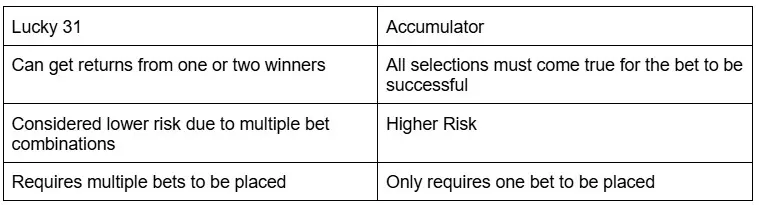
How a lucky 31 differs from a straight accumulator
If you want coverage and flexibility, a Lucky 31 bet may be the preferred option over a five-fold accumulator.
Pros and Cons of Lucky 31 Bets
Before placing a Lucky 31 bet or using free bets, it’s worth considering both sides.
Pros –
✅ Multiple chances to win
✅ Returns possible with just one winner
✅ Ideal for confident selections across several races
✅ Often eligible for bookmaker bonuses
Cons –
❌ Higher total stake required
❌ Returns can be smaller with only one winner
❌ Complex compared to singles or doubles
When Should You Place A Lucky 31 Bet?
A Lucky 31 bet works best when you have five strong selections, rather than speculative long shots.
Ideal situations include:
•
There are solid favourites across multiple races
•
You want insurance against one or two selections losing
•
You’re taking advantage of the bookmaker Lucky Bet promotions
•
You prefer steady returns over high-risk accumulators
As always, research is essential. Assess form, race conditions, class levels, jockeys, and track suitability before committing to a Lucky 31. When used wisely, it can be a balanced and rewarding way to bet on horse racing.
Copyright 2026 Racing TV - All Rights Reserved.
Please bet responsibly
Copyright 2026. All rights reserved